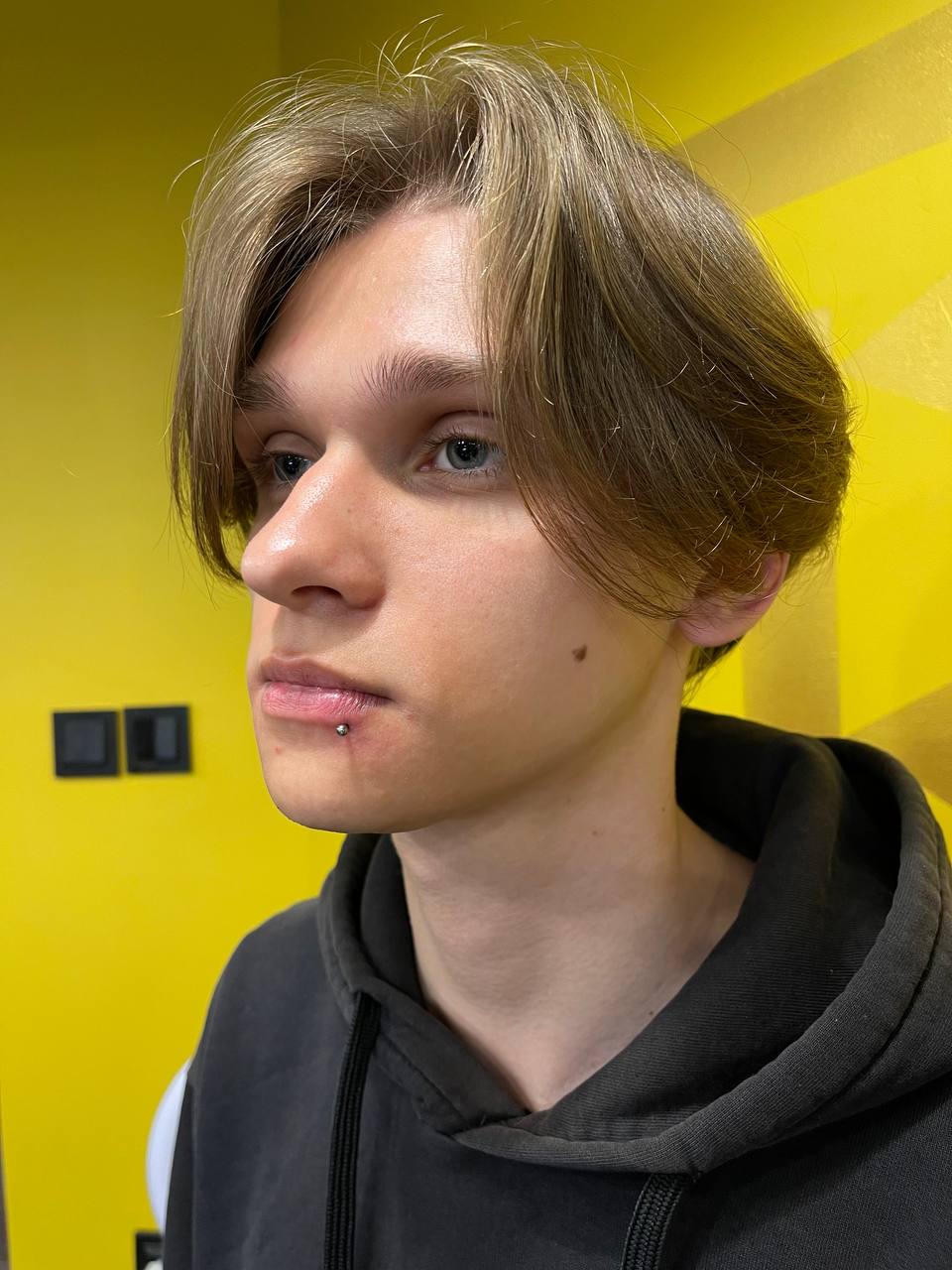
You have three haircut photos saved from Instagram, sit down in the barber’s chair and say, “I want something like this.” The problem is that even a great hairstyle from a photo will not always look the same on your head. It is not because the barber lacks the necessary skills. A men’s haircut needs to suit more than current trends. It should also work with your face shape, hairline, thickness, growth pattern, and the amount of time you want to spend in front of the mirror every morning.
Choosing a hairstyle should therefore begin not with “what is fashionable right now?” but with a few simpler questions. Is your hair straight or wavy? Do you have a receding hairline? Does your beard change the proportions of your face? Do you want to style your hair every day, or would you rather step out of the shower and get on with your day? A good barber can bring all these elements together so that your haircut looks good for longer than the first five minutes after leaving the barbershop.
Men’s haircut Katowice – why does face shape matter?
A haircut can visually lengthen or widen the face, soften sharp features, or make them look even more defined. This is why two people with similar hair length can look completely different with the same hairstyle.
When choosing a men’s haircut in Katowice, it is worth looking at the complete picture rather than the head alone. The forehead, cheekbone width, jawline, face length, beard shape, and even the way you wear your glasses all matter.
It is also important to remember that “face shape” is not a precise mathematical category. Most people do not have a perfectly square or oval face. It is often a combination of several shapes, so online charts should only be treated as a starting point.
Oval face – the most versatile shape
An oval face is considered the most versatile because its proportions are relatively balanced. Both short haircuts and styles with more volume on top can work well.
You can choose a classic side part, textured crop, quiff, crew cut, or even a more defined fade. Just be careful with a very heavy fringe, as it can make the face look shorter if that is not the effect you want.
If you are unsure where to begin, an oval face gives you plenty of freedom. Your hair type and lifestyle then become more important than the face shape itself.
Round face – how can you add more structure?
For a round face, more volume on top and shorter sides usually work well. The aim is to create a little more vertical length without making the face appear even wider at the sides.
A quiff, a softer pompadour, a textured top, or a fade with more length on top may be a good choice. If you prefer short hairstyles, you can also create a stronger contrast between the sides and the top.
What should you avoid? Very heavy, rounded hairstyles without much structure that repeat the shape of the face. Of course, there is no rule against choosing this look if you genuinely like it, but it is worth understanding how it will affect your proportions.
Square face – a strong jawline can be an advantage
A square face usually has a defined jawline, with the forehead and lower part of the face having a similar width. This provides an excellent base for many classic men’s hairstyles.
A crew cut, buzz cut, crop, short fade, or textured hairstyle can all look very good. A strong jawline does not always need to be softened. A short, clean haircut will often highlight it beautifully.
If you wear a beard, make sure your haircut and facial hair work together. A very wide beard combined with extremely short sides may make the lower part of the face look even broader.
Rectangular or long face – do not overdo the height
If your face is noticeably longer than it is wide, a very high pompadour or extremely short sides may make it appear even longer. It is often better to leave the sides slightly fuller and keep the volume on top moderate.
Textured styles, a side part, medium-length hair, and a fringe that visually shortens the face can all work well. This does not mean that a fade is off limits. It simply does not always need to begin very high.
Triangular and heart-shaped faces – balance is key
A heart-shaped face usually has a wider forehead and narrower chin. Cutting the sides very aggressively can emphasise the difference between the upper and lower parts of the face.
A slightly fuller shape around the temples, softer texture, and natural transitions may be a better choice. Light facial hair can also work well by visually adding some volume to the lower part of the face.
What if you do not know your face shape?
That is completely normal. You do not need to stand in front of a mirror with a ruler and measure the width of your cheekbones before your appointment.
In practice, the barber will assess your face as a whole. The best approach is to show two or three hairstyles you like and ask, “Which parts of these would work with my face and hair?” This is far more useful than insisting on the exact name of a particular hairstyle.
Hair type matters just as much as face shape
You may have the perfect face shape for a particular hairstyle, but if your hair behaves completely differently from the model’s hair in the photograph, achieving the same result will require another approach.
Fine, straight hair needs a different cut from thick waves or springy curls. The direction of growth, crown cowlick, and hairline around the temples also matter.
This is why a good barber in Katowice does not copy a photograph exactly but adapts the idea to the client’s actual hair.
Fine hair – how can you add volume?
Short or medium-length styles with texture often work best for fine hair. Hair that is too long may begin to lie flat and look even less dense.
A textured crop, shorter quiff, classic side part, or light crew cut can create the impression of more volume. The drying technique and styling product also make a big difference. A lightweight product that does not stick the hair together is usually the better choice.
If your hair is thinning at the crown, a simpler approach can sometimes produce the best result. A very long top combed over to hide the area may draw attention to exactly the place you want to disguise.
Thick hair – plenty of options and plenty of volume
Thick hair offers many possibilities, but it can also have a mind of its own. If too much weight is left in the wrong places, the hair may puff out at the sides and lose its shape only a few days after the haircut.
Careful layering, texturising, and removing excess bulk where needed can work very well. This does not always mean choosing an extremely short fade. Sometimes a well-built scissor cut is enough.
With thick hair, it is especially important for the barber to see how it naturally sits without styling.
Straight hair – a classic type that offers control
Straight hair works well with precise hairstyles such as a side part, slick back, crop, fade, quiff, or classic cuts with a clean shape.
However, if the hair is very coarse, the transitions between lengths need to be handled carefully. Sides cut too short may stick out like a brush. In this situation, just a few extra millimetres can make a huge difference.
Straight hair also makes it easier to achieve a clean, controlled finish, although some styles will require daily blow-drying in the right direction.
Wavy hair – work with it instead of fighting it
Wavy hair provides natural texture that people with perfectly straight hair often try to create using styling products.
Instead of forcing it straight, make the most of its natural movement. A textured top, messy crop, medium-length style, or looser side part can look very natural.
The right cut is essential. If the hair is shortened in the wrong place, the wave may begin to stick out. With wavy hair, the length needs to be selected according to where the hair naturally bends.
Curly hair – length changes everything
With curls, even a centimetre can completely change the hairstyle. Curly hair often springs up after it is shortened, so the barber needs to anticipate how it will look once dry.
A curly top with shorter sides, taper, low fade, or a more natural medium-length style can all work well. The most important thing is not to remove the curl pattern without a plan.
If you wear your hair curly, tell the barber how you style it and whether you use a hairdryer with a diffuser. The haircut should work with your everyday routine, not only in the photograph taken immediately after your appointment.
Receding hairline – hide it or embrace it?
This is one of the most common questions. The answer depends on how far the hairline has receded and how the hair naturally sits.
A textured crop or looser fringe can visually soften slight recession around the temples. With a more pronounced receding hairline, a shorter and more confident cut may work better than trying to cover everything with long strands.
A buzz cut or short crew cut can look excellent because it makes the hairline part of the style instead of pretending that it is different.
High forehead – is a fringe always the answer?
Not always, but it can often help. If you want to make the forehead look shorter, a textured fringe or crop may work well.
However, if your hair naturally grows strongly upwards or backwards, constantly forcing it to fall over the forehead will mean a daily styling battle.
In that situation, it is better to choose a hairstyle that respects the natural direction of growth rather than ignoring it.
Cowlicks – a small detail that can cause a big problem
Anyone who has tried cutting their hair exactly at the wrong point of a cowlick knows how quickly a section can begin sticking up.
There are usually two solutions: leave enough length for the hair’s weight to hold it down or cut it short enough for the cowlick to stop mattering. An awkward length somewhere in between is often the worst option.
Do not style your hair too heavily before your appointment. The barber needs to see how it actually grows.
Does a fade suit everyone?
A fade is a technique, not one specific hairstyle. You can choose a low fade, mid fade, high fade, skin fade, or a very soft transition.
The height of the fade makes an enormous difference. A high fade exposes more of the sides and may visually lengthen the face. A low fade is more subtle and leaves more weight around the temples.
Instead of simply saying, “I want a fade”, show the barber how high you want the transition to begin and what type of finish you prefer.
Buzz cut – simple does not mean boring
A buzz cut may look like the simplest possible haircut, but when performed well, it can strongly emphasise the facial features.
It usually looks best with a regular head shape and more defined features, but this is not a strict rule. Much depends on the chosen length, the finish around the sides, and the hairline.
If you want minimal styling, this is one of the most practical options. Just remember that regrowth becomes visible more quickly with very short hair, so you may need to visit the barber more often.
Haircut and beard – one complete look, not two separate projects
If you wear a beard, the barber should consider the proportions of your entire face. A longer beard can visually lengthen the face, while a wide, full beard can make the lower part look broader.
This is why it is worth planning your men’s haircut and beard together. Sometimes a small adjustment to the beard outline suddenly makes the entire hairstyle look much more cohesive.
With a round face, you can leave slightly more length at the chin and shorten the sides of the beard. For a very long face, the opposite may work better, as an overly long beard can stretch the proportions even further.
How should you choose a hairstyle if you hate styling your hair?
Tell your barber straight away. This is genuinely important information.
If you only have two minutes in the morning, there is little point in choosing a style that requires a hairdryer, pre-styler, brush, and precise shaping. It is better to choose a haircut that falls naturally into place.
Shorter textured crops, crew cuts, buzz cuts, or simple classic styles adapted to your hair’s natural growth pattern can be good options.
What if you enjoy styling your hair?
Then you have more possibilities. You can leave more length on top, work with volume, change the parting, and wear your hair neatly one day and more casually the next.
Ask the barber to show you exactly how to dry your hair and how much product to apply after the cut. A common mistake is covering the hair with a large amount of pomade and then wondering why it looks so heavy.
Which product suits which hair type?
There is no single product that works for everyone. Fine hair usually responds well to lightweight products that add texture without weighing it down. With thick hair, you can often use a stronger paste or clay.
For wavy and curly hair, products that enhance the natural texture usually work better than very dry pastes, which may increase frizz.
If you want shine and a more classic finish, pomade may be a good choice. If you prefer a natural matte look, clay or paste will usually work better.
How should you explain what you want to your barber?
Photographs are an excellent idea, but it is best to show several. One photo only says that you like the final result. Three photos can help the barber understand exactly what you prefer: the length, texture, fade height, or how the top is styled.
It is even more useful to explain what you do not like. “I don’t want the sides too exposed”, “I don’t want a fringe over my forehead”, or “I don’t want to style my hair every day” are all very practical details.
How often should you visit the barber?
It depends on the haircut. Short fades and very clean outlines lose their fresh appearance more quickly, so they often require an appointment every two to four weeks. Longer, more natural hairstyles can continue to look good for much longer.
If you do not want to visit the barbershop frequently, mention this during your appointment. The barber can shape the haircut so that the regrowth looks more natural.
The most common mistake: choosing a hairstyle only because it is fashionable
A trend can provide useful inspiration, but it should not be the only consideration. A hairstyle that looks excellent on a model with extremely thick hair and a straight hairline may require a completely different approach on someone with fine hair and receding temples.
This does not mean that you need to give up fashionable cuts. They can often be “translated” to suit your hair by changing the length, fade height, or styling method.
Men’s haircut Katowice – how should you prepare for your appointment?
Arrive with your hair in the most natural condition possible. If you apply a large amount of product, it will be more difficult to assess its thickness and growth direction.
Prepare two or three reference photos and consider how much time you want to spend styling your hair. Explain what bothered you about your previous haircut: perhaps the sides puffed out too quickly, the fringe fell into your eyes, the hair refused to sit correctly, or the fade grew out too harshly.
This information is far more valuable to a barber than simply saying, “shorter on the sides, keep the top”.
Barber Katowice – a hairstyle tailored to you, not copied from a photograph
A good men’s haircut in Katowice should suit your face, hair, and everyday life. The goal is not to find one “perfect hairstyle forever”. Hair changes, personal style changes, and after several months, you may feel like trying something different.
The best result comes from combining inspiration with what your hair can realistically do. At KRZ Studio Barbershop in Katowice, it is therefore worth treating the first few minutes of your appointment as a short consultation rather than a formality.
If you do not know which hairstyle to choose, you do not need to arrive knowing the exact name of a haircut. Show us what you like, explain what you do not want, and let the barber adapt the lengths to your face and hair type.
Frequently asked questions
Which hairstyle works best for a round face?
Shorter sides and more volume on top usually work well because this combination visually lengthens the face. A quiff, textured top, or carefully selected fade may be a good option.
Which hairstyle works well with a receding hairline?
A textured crop or looser fringe may work with slight recession. For a more pronounced receding hairline, a shorter, more confident cut such as a crew cut or buzz cut often looks good.
Does a fade suit every face shape?
A fade has many variations. Low, mid, and high fades affect facial proportions differently, so the height of the transition should be selected individually.
Which hairstyle should you choose for fine hair?
Shorter textured cuts usually work well because they do not weigh the hair down and can make it appear fuller.
What should I tell the barber if I do not know which haircut I want?
Show a few photos of hairstyles you like, explain how much time you want to spend styling your hair, and mention what you disliked about your previous cut. The barber can use this information to suggest an option suited to your face and hair.