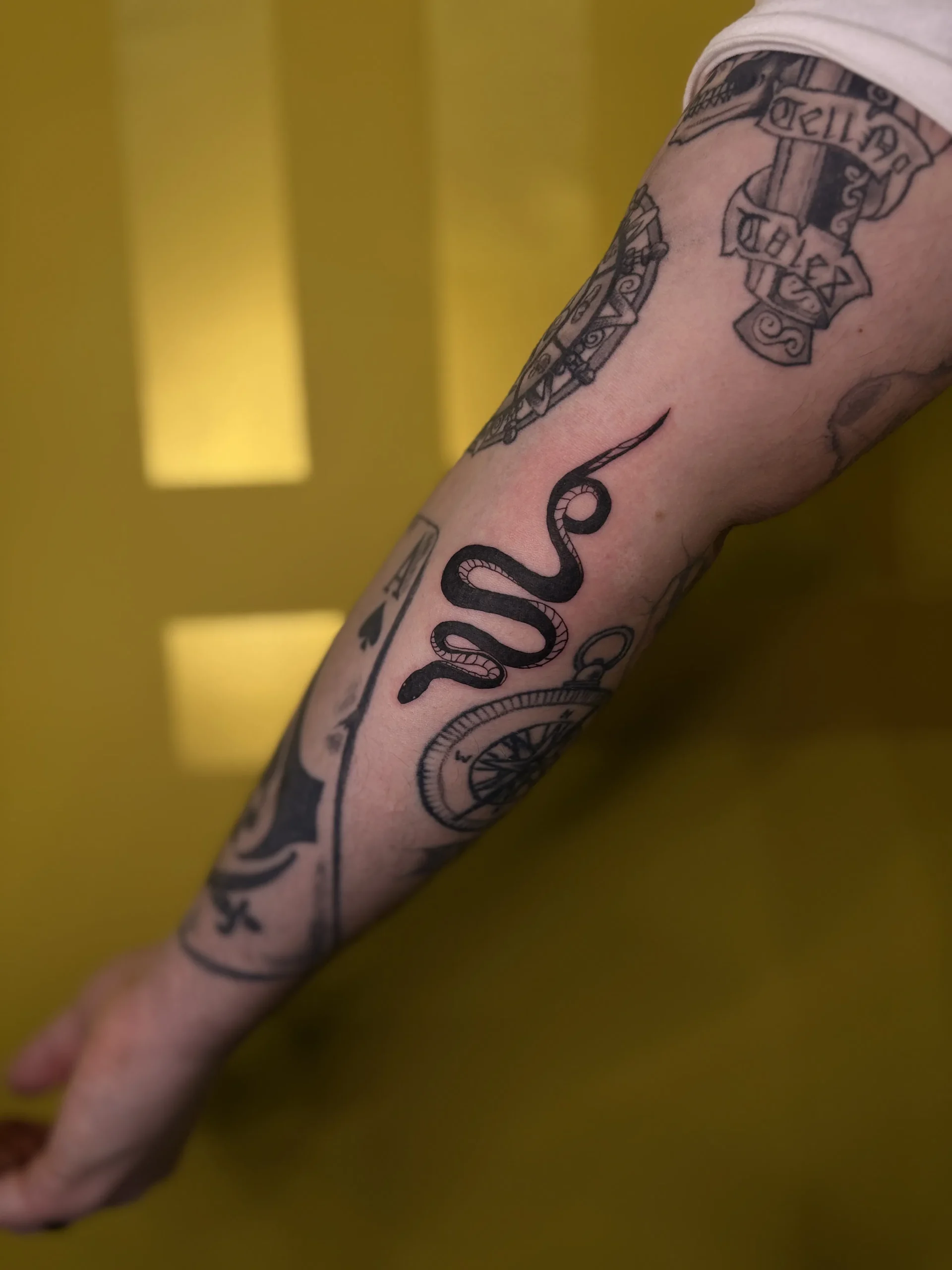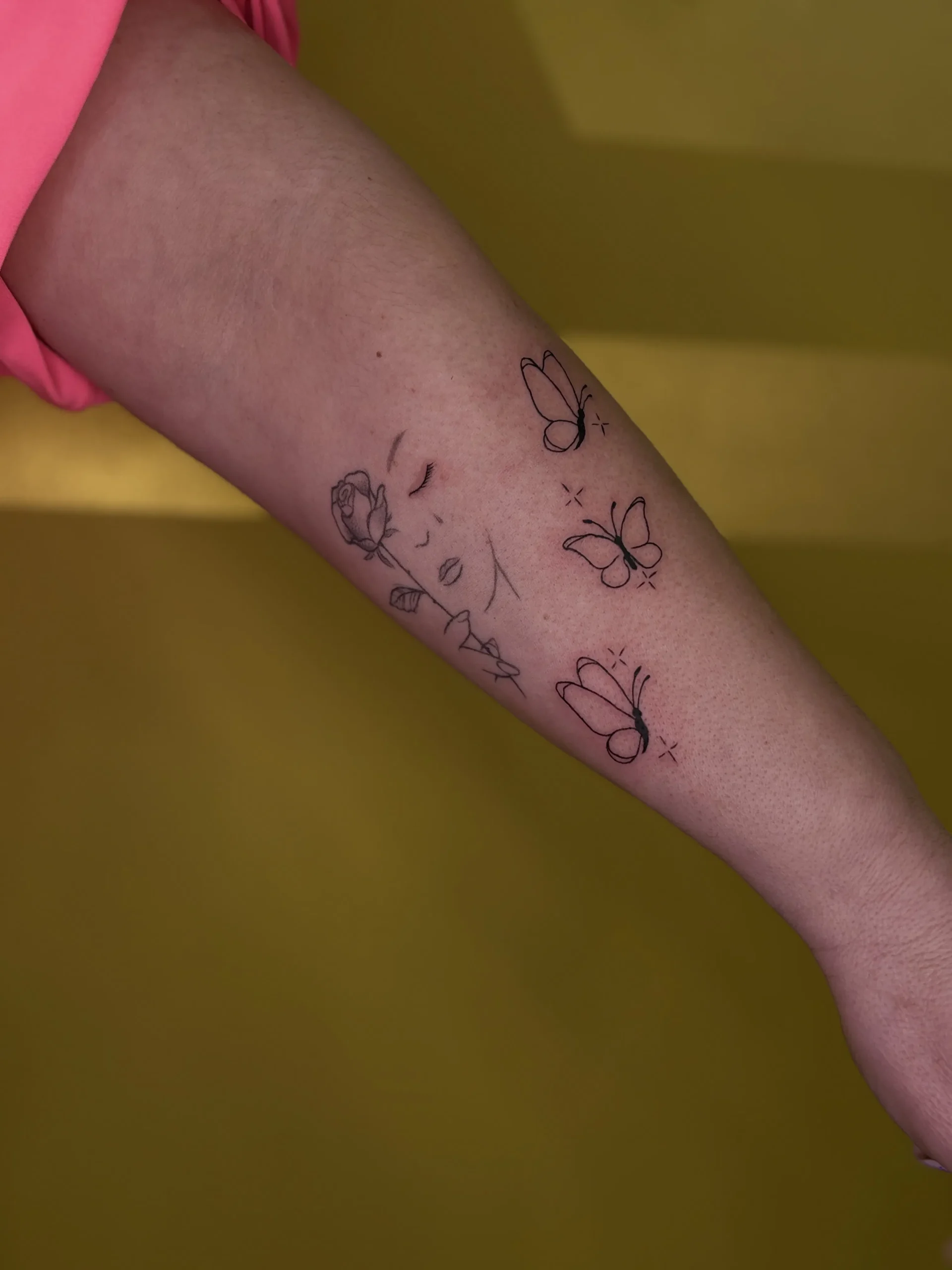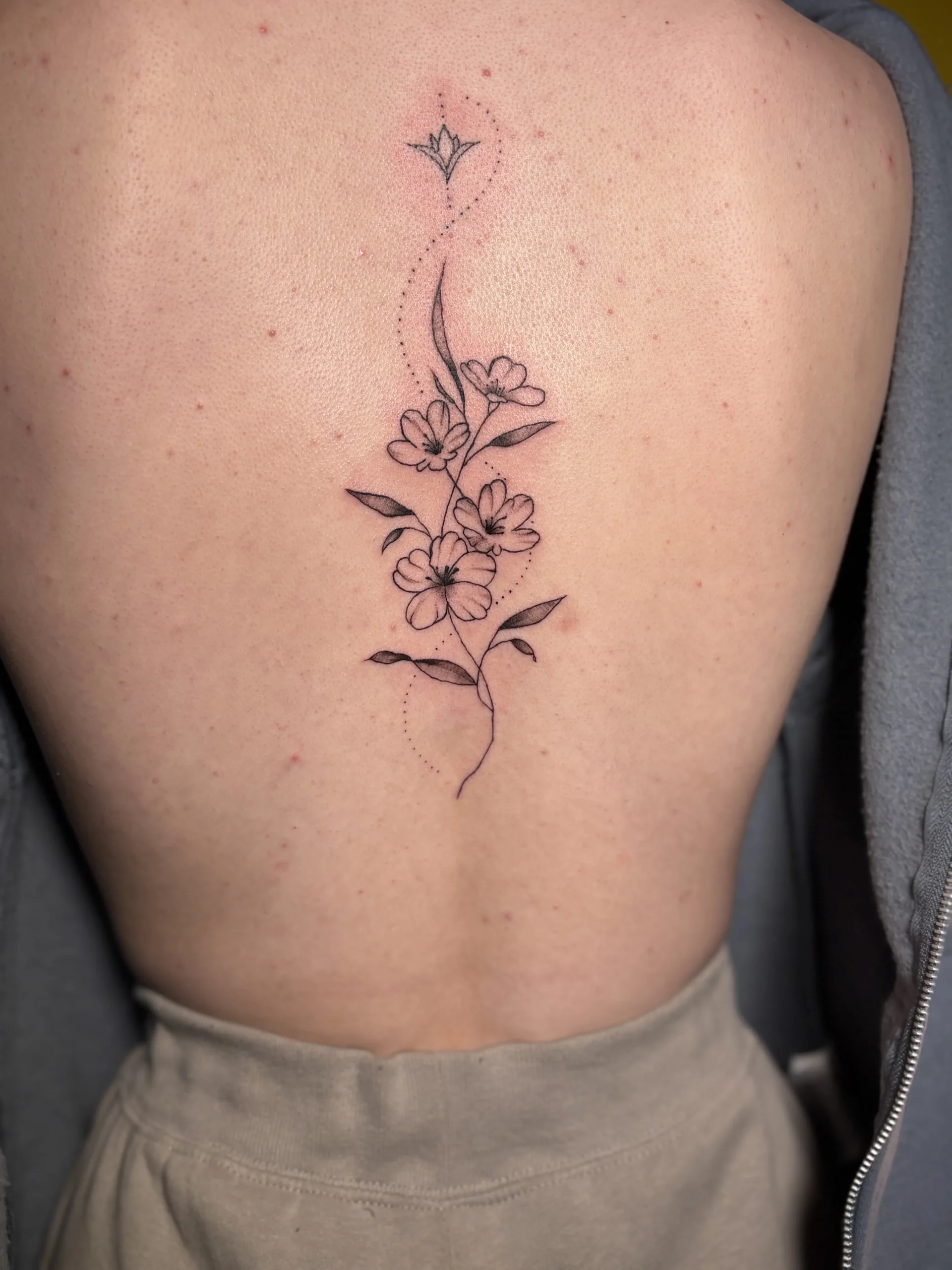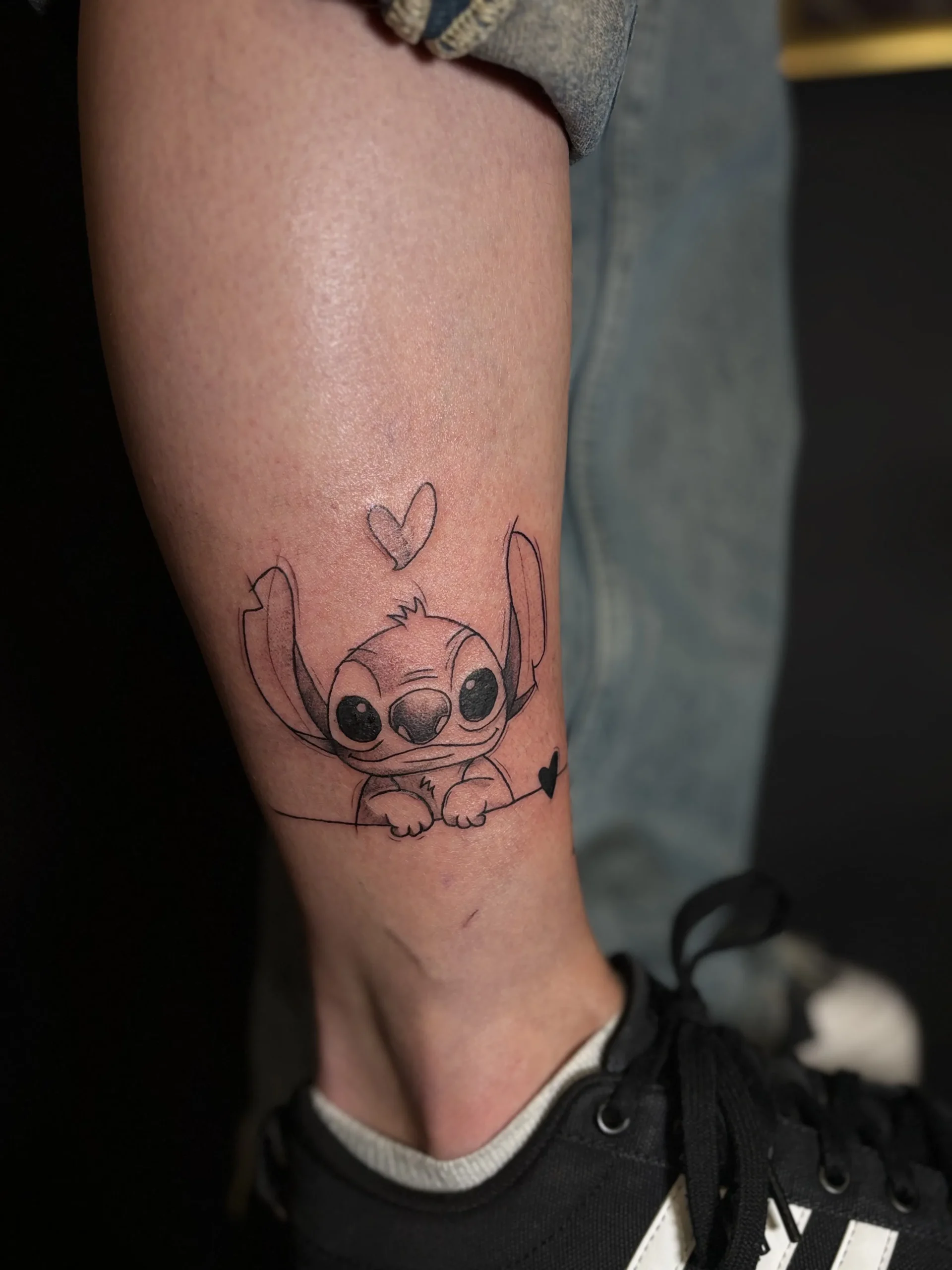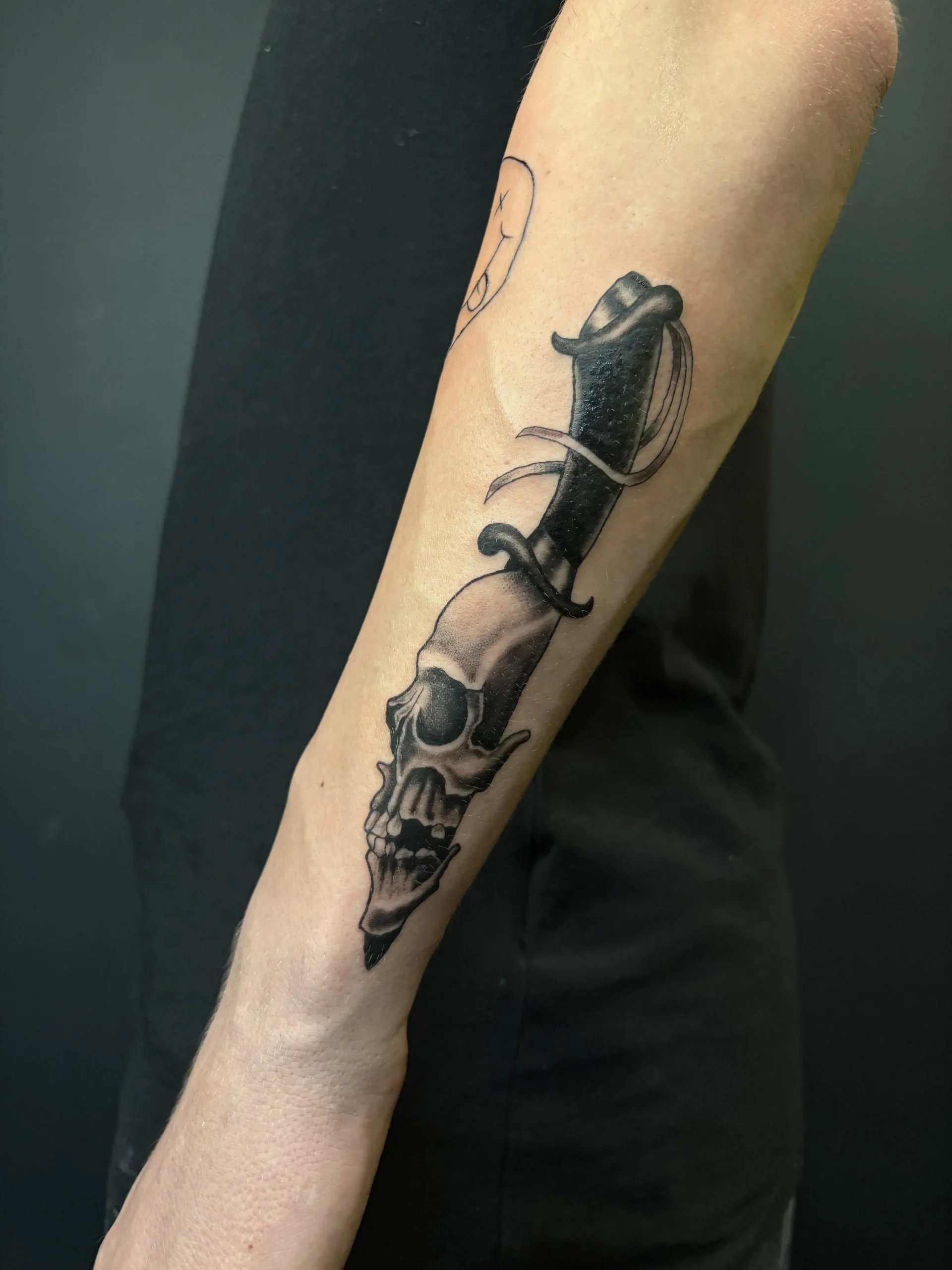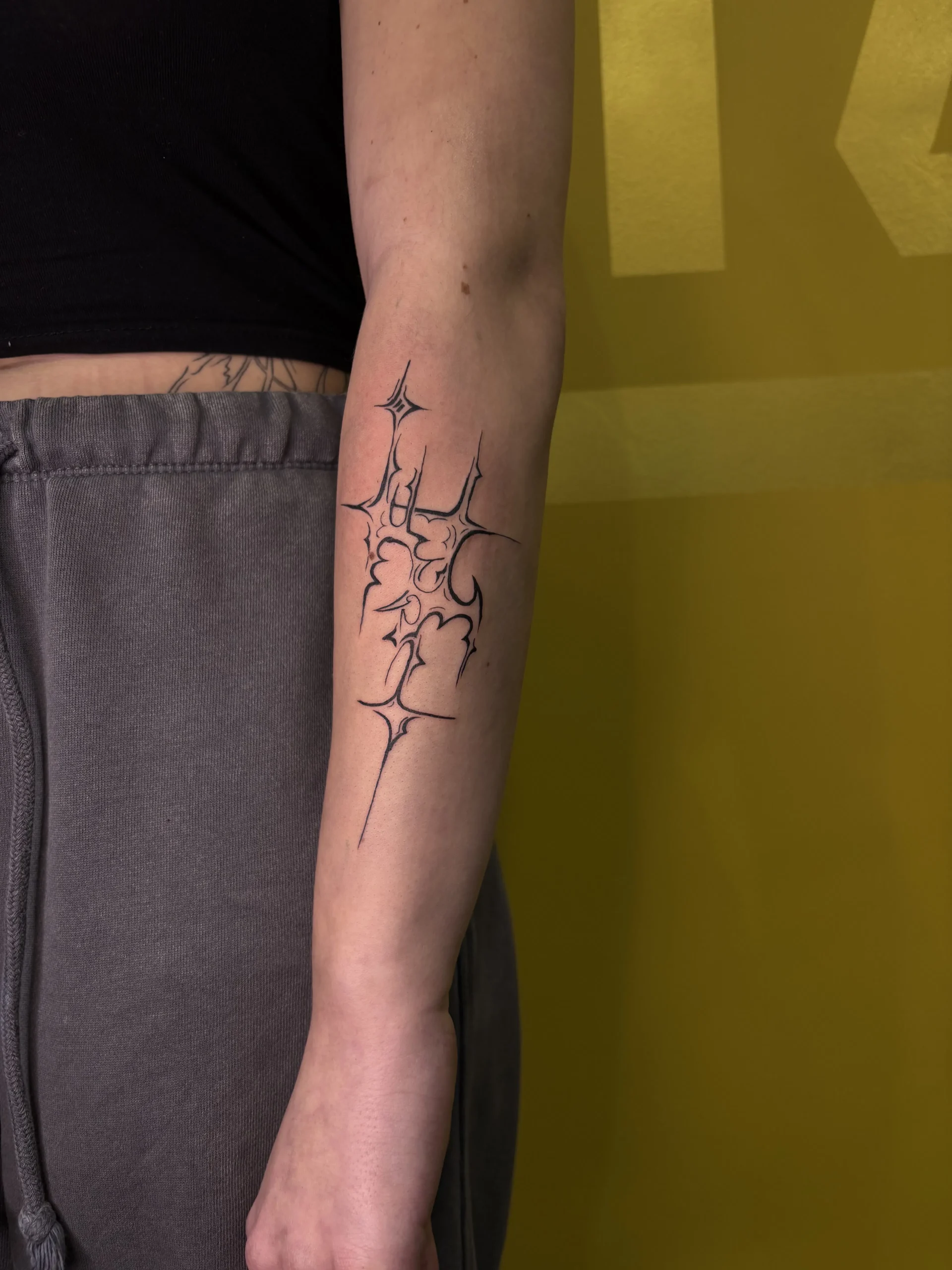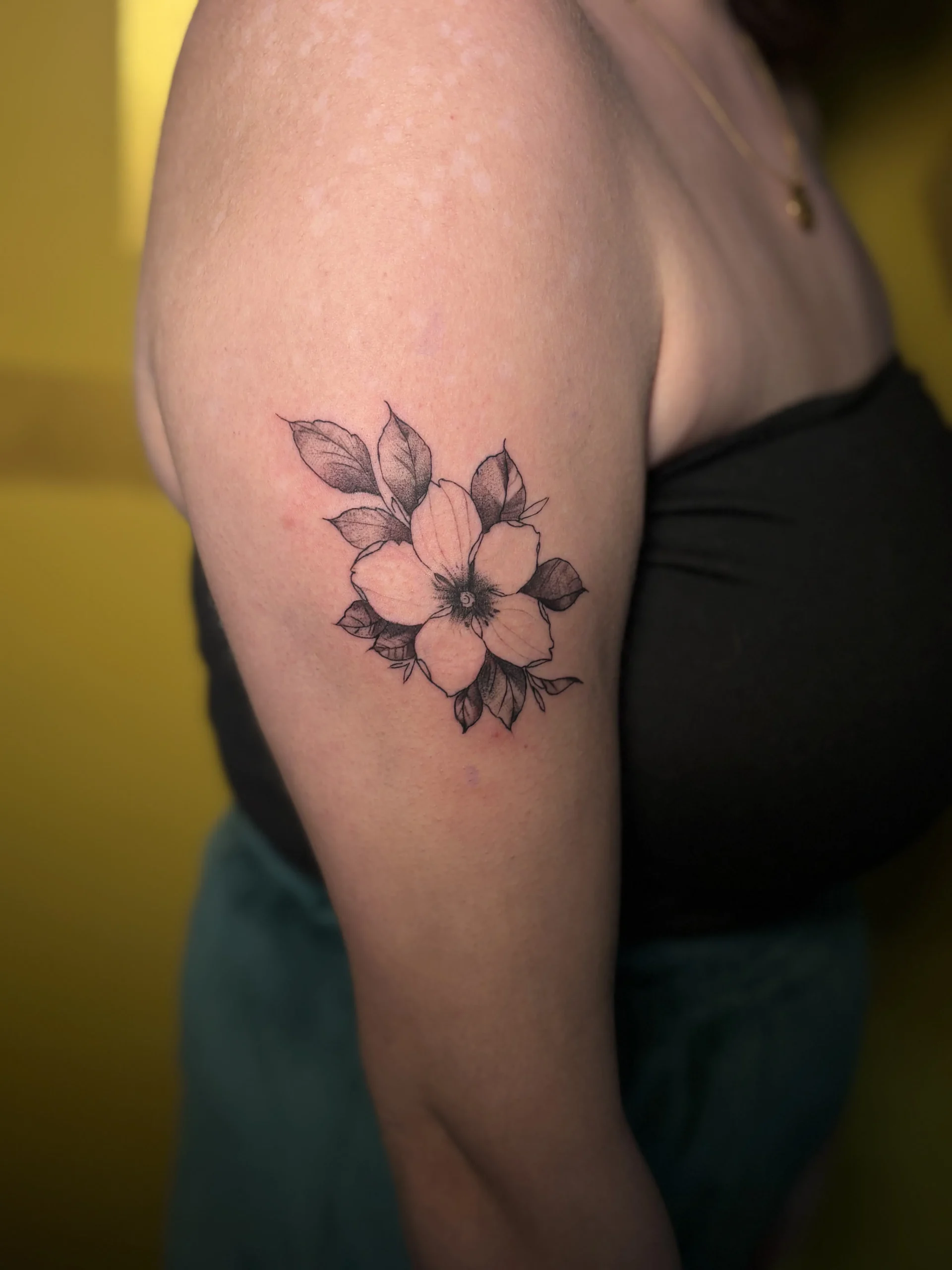
Do you have a tattoo you no longer want, but you do not necessarily need your skin to look as if there had never been any ink there? This is a very common situation. Many people are not looking for complete tattoo removal. Instead, they want a cover-up — a new tattoo that uses, changes or completely hides what was there before.
This leads to an important question: do you need to remove the old tattoo completely before getting a cover-up? In most cases, no. Sometimes a few laser sessions are enough to weaken the darkest areas, reduce the contrast of the old design and give the tattoo artist much more freedom when planning the new piece.
This is what we mean by tattoo lightening before a cover-up. The goal is not perfectly clear skin, but creating a better base for the new design.
Tattoo lightening before a cover-up — how does it work?
Laser treatment targets pigment in the skin. Short pulses of energy break some of the ink particles into smaller fragments, which are then gradually cleared by the body. That is why a tattoo does not disappear immediately after you leave the clinic. It continues to fade over the following weeks.
With complete removal, the treatment series continues until the skin is as clear as realistically possible or until further sessions no longer produce noticeable progress. With a cover-up, the goal is different: you stop once the old design is no longer limiting the new one.
If you are considering laser tattoo removal in Katowice, it is worth saying from the start that your goal is not complete removal but lightening for a cover-up. That can completely change the treatment plan.
Does every old tattoo need to be lightened before a cover-up?
No. A small, light and not heavily saturated tattoo can sometimes be covered without laser treatment first. This is especially true if the new design will be larger, darker and carefully planned.
The problem begins when the old tattoo is very black, has thick outlines, large solid areas or sits exactly where the new design needs lighter elements.
A cover-up is not like applying white paint over a wall. New tattoo ink does not “erase” the old one. The artist has to design around the pigment that is already in the skin.
When does lightening make the biggest difference?
It makes the biggest difference when the old tattoo has very strong contrast. Imagine a black name tattooed on the forearm. Without laser treatment, the new design has to be dark and complex enough to hide the letters effectively.
But if those black outlines are noticeably weakened first, many more options become available. The artist can use softer shading, more negative space and does not have to build the entire tattoo around one difficult area.
Why does a cover-up without laser often have to be larger?
Because the old tattoo creates limitations. To hide it, the new design usually needs to extend beyond the original shape and include enough darker elements where the old pigment is strongest.
If someone wants a tattoo that is only slightly larger than the old one, but the existing design is very dense, there may simply not be enough space to create a balanced composition.
Lightening helps reduce that problem. It will not make the old tattoo disappear as if it had been erased, but it can stop it from controlling the entire new design.
Can you do a light cover-up over a black tattoo?
Without prior lightening, this is very difficult. Light pigments do not have the same covering power as wall paint. If there is dense black ink underneath, the old tattoo may still affect the way the new colour looks.
This is one of the most common reasons why tattoo artists recommend a few laser sessions instead of trying to “paint over” everything immediately.
How much does a tattoo need to be lightened before a cover-up?
There is no universal rule such as “50 percent lighter”. What matters is the practical result.
For one project, it may be enough to weaken part of the bold outline. For another, the black fill may need to be reduced much more. In some cases, laser treatment can be used only on selected areas — for example on lettering, the tip of an old motif or a section that extends beyond the planned new shape.
The best time to stop the laser series should ideally be decided together with the tattoo artist who will create the cover-up.
The best plan: consult the tattoo artist before starting laser treatment
This is very practical, but many people do it the other way around. They spend a year removing the tattoo first and only then ask the artist whether it is light enough.
It is usually much better to show the old tattoo to the artist who will be creating the cover-up before starting. The artist can point out which parts are genuinely problematic and which areas could be incorporated into the shading, background or new composition.
If you are looking for a place to plan such a project, you can start with a consultation at a tattoo studio in Katowice and discuss straight away whether laser treatment is needed at all.
Can laser treatment be done on only part of a tattoo?
Yes. The entire old tattoo does not always need to be treated.
If the problem is only one dark word, part of an outline or an element that extends beyond the planned cover-up, selective lightening can be focused on that specific area.
This often saves time and allows the treatment to focus exactly where the old pigment is limiting the new design the most.
Old lettering — a classic case for lightening
Names, dates, short quotes and other black lettering often give the artist very little flexibility because the letters can remain readable even under new shading.
After a few laser sessions, once the outline becomes less intense, it is much easier to “lose” it within the texture of the new tattoo.
Tribal tattoos and thick black outlines
These are usually more difficult to cover without preparation. Large amounts of black ink and wide lines can force the new tattoo to become very heavy and bold.
Lightening even the most saturated areas can completely change the possibilities. Instead of another very dense blackwork piece, it may become possible to plan a design with more detail and softer transitions.
Dark fills — do they need to be removed completely?
Usually not, especially if the new design will also contain a dark element in the same area. If there is a black patch underneath and the new tattoo is going to have deep shading there, some of the old pigment may not be a problem at all.
The situation is different if the client wants a light flower, open skin with no background or a very delicate detail in exactly the same place. In that case, stronger lightening may be needed.
Colour tattoos and cover-ups
Colour makes things more complex because different pigments respond to different wavelengths. Black and darker shades are generally more predictable when lightened with laser than some greens, yellows or very light pigment mixtures.
This means that after several sessions, one part of the old tattoo may already be very faint while another colour is still clearly visible.
The cover-up plan then needs to be based on what is actually left in the skin, not on the expectation that every pigment will fade in the same way.
Can a red tattoo be lightened before a cover-up?
Yes. Red pigments can respond to the right wavelength. In practice, however, each ink needs to be assessed individually because “red” can actually be a mixture of several different components.
What about green and blue?
Some green and blue pigments may require different wavelengths from standard black ink. That is why both the equipment and the practitioner’s experience matter.
If the old tattoo contains several colours, the lightening process may need to be more gradual and staged.
Can white pigment be a problem?
It can. Very light pigments can be more difficult to remove with laser, and some cosmetic or pale mixtures may react unpredictably.
That is why it is worth mentioning before treatment if the tattoo originally contained white highlights or pastel colours, even if they are barely visible today.
How many laser sessions are needed before a cover-up?
Sometimes one or two sessions are enough to give the tattoo artist the space they need. In other cases, several treatments may be required.
This depends on the age of the tattoo, the amount of pigment, the colour, the depth, the location and whether it has been touched up before. A professional tattoo that has been reworked several times may contain far more ink than it appears to at first glance.
That is why it is more realistic to say “we will reassess after the next session” than to promise an exact number in advance.
Why does the result keep changing after one laser session?
The laser breaks down pigment during the treatment, but the body needs time to clear the fragments. The tattoo therefore continues to fade over the following weeks.
This is important before a cover-up because it makes little sense to judge the result the next day and immediately book a new tattoo. The skin needs to heal and the colour needs time to stabilise.
How long should you wait between laser sessions?
In practice, treatments are usually spaced several weeks apart — often around 6–8 weeks or longer depending on how the skin reacts. More frequent laser sessions do not automatically mean the process will finish faster.
The body needs time both to recover and to continue clearing the fragmented pigment.
Can a longer break be helpful?
Yes. If the tattoo is still gradually fading, there is not always a reason to rush into the next session. Research and reviews on laser tattoo removal often point out that intervals that are too short may increase the risk of unwanted effects without automatically improving the outcome.
When can you get a cover-up after the final laser session?
Only once the skin has healed completely. There should be no scabs, blisters, redness, tenderness or obvious changes in texture.
This is not only about comfort. Tattooing skin that has recently been treated with laser may make healing more difficult and increase the risk of an unwanted reaction.
The timing is best decided individually after the skin has been assessed by both the laser practitioner and the tattoo artist.
Do you need to wait several months?
Sometimes, yes — especially if the treatment series was long, the skin reacted strongly or the final session covered a large area. There is no point rushing the cover-up at the expense of skin quality.
If the goal is a new tattoo that will last for years, waiting a few extra weeks is usually a much better investment than tattooing too soon.
How does laser treatment affect the design of the new tattoo?
The lighter the old tattoo becomes, the fewer restrictions there are. The artist can work with a wider tonal range, use softer shading and does not need to place every dark element exactly over the old outline.
This is especially important for realism, ornamental work, botanical designs and projects that need a lot of light and open space.
Can the cover-up be more delicate after lightening?
Often, yes. This is one of the biggest advantages of laser treatment beforehand.
Without lightening, the new piece may require a lot of black ink. After lightening, it may be possible to keep the design more subtle, although a cover-up still follows different rules from a tattoo created on clear skin.
A cover-up does not have to be black
This is a common myth. A cover-up does not always need to become one huge black patch. Colour, good composition and smart use of contrast can work very well.
However, the darker the old tattoo is, the harder it is to create a light, colourful design without first reducing the old pigment.
What about old school, neotraditional and colour work?
Styles with bold outlines and a lot of saturated colour often work well for cover-ups because they naturally contain elements that can help hide the old tattoo.
That does not mean every old tattoo can be covered with just any design in one of these styles. The composition still needs to be created around the exact location and the pigment already in the skin.
Realism and cover-ups
Realism relies heavily on control of light and shadow. If an old black line sits exactly where the light part of a face or fur should be, the tattoo artist may have very limited options.
In cases like this, selective lightening of the problem areas can make a huge difference.
Blackwork — when might laser not be necessary?
If the new design is going to be a large, bold blackwork piece, much of the existing dark pigment may be incorporated into the new composition.
In that case, complete removal could be completely unnecessary. Sometimes laser is used only on the parts that extend beyond the planned shape.
Blast-over vs a traditional cover-up
A blast-over follows a slightly different idea: the old tattoo does not need to be completely hidden. The new design is intentionally tattooed over it while part of the previous image remains visible.
If you like this aesthetic, laser treatment may not be needed at all, or only very light fading may be enough.
Can the old tattoo show through after a cover-up?
Yes, especially if the cover-up was designed too lightly or the old pigment was very strong. Over time, as the new tattoo also ages and loses some intensity, parts of the old design may become more visible.
That is why a good cover-up should not be designed only to look great in a photo when it is fresh, but also with healing and long-term ageing in mind.
Why is it a bad idea to force the cover-up into exactly the same size?
Because the new design needs room to breathe. If you try to fit it exactly inside the outline of the old tattoo, the result often requires too much dark pigment and can become visually heavy or difficult to read.
A larger design makes it possible to move the main focal point away from the old tattoo and use the existing pigment as part of the background.
Does tattoo lightening always happen evenly?
No. One area may respond very quickly while another fades more slowly. Thick lines, repeatedly touched-up areas and dense fills often take longer than soft shading.
That is normal. Before a cover-up, the goal does not necessarily have to be a perfectly even “shadow” of the old tattoo.
What if the tattoo is already a cover-up?
Then there are several layers of pigment in the skin. This is sometimes referred to as a double tattoo, and the situation is more complex.
There is more ink for the laser to break down, and an even older design may become visible underneath the current tattoo. It is worth mentioning this during the consultation even if you only vaguely remember what used to be underneath.
Why is a tattoo that has been touched up several times harder to lighten?
Every touch-up may add another layer of pigment to the skin. On the surface, you may see a single black line, but underneath there can be several layers of ink added over different years.
This can extend the lightening process and make careful adjustment of the laser settings even more important.
What if there is scar tissue under the tattoo?
If the old tattoo feels raised, has an uneven texture or was originally tattooed very aggressively, the condition of the skin should be assessed first.
Laser can reduce pigment, but it does not automatically remove scar tissue. A new tattoo may also behave differently when applied over scarred skin.
Can laser treatment cause scarring?
With proper assessment and correctly selected settings, permanent scarring is not an expected outcome, but the risk cannot be completely ruled out. Factors include treatment intensity, skin type, existing scars, aftercare and the way the skin heals.
That is why the goal of lightening for a cover-up should not be “use the strongest setting so it goes faster”. The skin that will later be tattooed again should stay in the best possible condition.
Tanning and tattoo lightening
A fresh tan makes laser treatment more complicated because melanin also absorbs light energy. This can increase the risk of pigment changes and limit the settings that can be used safely.
If you are planning a laser series before a cover-up, sun protection should be treated as part of the overall plan.
What should you do after a laser session?
Follow the aftercare instructions you receive after treatment. Do not pick scabs, break blisters or try to “help the pigment come out” with aggressive peels.
The skin needs calm, uncomplicated healing. This is especially important if the same area will later be tattooed again.
Does more laser always mean a better cover-up?
Not necessarily. If the tattoo artist says after two or three sessions that the old design is already light enough, further treatments may not provide any practical benefit for the new project.
This is exactly why it is useful to return to the tattoo artist from time to time and show them how the result is progressing.
When does complete removal still make sense?
If you are planning a very delicate new tattoo, want to change the placement significantly or the old piece is so large that any cover-up would require an enormous design, more complete removal may give you greater freedom.
The same applies if you are not yet sure whether you want another tattoo at all. There is no need to stop at “light enough for a cover-up”. You can continue the removal process if your goal is to clear the skin further.
When is partial lightening enough?
Most often, when:
– the new design will be larger than the old one,
– its darker elements can be intentionally placed over the remaining pigment,
– only a few strong outlines are creating the main problem,
– the old tattoo has already faded to some extent,
– the client understands and accepts that some old pigment may remain under the new tattoo.
When is stronger lightening worth considering?
When you want a light design, subtle shading, more negative space, or when the darkest part of the old tattoo sits directly in the centre of the new composition.
In situations like these, every additional reduction in contrast can give the tattoo artist more freedom.
Lightening for a cover-up is a joint project between two specialists
The best results usually happen when the laser practitioner understands the tattoo artist’s plan, and the tattoo artist understands what can realistically be achieved with laser treatment.
These should not be two completely separate processes.
The laser is there to prepare the skin and pigment. The tattoo artist then uses that new base to create a design that is readable, balanced and built to last.
How should you prepare for a consultation?
Take a clear photo of the old tattoo in natural light. If you already have ideas for the new design, bring references, but try not to become too attached to one exact composition yet.
Explain when the old tattoo was done, whether it has been touched up, whether there is an older design underneath and whether it has ever been treated with laser before.
Tattoo lightening before a cover-up in Katowice — where should you start?
Start with the goal. Not with the number of sessions.
If you want a new tattoo, it makes sense to discuss the options for a cover-up at KRZ Studio and at the same time find out whether laser lightening of the old tattoo will be necessary.
You may find that only one problem area needs treatment. You may need three sessions. Or the old tattoo may already be light enough that laser is not needed at all.
If you would like to start with a consultation, you can contact KRZ Studio and show both the old tattoo and your idea for the new design.
Frequently Asked Questions
Do you have to remove an old tattoo completely before a cover-up?
No. In many cases, it is enough to lighten the most saturated areas so the tattoo artist has more freedom when planning the new design.
How many laser sessions are needed before a cover-up?
It depends on the colour, amount of pigment, age of the tattoo and the new design you are planning. Sometimes a few sessions are enough, while in other cases laser treatment is not needed at all.
Can you lighten only part of a tattoo?
Yes. If only one area is limiting the new design, selective lightening can be focused on that section.
How long should you wait after laser before getting a cover-up?
Until the skin has completely healed and stabilised after the final treatment. The timing should be decided individually because skin response and the extent of previous laser sessions can vary.
Can a cover-up be lighter and more delicate after laser lightening?
Often, yes. The lower the contrast of the old tattoo, the more freedom the artist has when working with shading, colour and negative space.