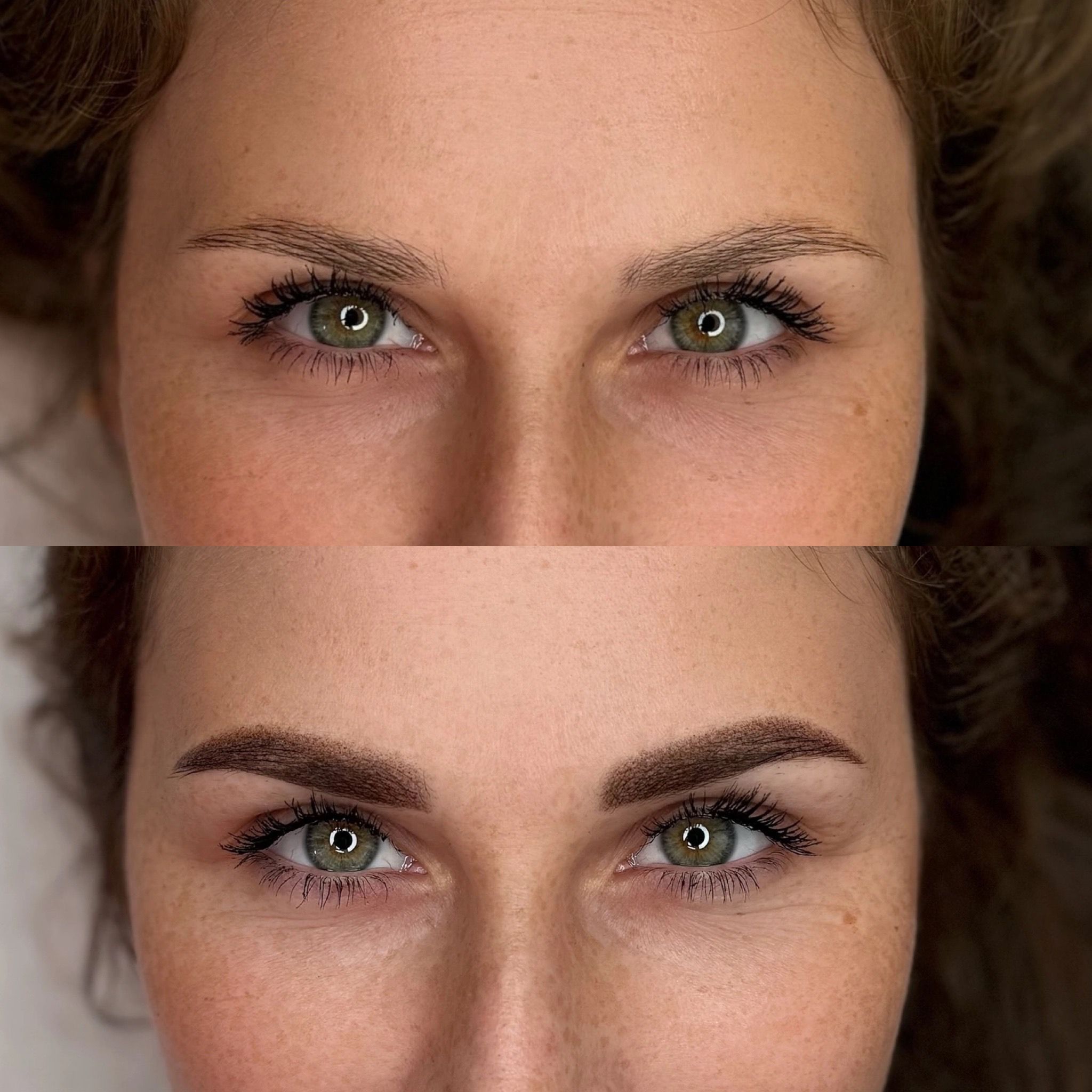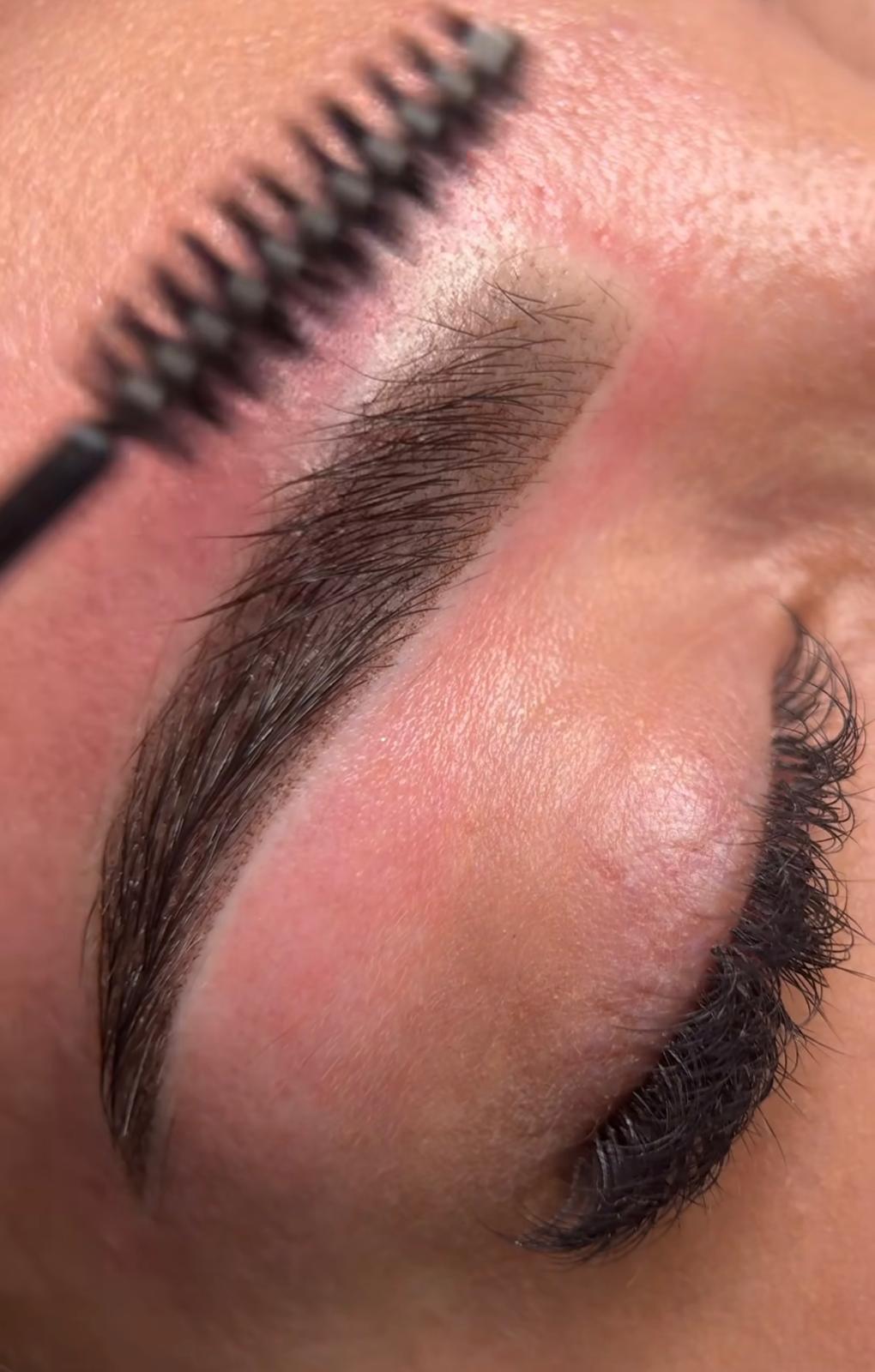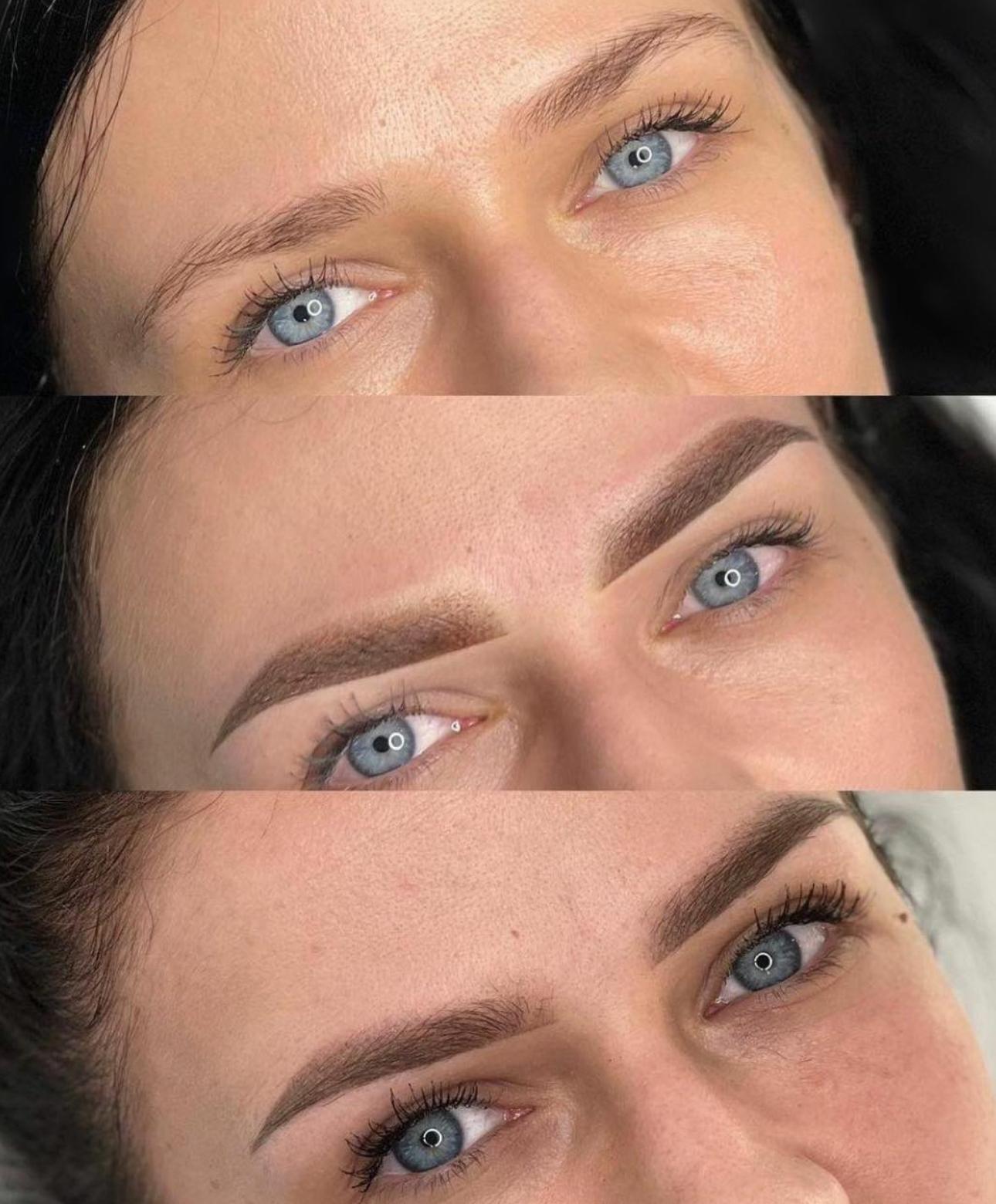
You look at your old permanent brows and know one thing: you want to lighten them or get rid of them. The shape no longer suits you, the colour has turned grey, red or orange, and adding yet another layer of pigment simply does not make sense. That is usually when the question comes up: laser or remover — which option works better for permanent eyebrow makeup removal?
At first glance, both methods aim for the same thing: gradually reducing the amount of visible pigment. But they work in completely different ways. Laser treatment uses light energy to target pigment in the skin, while remover is introduced mechanically into the skin, usually with a micropigmentation device, to trigger a controlled process that helps remove part of the colour.
That is exactly why there is no honest answer saying one method is always better. A lot depends on the pigment colour, its composition, how deep it sits, how many times the brows have been treated before, the condition of the skin and what you actually want to achieve — complete removal or simply enough lightening to create a new set of brows.
Laser or remover — the main difference in one sentence
Laser breaks down pigment using light energy, while remover works by mechanically opening the skin and applying a specialised solution to the pigmented area.
That is not just a small technical difference. It affects the healing process, the way treatment is selected, the possible risks and how the entire removal process may look.
If you are interested in laser permanent makeup removal in Katowice, it is worth assessing the colour and saturation of the pigment first rather than choosing a method based only on opinions from TikTok or Facebook.
How does laser permanent makeup removal work?
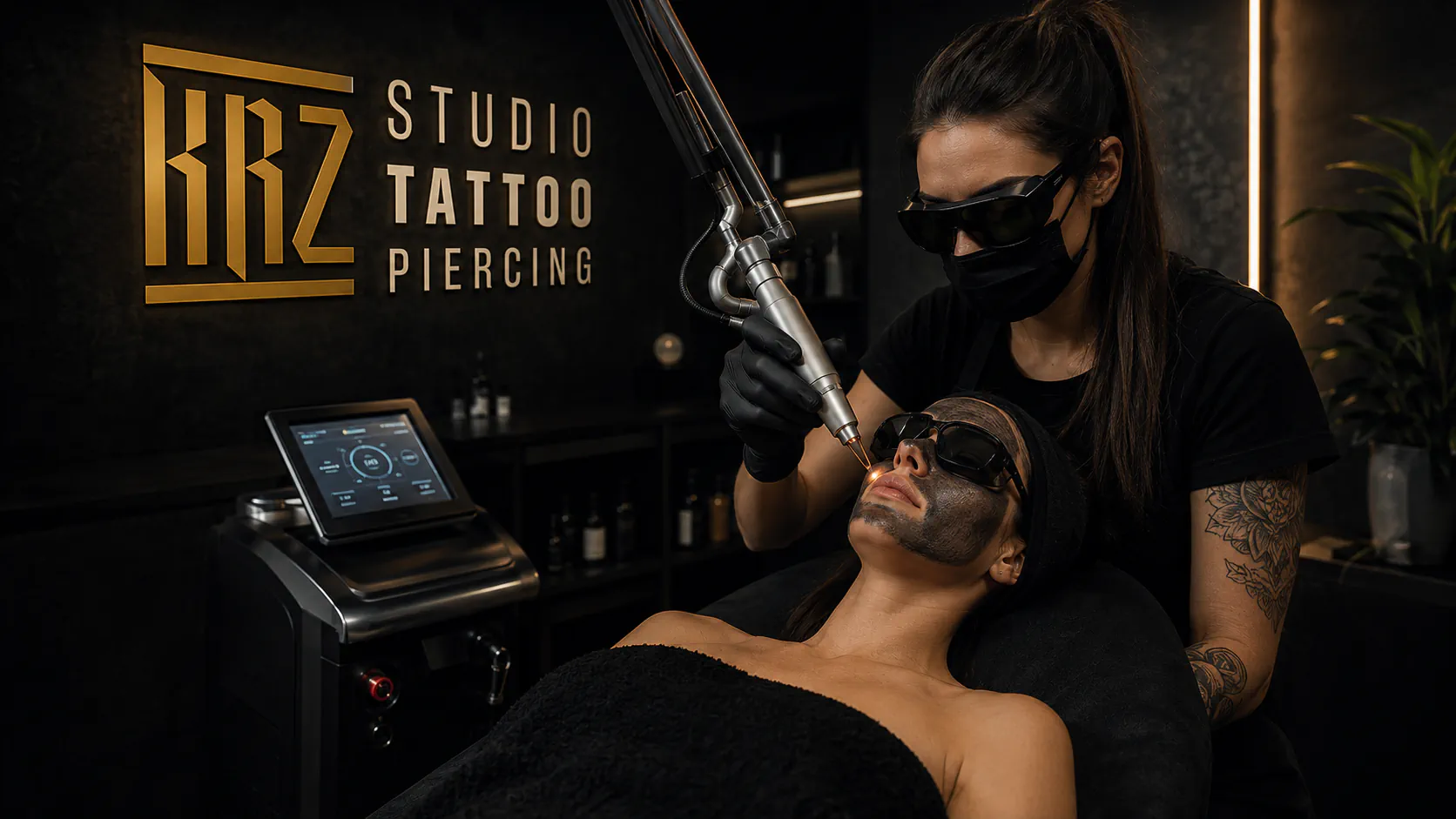
Tattoo removal lasers use very short pulses of light at a specific wavelength. The pigment absorbs the energy, breaks into smaller particles and is then gradually cleared by the body.
For dark brown and black pigments, a wavelength of 1064 nm is often used, while 532 nm may be used for reds and oranges. This is, of course, a simplified explanation, because PMU pigment is rarely one pure colour. It is usually a mixture of several components.
Why can eyebrows change colour after the first laser session?
This is one of the most important things to understand about PMU removal. Brown pigment may contain dark, red, orange and yellow components. If the laser removes the darker part of the mixture more effectively first, colours that were barely visible before may suddenly become much more noticeable.
Reports on laser removal of permanent eyebrows describe red, orange, yellow, green and blue tones becoming visible after the darker layer has been reduced. That does not necessarily mean the pigment suddenly changed into a new colour. Sometimes another component of the original mixture has simply become visible.
Can laser make permanent makeup darker?
Yes. With some pigments, something known as paradoxical darkening can happen. This is most often discussed in relation to pigments containing certain iron or titanium compounds, which may become darker when exposed to laser energy.
This effect is known in laser medicine, so if the exact pigment composition is unclear, careful assessment or a small test spot may sometimes make sense.
Important: paradoxical darkening is not the same as revealing a red or orange undertone. These are two different mechanisms.
Is laser the best-studied removal method?
Yes. In medical literature, pigment-targeting lasers remain the most widely described and standardised technology for tattoo removal. There are systematic reviews and a large number of studies on wavelengths, effectiveness and possible complications.
That does not mean laser treatment has no drawbacks. It simply means we have more clinical data on it than on many alternative methods.
How does a permanent makeup remover work?
The term “remover” covers several types of products and treatment protocols. These may include saline, acidic, alkaline or other formulas designed for professional pigment removal.
The skin is usually punctured in a similar way to a PMU treatment, and the solution is introduced into the area containing the old pigment. The aim is to trigger a process in which some of the pigment is gradually removed or brought closer to the surface as the skin heals.
Unlike laser treatment, there is no selective absorption of light by a specific pigment colour.
Remover is not one single treatment
This is very important. “Remover” is not one technology with the same ingredients and the same protocol everywhere.
Two clinics may use completely different products, with different chemical bases, working depths and techniques. That means one person’s experience with a particular remover does not necessarily tell you much about another product.
Is remover better studied than laser?
No. There are far more clinical publications on laser tattoo and PMU removal. Evidence for removers is more limited, and these techniques are not described as consistently in medical literature.
That is why claims such as “remover is completely safe because it is not a laser” or “it removes every colour without risk” should be treated cautiously. No laser does not mean no skin trauma.
What happens to the skin after remover treatment?
During the procedure, the skin is mechanically disrupted with a needle or cartridge. Afterward, the healing process may include redness, swelling, scab formation and a period when the area clearly looks as though it has recently been treated.
That means remover treatment is not non-invasive. Working too aggressively, going too deep or following poor aftercare can increase the risk of scarring and pigment changes in the skin.
What does the skin look like after laser treatment?
After laser treatment, temporary whitening of the surface, redness, swelling and a feeling of warmth are common. Depending on the settings and the skin’s reaction, blisters or scabs may also appear.
In a more recent survey of laser removal practitioners, swelling and blistering were among the most commonly reported reactions after treatment, while permanent issues such as scarring or paradoxical darkening were reported much less often. Risk increased, among other factors, with PMU, coloured pigments and darker skin phototypes.
Which method heals faster?
There is no single healing time that can be guaranteed for everyone, but laser usually does not involve the same kind of mechanical “opening” of the skin as remover treatment. When the settings are chosen correctly, the visible reaction after laser can often be relatively short-lived.
Healing after remover tends to be more similar to fresh micropigmentation, where the skin has been deliberately disrupted. A visible scab and a more obvious healing phase may therefore be more common.
Ultimately, much depends on treatment intensity, individual skin response and the practitioner’s technique.
When is laser often the first choice?
If the pigment is dark, grey, graphite or brown and responds to available wavelengths, laser is often a very logical place to start.
One of the advantages of laser treatment is that the wavelength can be selected according to pigment colour, allowing it to be lightened gradually without introducing another substance into the skin.
Do black and grey pigments respond well to laser?
Dark pigments are generally among the most predictable colours to treat with laser, especially when the correct wavelength is used.
That is why old brows that have become very grey, graphite or extremely dark are often suitable for starting with laser removal.
What about red and orange brows?
These colours can also respond to laser, but they require a different wavelength from typical black pigment. In practice, it is common for red or orange pigment to remain after the first sessions performed with 1064 nm, and the next stage is then planned specifically around that remaining colour.
So it is not worth judging the entire removal process after one session.
What about yellow pigment?
Yellow and very light pigments are more challenging. Some wavelengths are absorbed by them less effectively, which can make the process less predictable.
This is one of those situations where an individual consultation is much more useful than online advice saying “always use laser” or “always use remover”.
When can remover be considered?
Remover may be considered when the pigment is difficult to manage with laser alone, when its composition is unknown or when previous treatments have left behind colours that require a more individual approach.
It may also form part of a treatment plan for someone who is not suitable for a particular laser procedure for a specific reason. That does not mean remover is automatically simpler or safer.
Can remover remove every colour?
In theory, remover does not depend on the pigment absorbing a specific wavelength of light, so colour is not a limitation in exactly the same way as it is with laser treatment.
In practice, however, results still depend on the product, technique, pigment depth, number of previous layers and the way the skin reacts. There is no good reason to promise complete removal of every pigment with one system.
Does remover remove pigment faster?
There is no rule saying that it does. Both laser and remover usually require a series of treatments with enough time for the skin to recover in between.
With either method, trying to “speed things up” with treatments that are too frequent or too aggressive may increase the risk of skin damage.
How many sessions are needed?
It depends on the saturation, colour, depth and how many times the brows have previously been touched up. Old, lightly saturated pigment may fade much faster than very dark brows that have been refreshed every year for five years.
That is why giving an exact number of sessions before seeing the skin is more of a marketing promise than a realistic forecast.
Can laser and remover be combined?
Yes, combined approaches do exist, but they need to be planned very carefully. Sometimes part of the pigment responds well to laser, while a remaining component may later require consideration of a different method.
The most important thing is to allow enough healing time between procedures and reassess the skin before every next step.
Can remover be done immediately after laser?
A second procedure should not be performed on freshly damaged skin. After laser treatment, the skin needs to heal fully before you can properly assess what pigment is actually left.
Sometimes the colour continues to change for several weeks, so making a decision the very next day would simply be too early.
Can laser be done immediately after remover?
The same principle works the other way around. Skin treated with remover needs to be fully healed. There should be no scabs, active redness, tenderness or fresh changes in texture.
What about the risk of scarring?
Scarring is possible after any method that damages the skin. With laser, the risk may increase with overly aggressive settings, poor patient selection or problems during healing.
With remover, important factors include how deep the needle is worked, how many passes are made, the composition of the product and how the skin is cared for afterwards.
So the question “which method does not cause scars?” is not really the right one. A better question is: “which method gives me the best chance of reaching my goal with the least possible trauma to my skin?”
What about the risk of pigmentation changes?
Temporary hyperpigmentation or hypopigmentation can occur after either method, particularly in people who are prone to pigment changes.
With laser, skin phototype, tanning and wavelength matter. With remover, the level of inflammation and skin trauma is important. Sun protection after the area has healed is important regardless of which method is chosen.
Does a darker skin phototype rule out laser treatment?
No, but it does require more careful settings. Melanin in the skin can also absorb laser energy, which is why the practitioner’s experience and the correct wavelength become especially important in darker skin types.
In laser studies, people with darker skin were more likely to experience certain side effects, particularly pigment changes.
Does a tan matter?
Yes. A fresh tan increases the amount of melanin in the epidermis and may limit the safe use of certain laser settings.
If you are planning laser eyebrow removal, getting an intense facial tan shortly before the appointment is not a good idea.
Remover and tanned skin
The fact that remover does not use a laser does not mean sun-irritated skin is ideal for treatment. If the skin is recently sunburnt, very dry or reactive, adding another controlled injury does not make sense either.
Which method hurts more?
This is very individual. Laser produces short, intense pulses that are often compared to the snap of an elastic band against the skin, while remover feels more like micropigmentation because the skin is repeatedly punctured.
In both cases, comfort depends on the treatment area, the settings and the pain-relief methods used according to the clinic’s protocol.
What happens to eyebrow hairs?
During brow removal treatments, the natural hairs remain in the treatment area, so the practitioner should take them into account when choosing the technique and technology.
After laser, some hairs may temporarily look lighter, but PMU pigment removal itself is not an eyebrow hair-removal treatment.
What if I only want to lighten my PMU before having new brows done?
This is a very common situation. The old pigment does not always need to be removed completely. Sometimes it only needs to be lightened enough for the artist to design a new shape and create a softer, more natural-looking result.
In that case, it is worth explaining from the start that your goal is lightening before new PMU, not complete removal of every trace of colour.
What if the shape is wrong but the colour is already light?
If the problem is a section that extends beyond the new desired shape, the treatment plan may be much more localised. Sometimes only the tail, an overly high arch or an asymmetrical area needs to be removed.
There is no reason to automatically treat the entire brow if only a small correction is needed.
What if my brows are very dark and have been touched up many times?
In that case, the main issue is usually the sheer amount of pigment in the skin. Adding another layer almost never creates a soft, natural result.
Laser is often a logical way to begin reducing that dark layer, although the final plan depends on the colour and the skin’s response after the first session.
What if I do not know which pigment was used?
This is very common. The treatment may have been done years ago, the salon may no longer exist and nobody remembers the name of the pigment.
In that situation, the current colour, saturation and treatment history become especially important. With uncertain cosmetic pigments, a cautious test spot may be one part of the laser assessment process.
Is a photo enough to choose the right method?
A photo can be helpful, but phone cameras can change white balance, lighting and saturation. Brows that look purely grey in a photo may show a noticeable green or red undertone in person.
For a final decision, an in-person consultation is more reliable.
What happens during a consultation before PMU removal?
It is useful to discuss when the brows were done, how many times they have been touched up, whether laser or remover has been used before, whether there have been any allergic reactions and what your final goal is.
The practitioner should also assess the condition of the skin, your phototype, the pigment colour and any possible contraindications.
How should you prepare for laser treatment?
Avoid fresh tanning and irritating the skin. Tell the practitioner about any medication, active skin conditions and previous procedures around the brow area.
Do not try to lighten PMU yourself with acids or home treatments before your appointment.
How should you prepare for remover treatment?
The principle is similar: the skin should be calm, with no active irritation, wounds or recent procedures. It is also worth knowing which remover product the clinic uses and what aftercare protocol they recommend.
DIY PMU removal — why is it a bad idea?
Vinegar, acids, salt, bleaching agents, aggressive peels and “miracle” products from the internet cannot safely reach pigment placed within the skin.
What they can do is cause a chemical burn, scarring or pigmentation changes that may be much harder to correct than the permanent makeup itself.
Can laser remove PMU completely?
Laser can produce very significant lightening, but complete removal cannot be promised in every case. Some colour residues can be resistant, and after a series of sessions a faint “shadow” of the old pigment may remain.
Can remover remove PMU completely?
That cannot be guaranteed either. The result depends on many factors, and a treatment series may end with major lightening without the pigment disappearing completely.
Laser or remover — which is more predictable?
Laser has a much larger research base and more standardised principles for matching wavelengths to pigment colours. For pigments that respond well to laser energy, it is therefore usually more predictable.
Remover can have a place in an individual treatment plan, but its effect depends more heavily on the specific product, technique and healing process.
Is picosecond laser always better?
The choice should not be reduced to one marketing term. Picosecond lasers use extremely short pulses and can be very effective tools, but wavelength, pigment colour, treatment settings and the practitioner’s experience still matter.
Simply seeing the word “pico” on a device does not guarantee a perfect result.
Is Q-switched laser outdated?
No. Q-switched Nd:YAG is still widely used and is well described in the literature. In practice, the technology should be chosen according to the pigment and the equipment available, not according to which name is currently more fashionable.
The most important question: what do you want to do after removal?
If you plan to have new permanent brows after the removal process, protecting the skin from unnecessary trauma is extremely important. Any scar or obvious change in texture can make it harder for new pigment to settle evenly later.
So the goal should not be to “remove it at any cost”, but to lighten the old pigment as effectively as possible while keeping the skin in good condition.
When can you have new permanent makeup?
Only after the skin has completely healed and stabilised after the final removal session. The timing should be decided individually after the area has been assessed.
There is no point in applying new PMU to skin that is still red, sensitive or continuing to remodel after the previous treatment.
Laser or remover — how do you decide?
The simplest rule is this: do not choose a treatment based on the name alone. First, find out what kind of pigment is actually sitting in your skin.
Dark, grey or black pigment often supports starting with laser. Unusual, resistant colours or a complicated history of previous treatments may require a more individual plan, sometimes involving another method or a combination of techniques.
Most importantly, choose someone experienced enough to say: “I am not doing another treatment here until the skin has fully healed.”
Laser permanent makeup removal in Katowice — where should you start?
If you are unsure whether your brows are better suited to laser, remover or simply need a proper colour assessment first, start with a consultation.
At KRZ Studio in Katowice, you can discuss your PMU history, the current shade and your final goal. If you plan to have fresh pigment applied after lightening, you can also take a look at the permanent makeup services in Katowice.
Do you have old photos of your brows, or are you unsure how many times they have been pigmented? Contact KRZ Studio and start with a consultation rather than choosing a method blindly.
Frequently Asked Questions
Which is better for eyebrows: laser or remover?
There is no single answer. Laser is better studied and more standardised, especially for dark pigments. Remover may be considered in selected cases depending on the colour, PMU history and condition of the skin.
Can laser remove red eyebrow pigment?
Red and orange components may respond to an appropriately selected wavelength, which is often different from the wavelength used for black pigment. That means the treatment plan may change during the removal process.
Is remover safer than laser?
You cannot assume that it is. Remover also disrupts the skin and, if used too aggressively, can lead to scarring or pigmentation changes. Safety depends on correct assessment, technique and healing.
Can laser and remover be combined?
Yes, combined treatment plans are used in some cases, but the skin must heal completely between procedures. The methods should not be performed one after another without enough recovery time and a fresh assessment of the pigment.
Do old brows need to be removed completely before new PMU?
Not always. In many cases, it is enough to lighten the old pigment so that a softer, more natural new shape can be created without adding another dark layer.