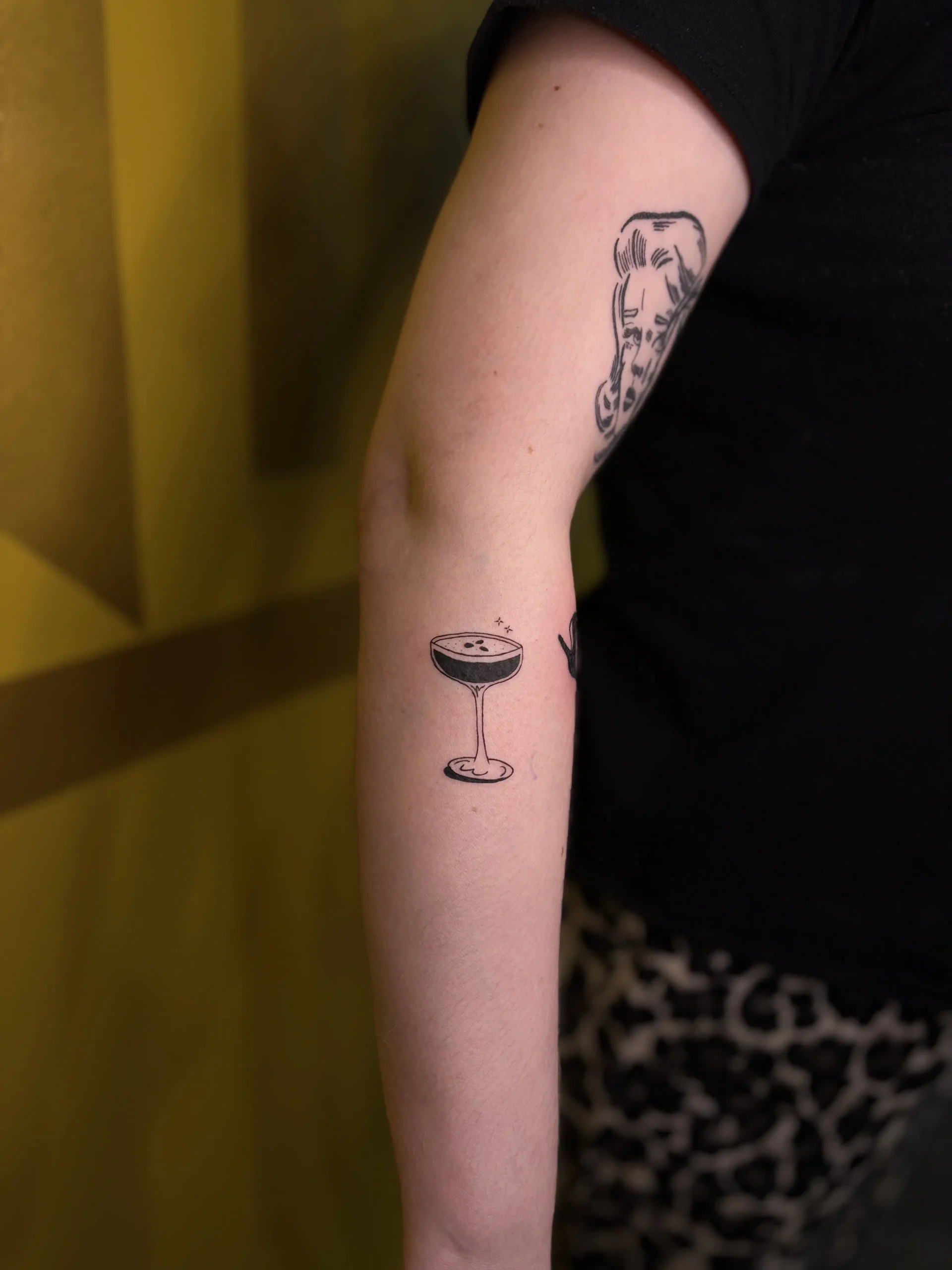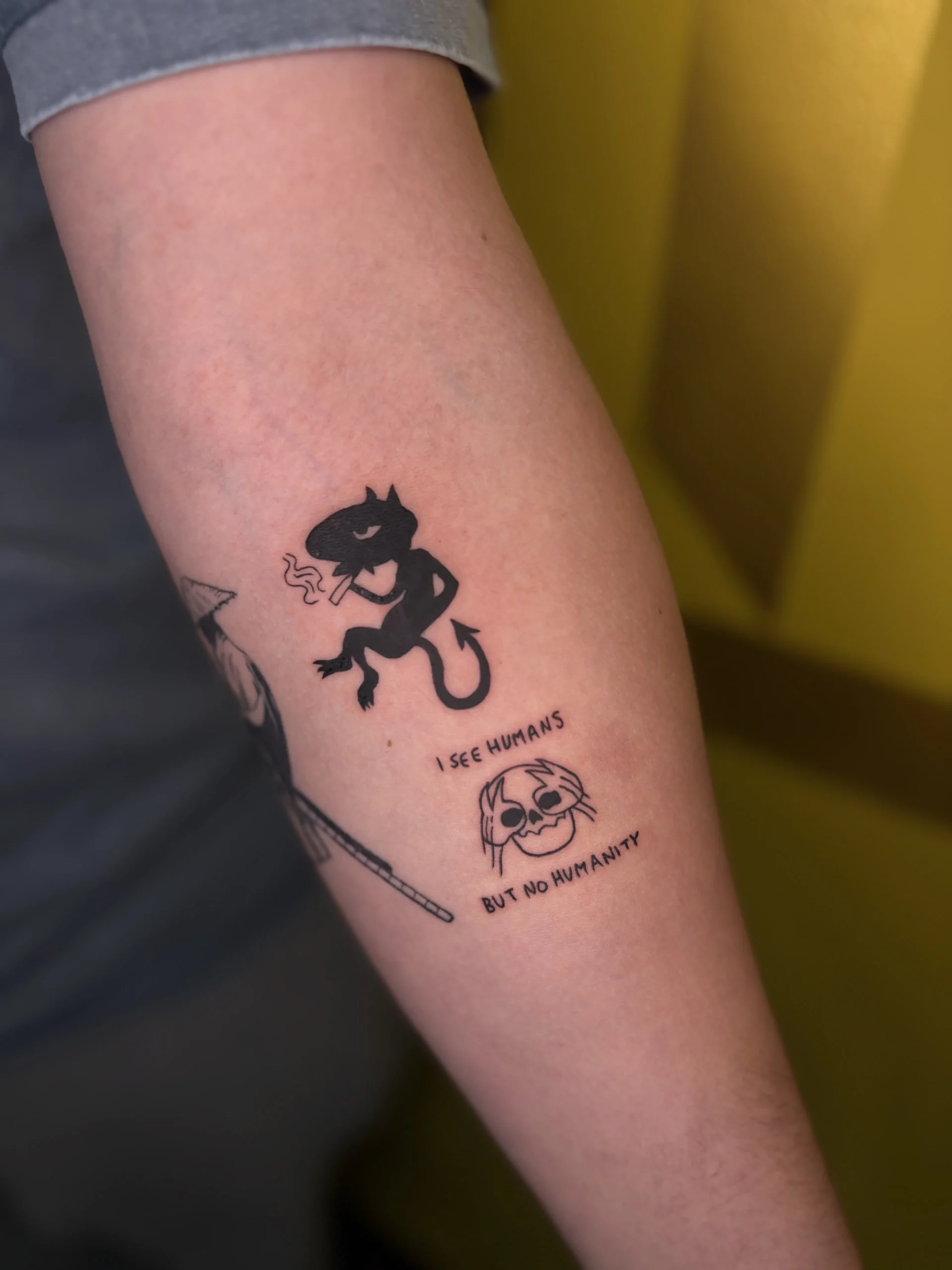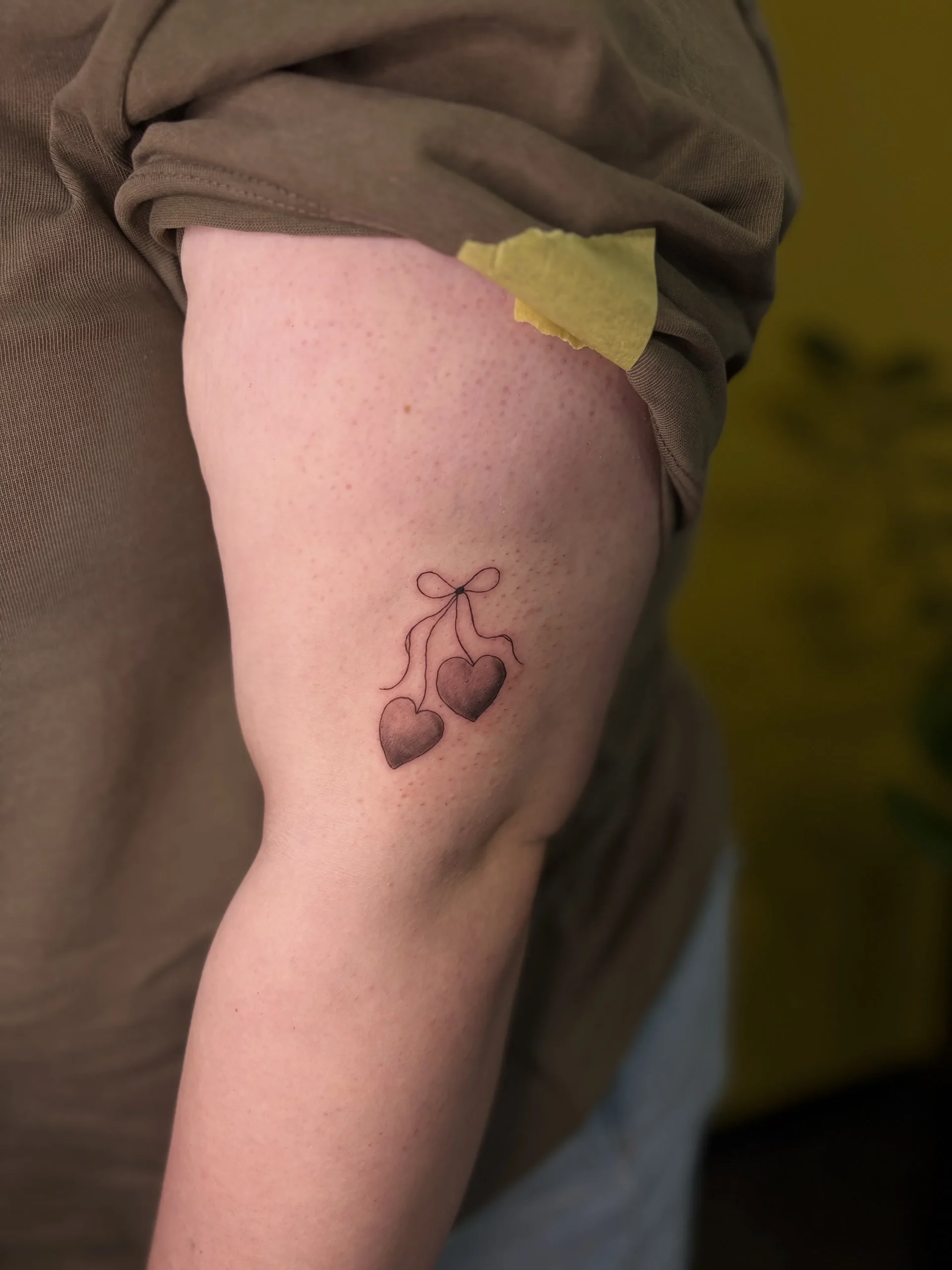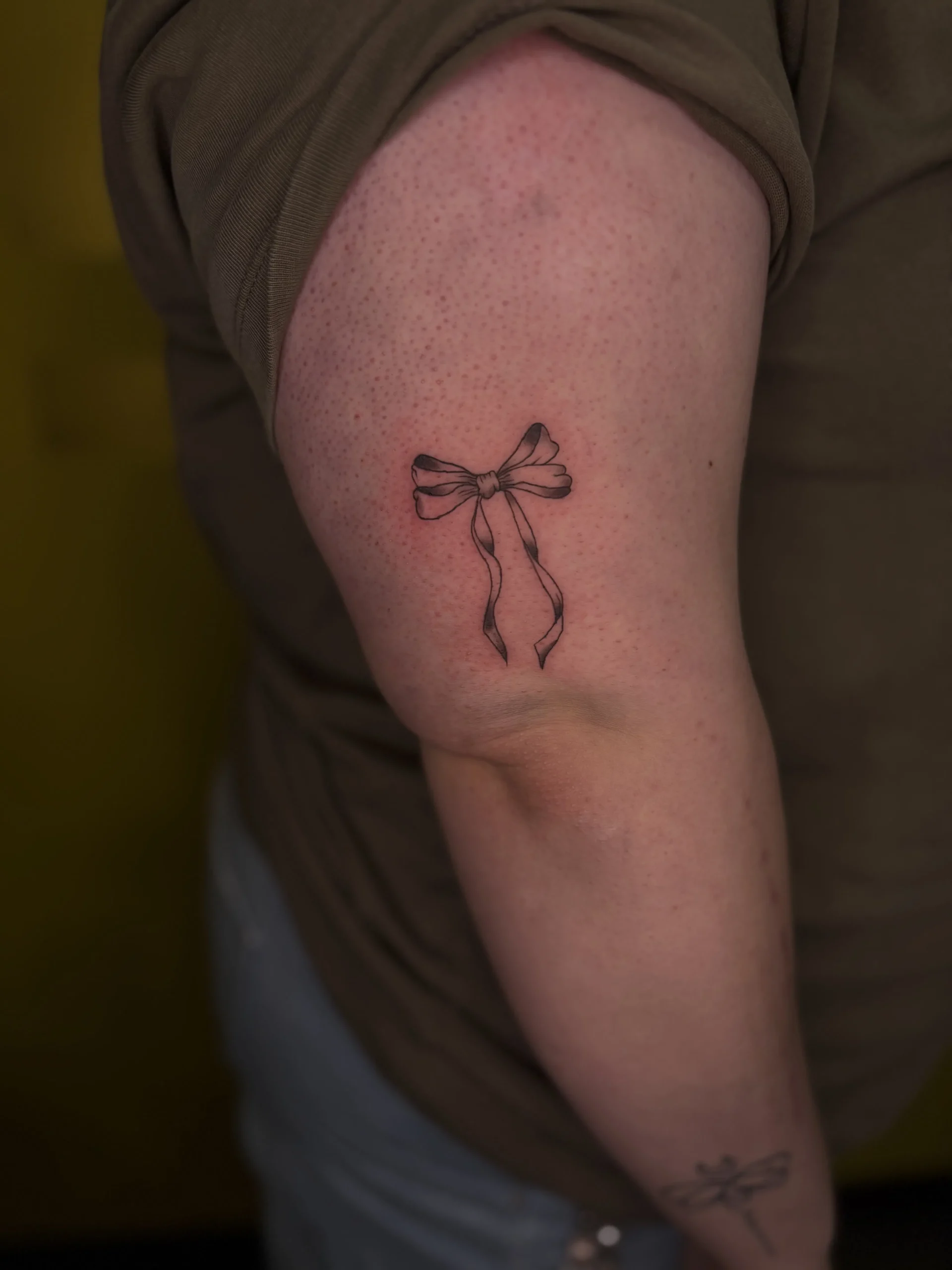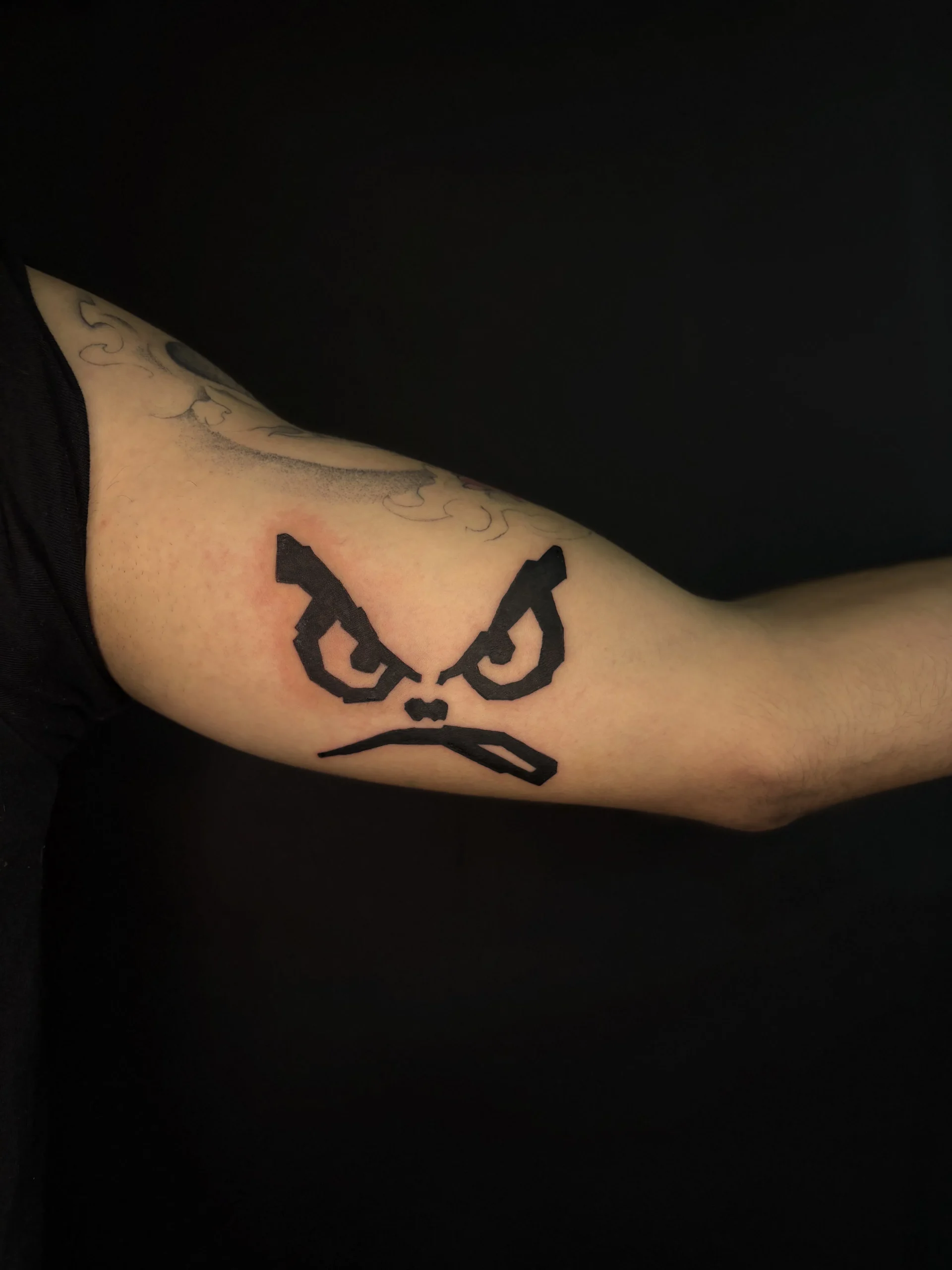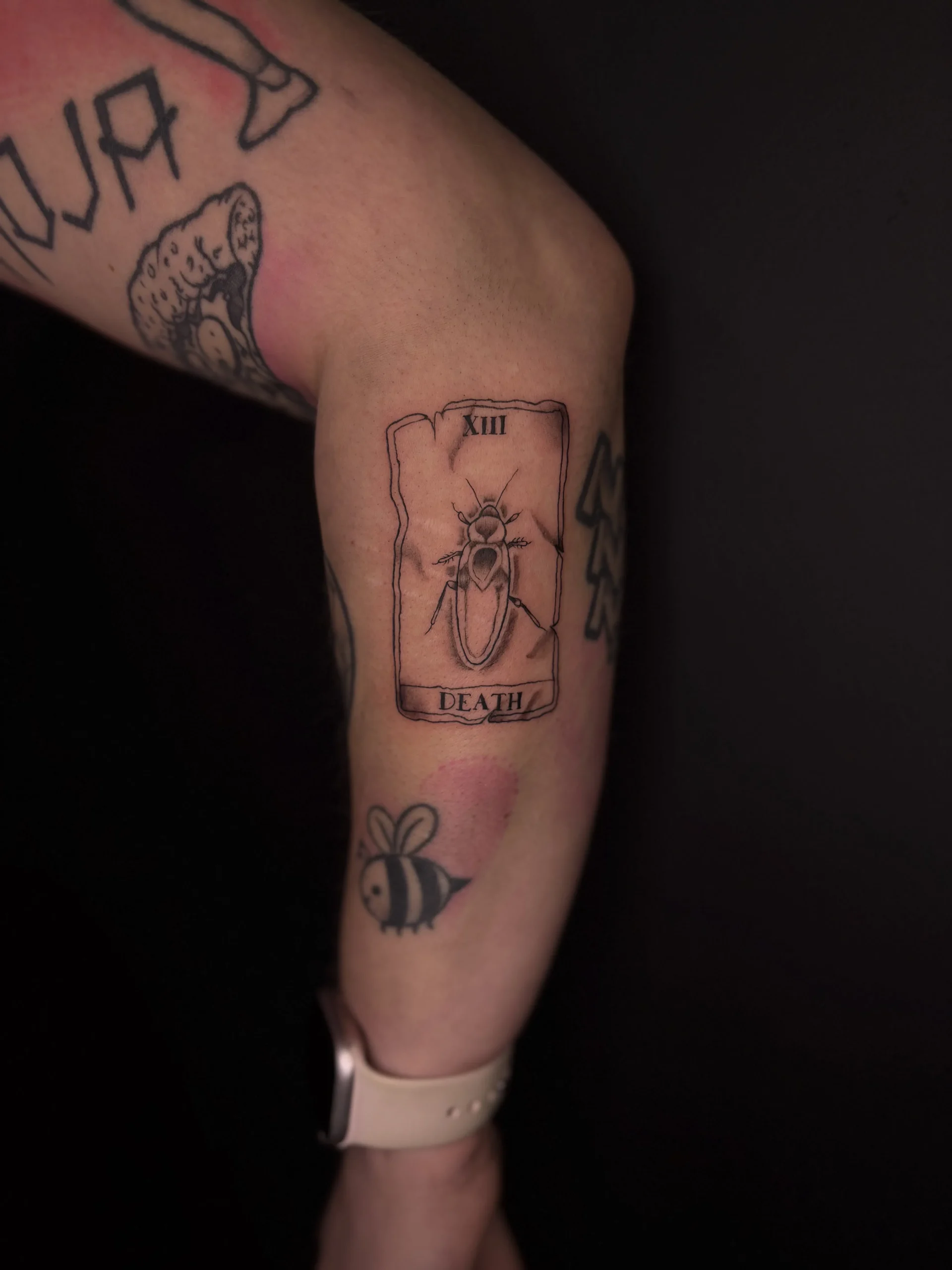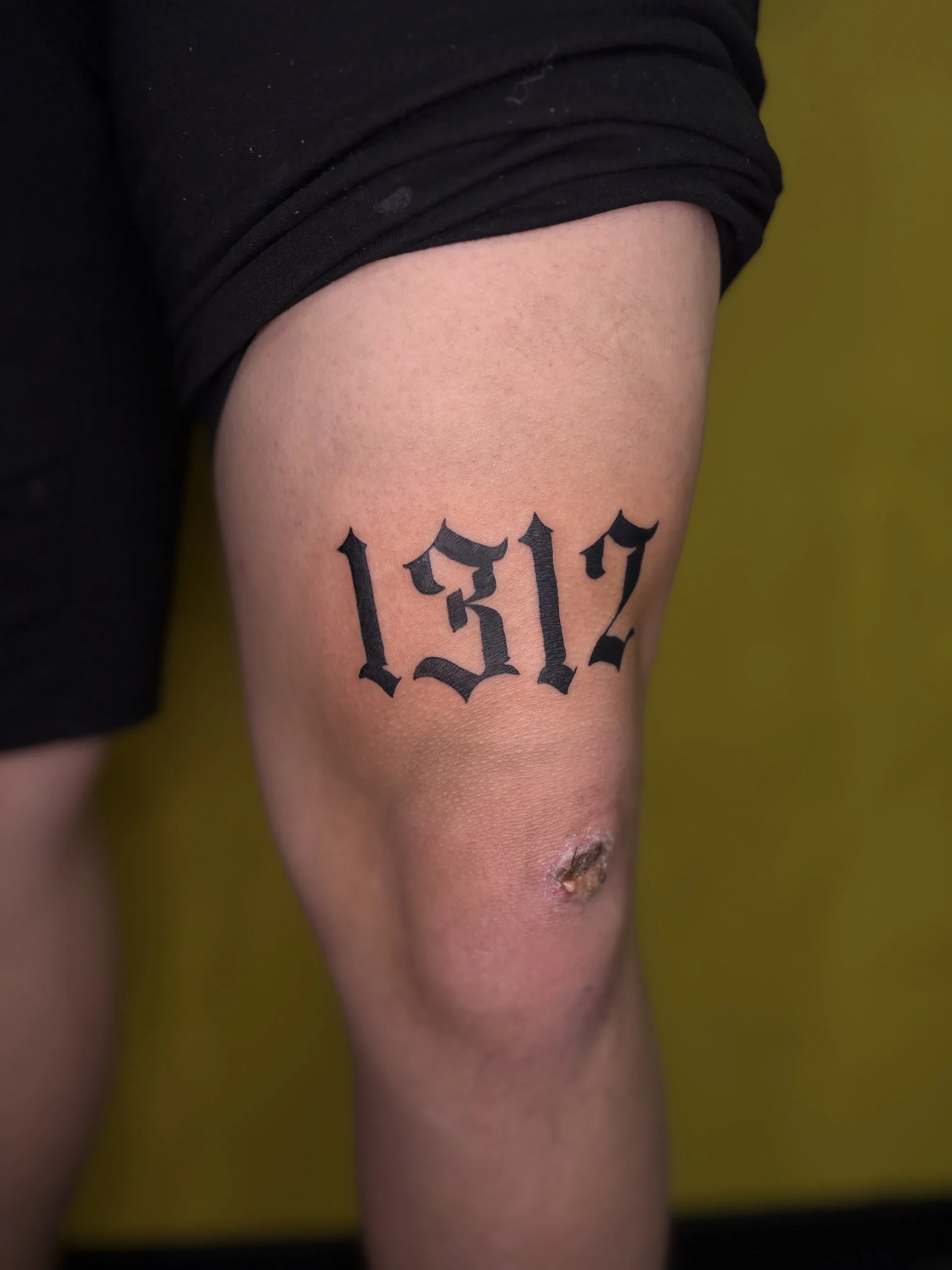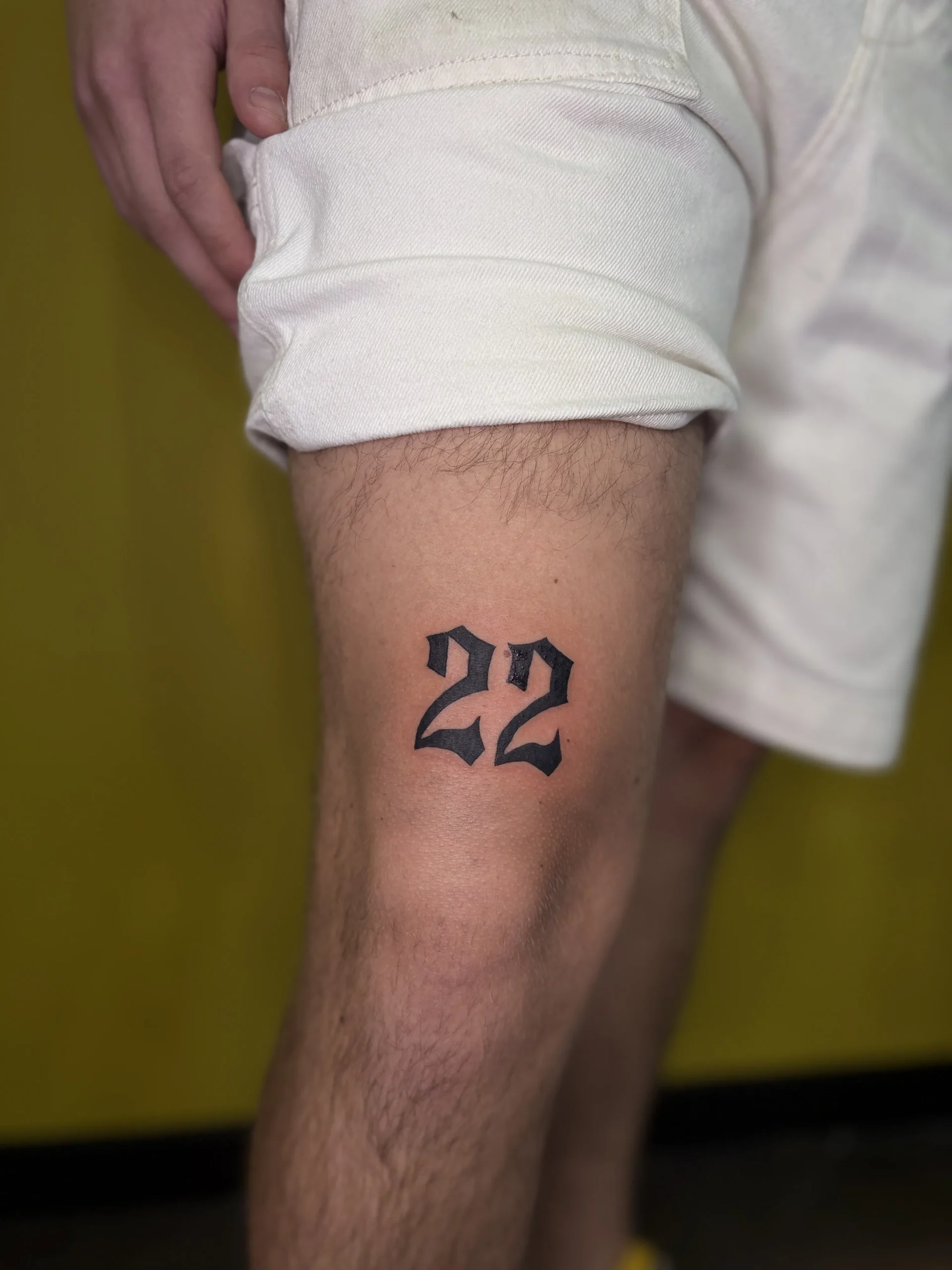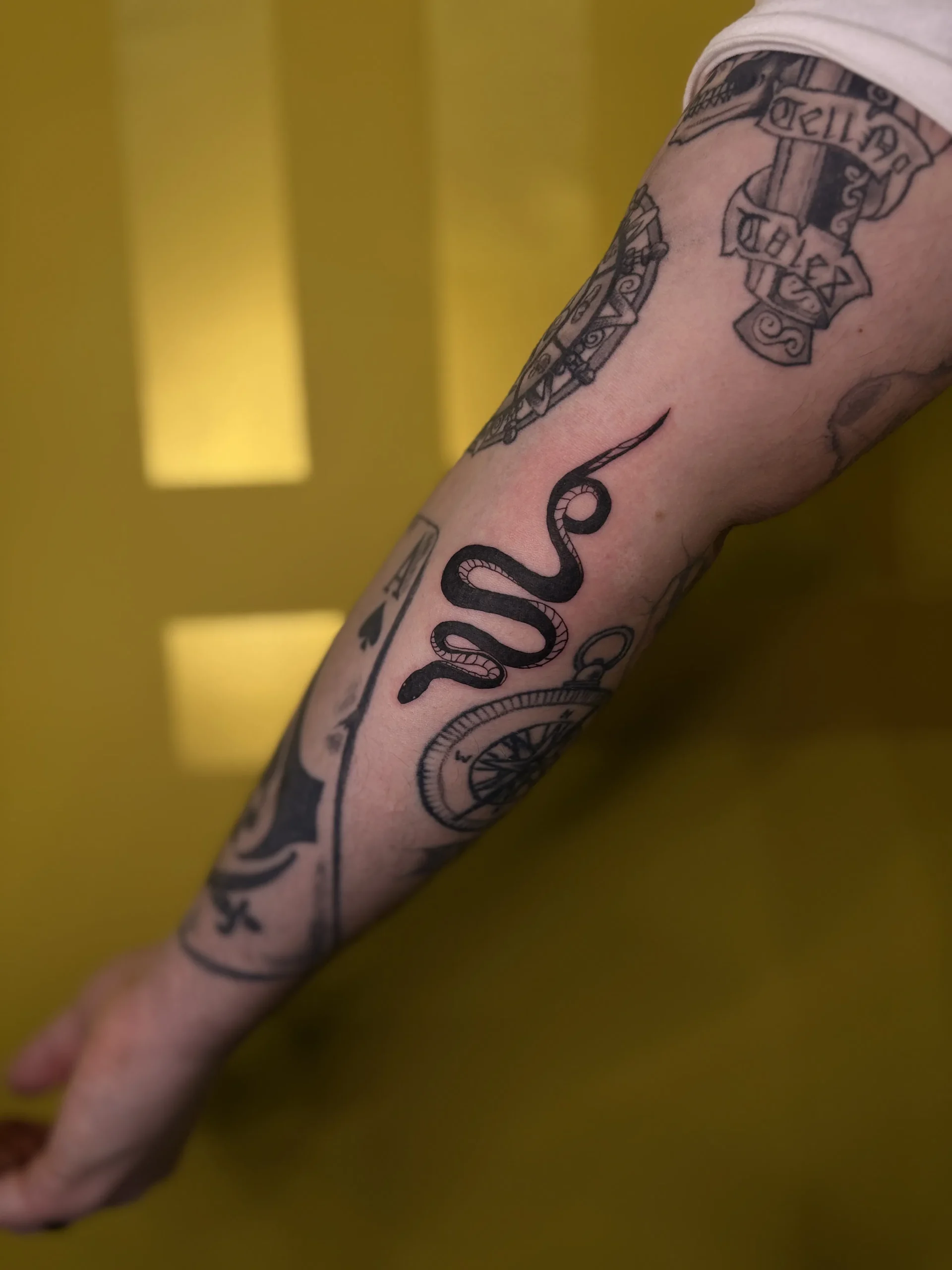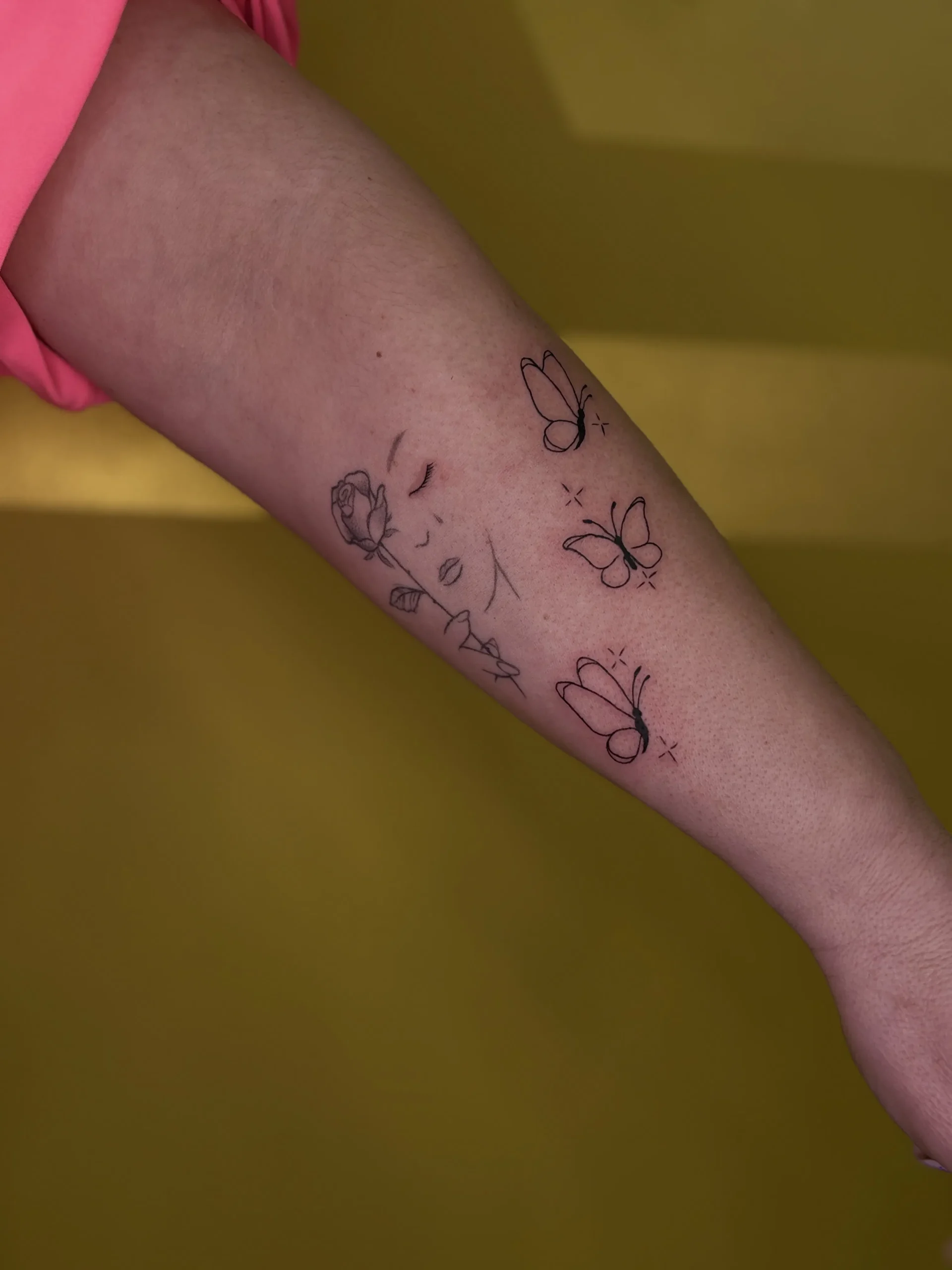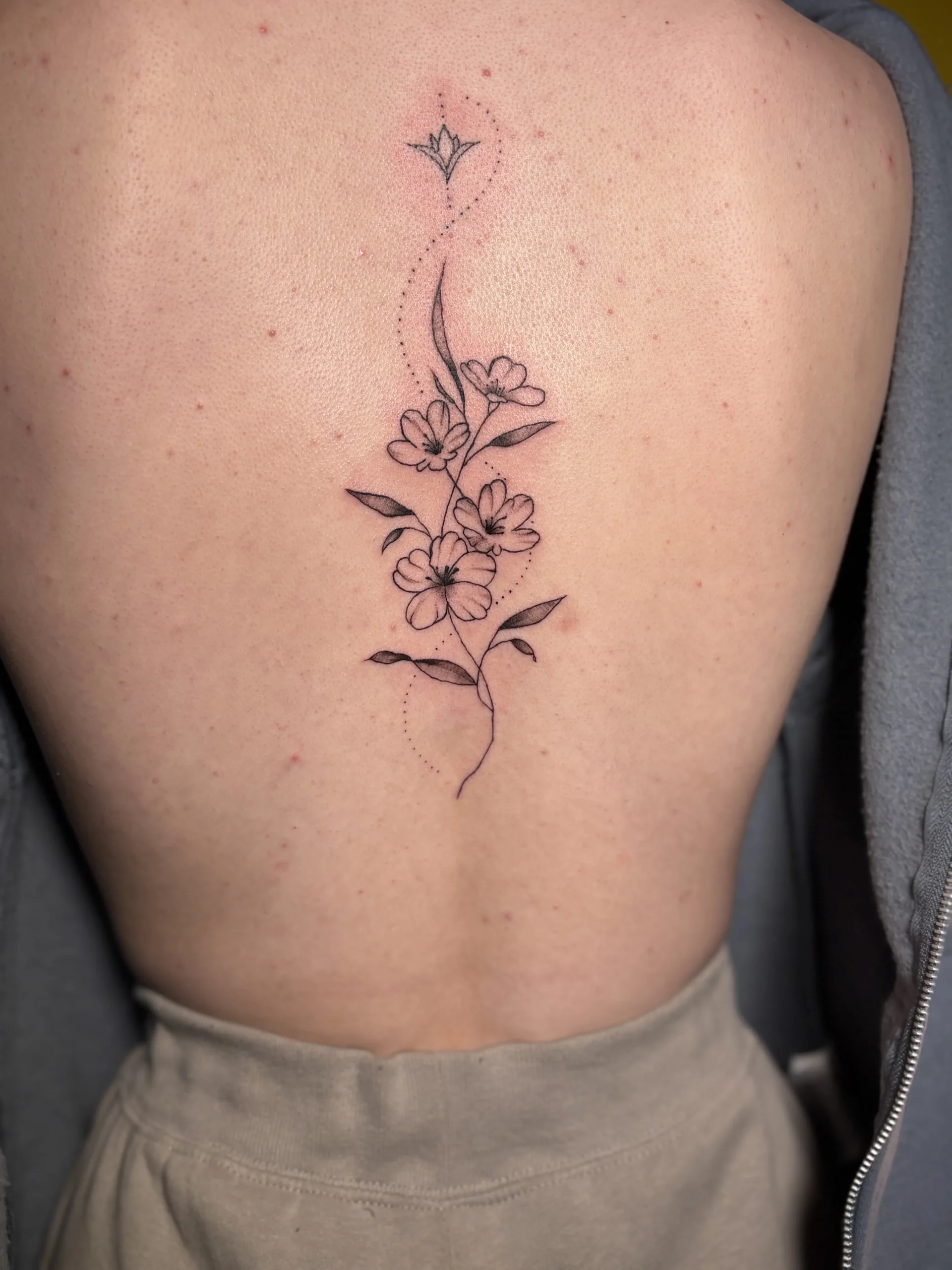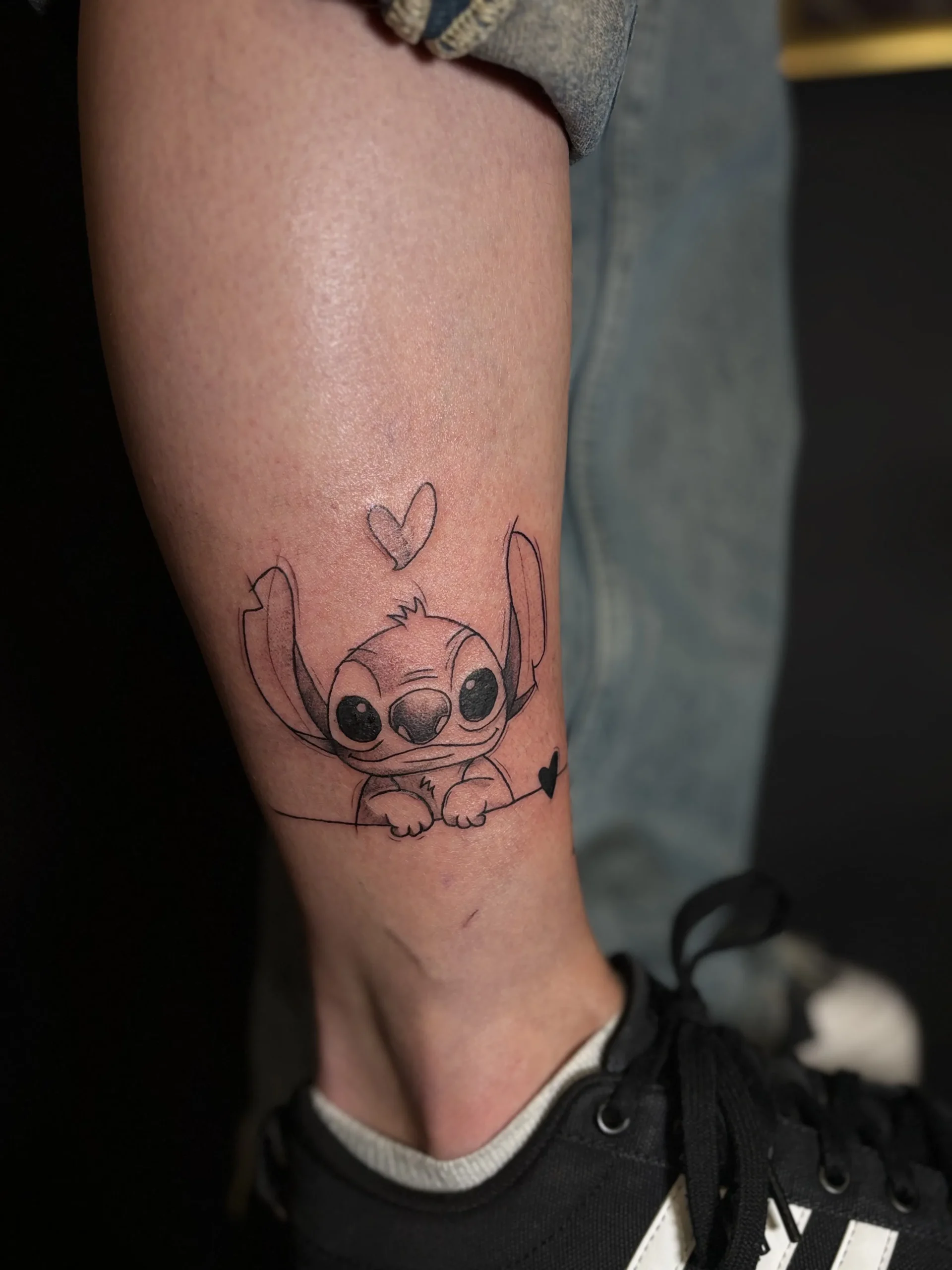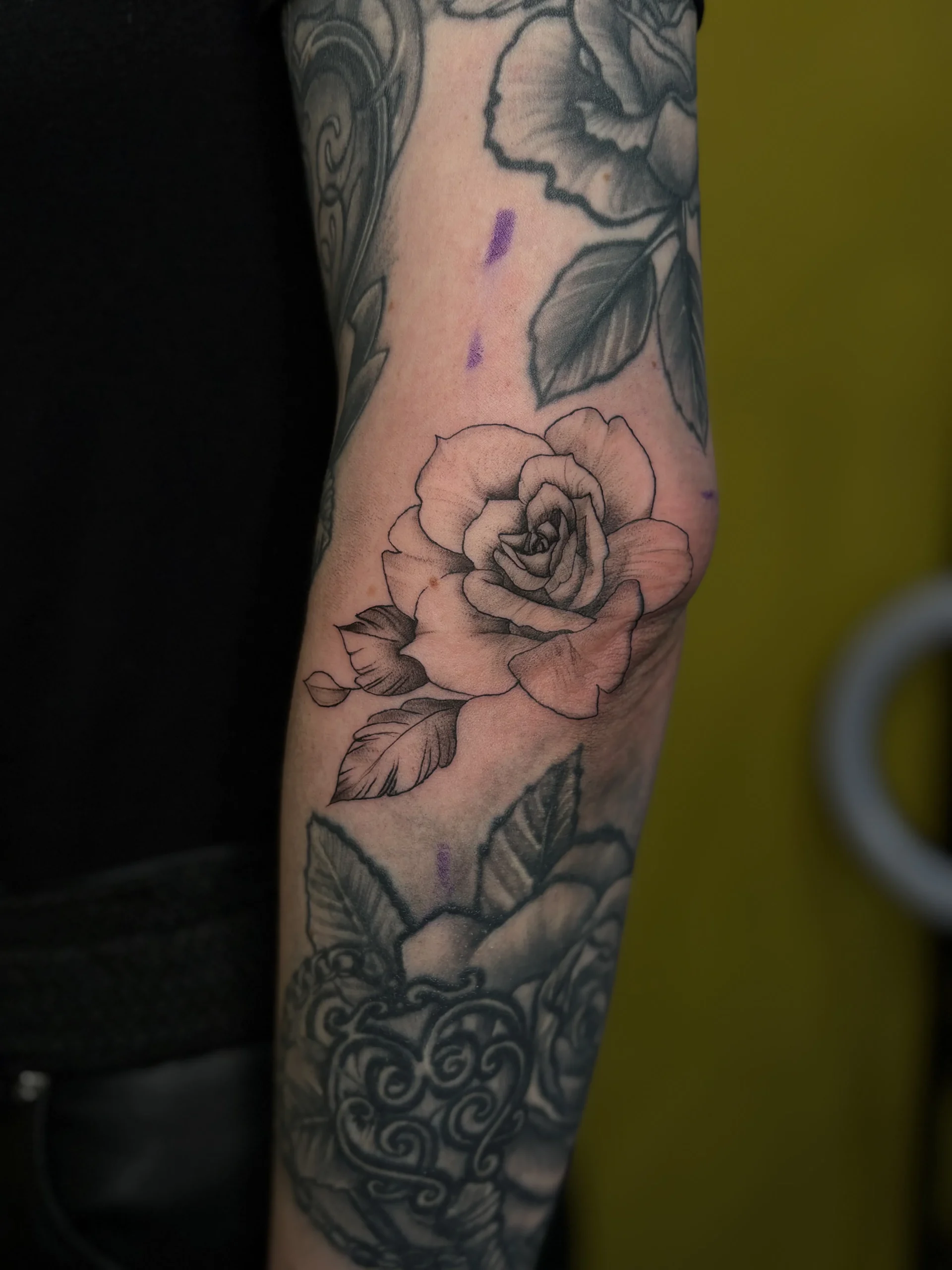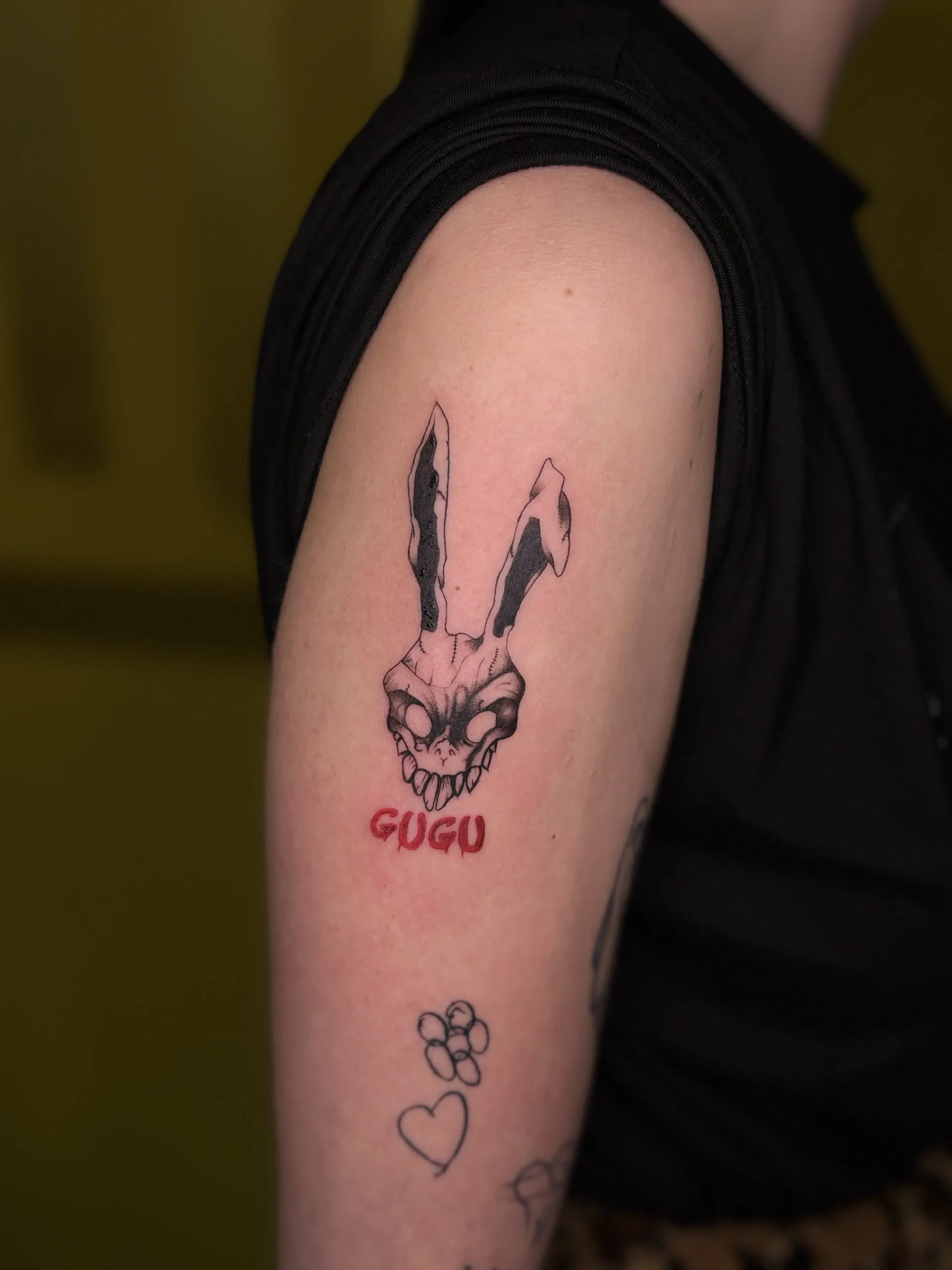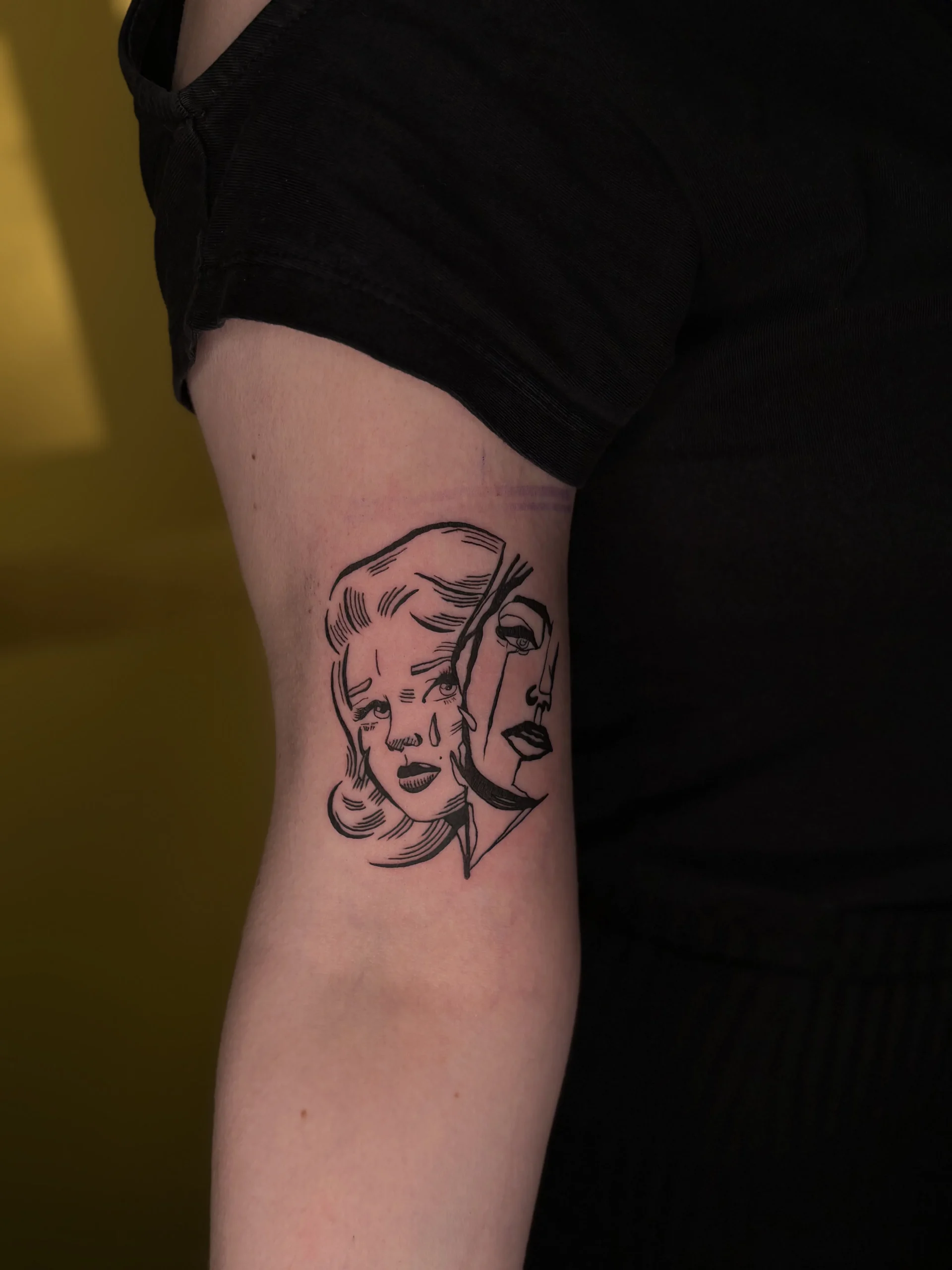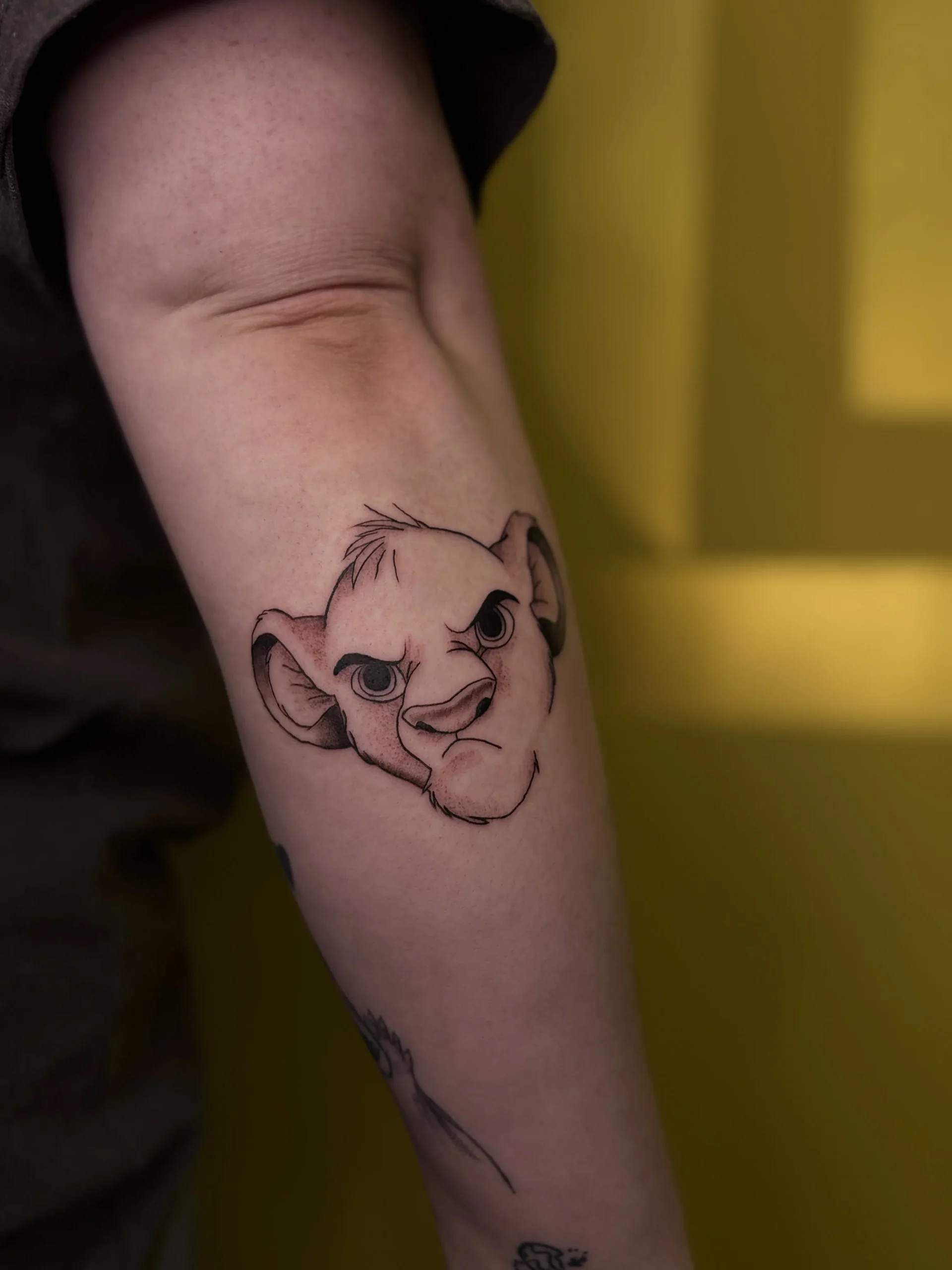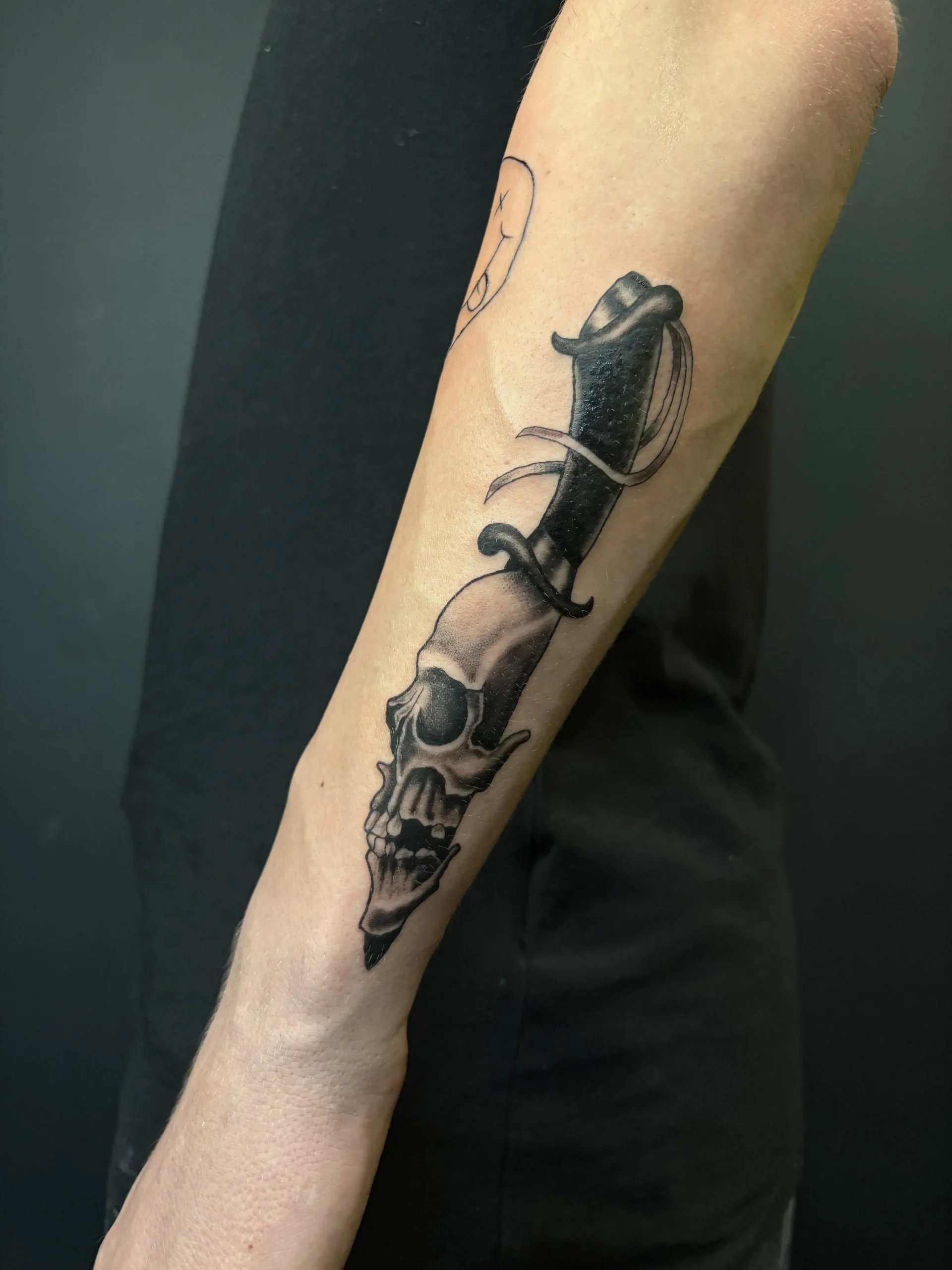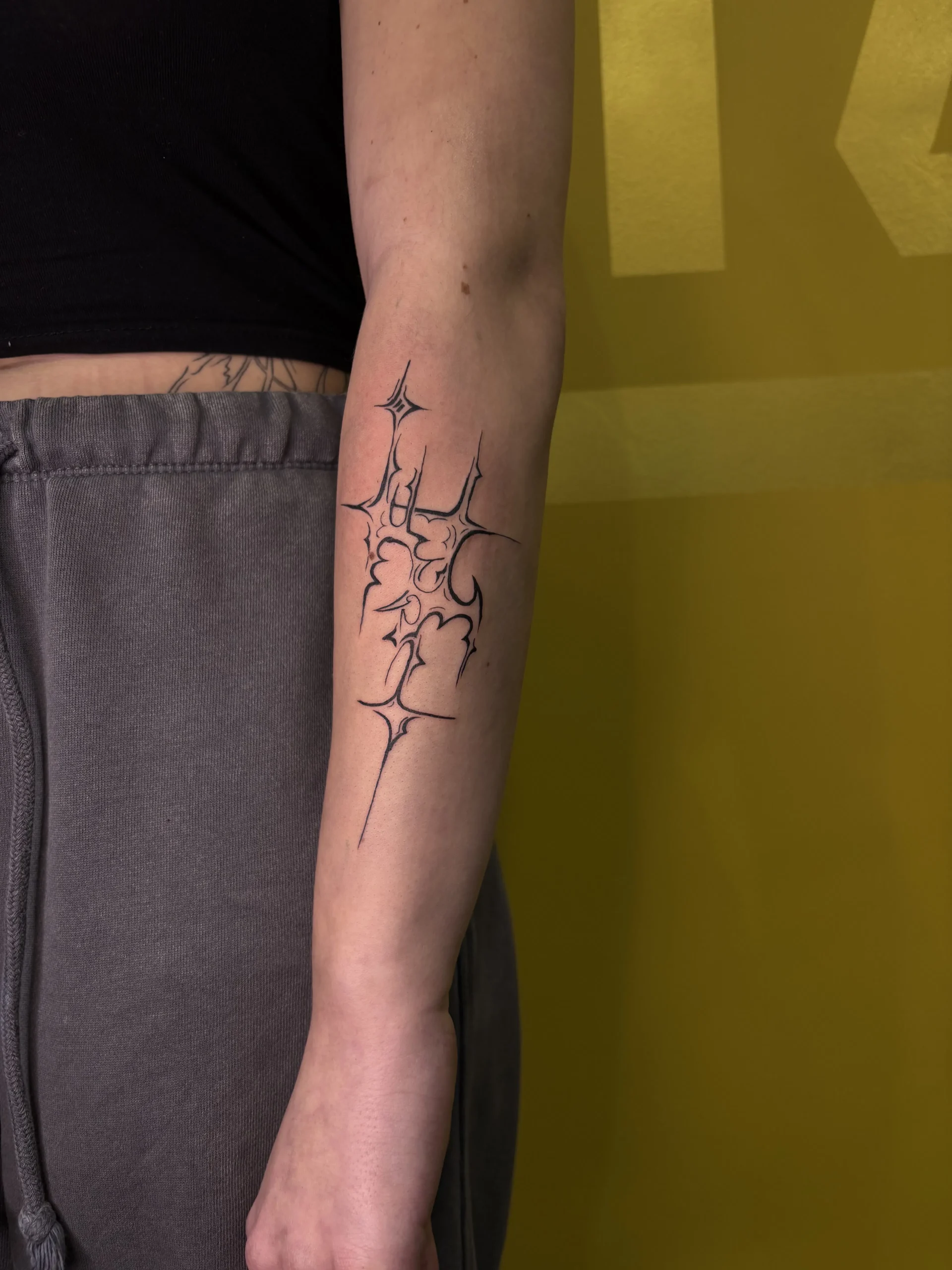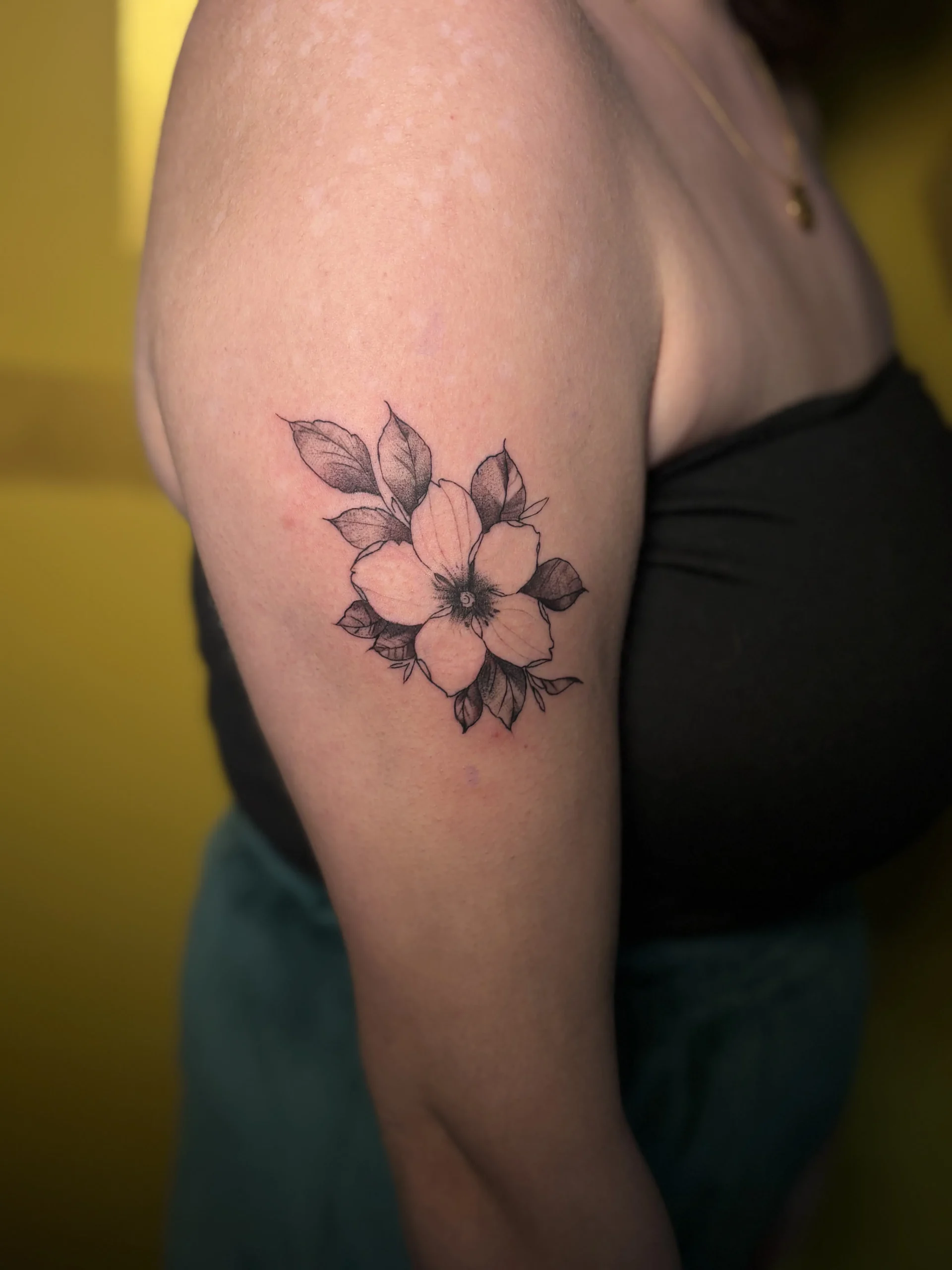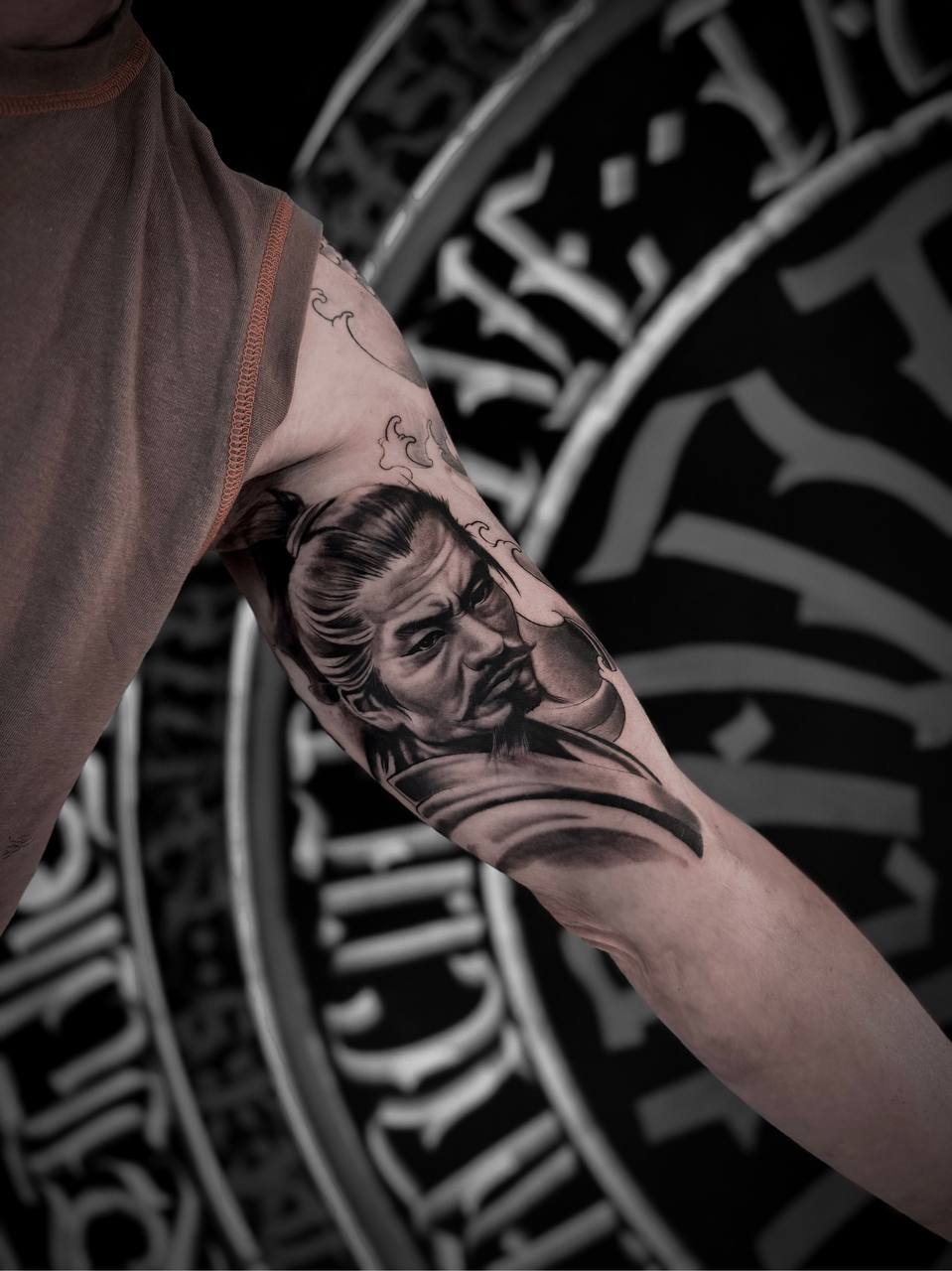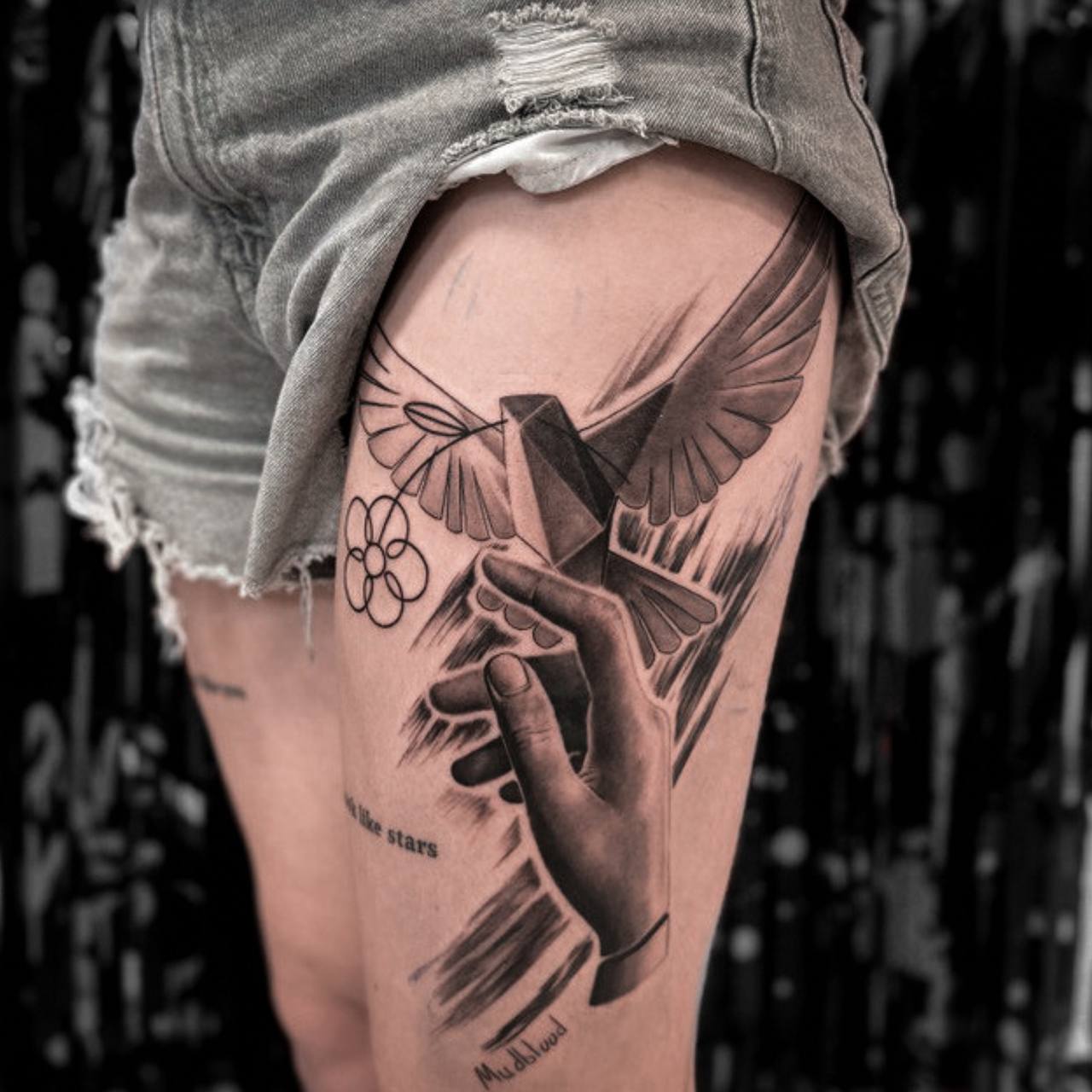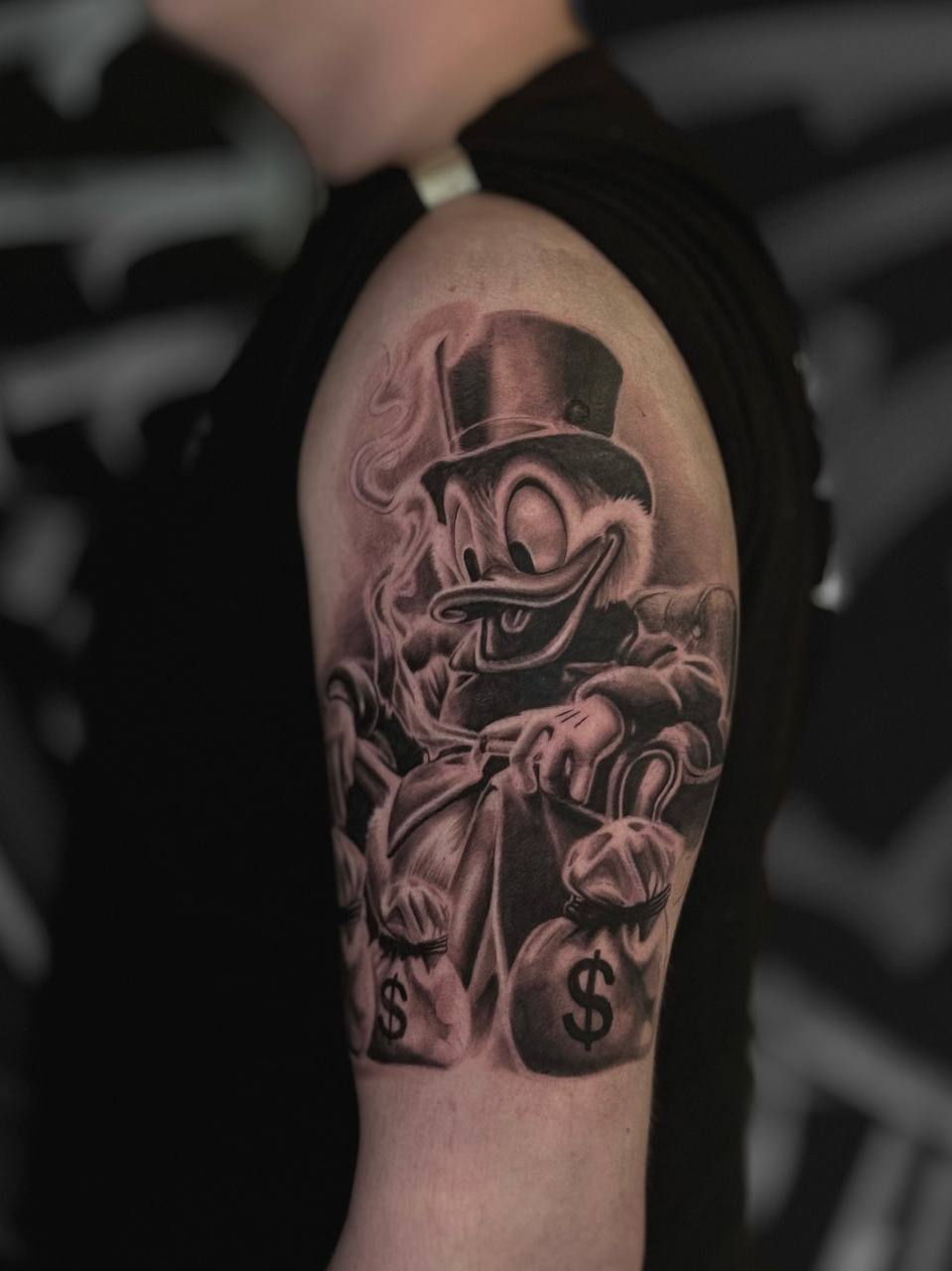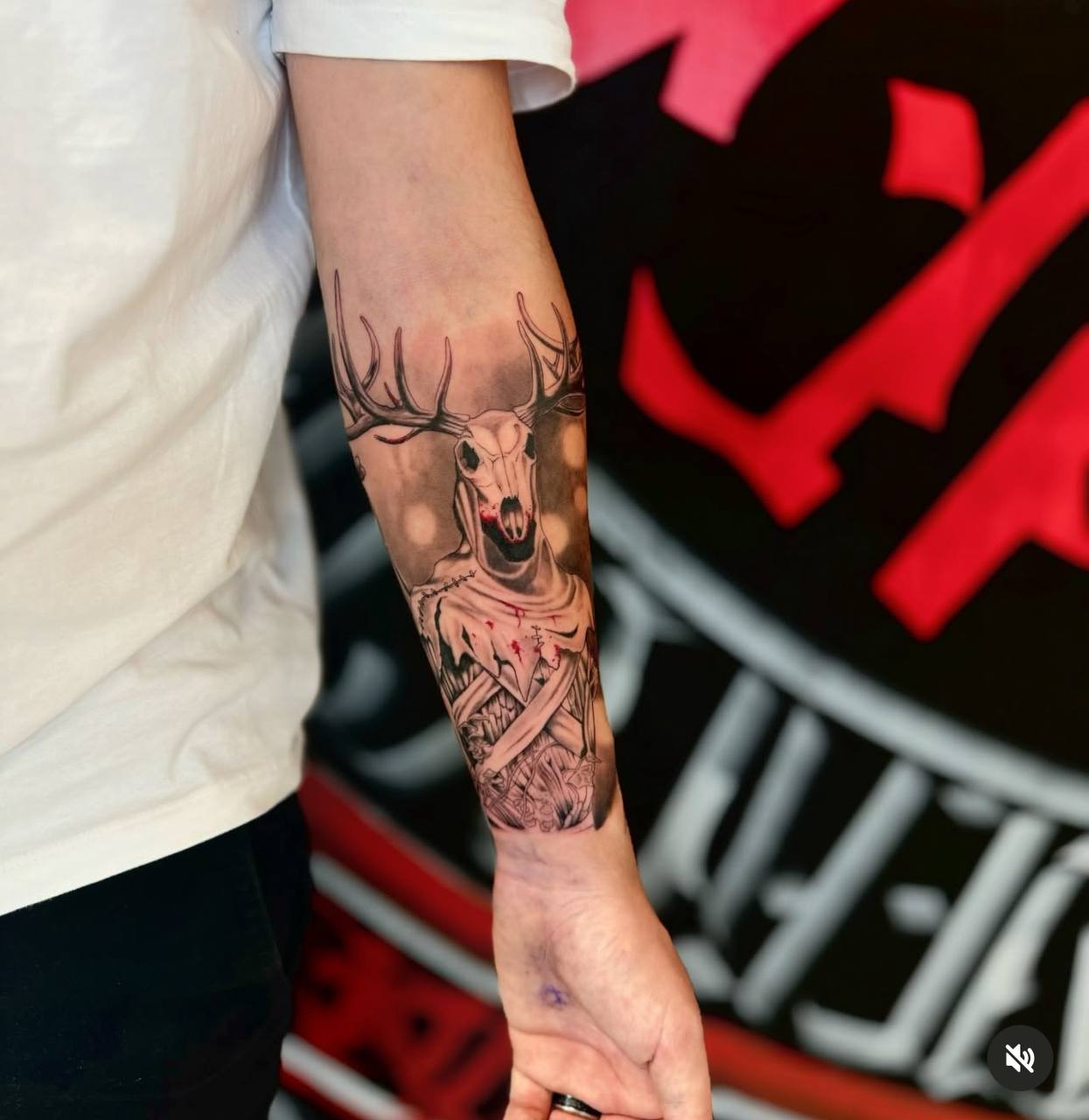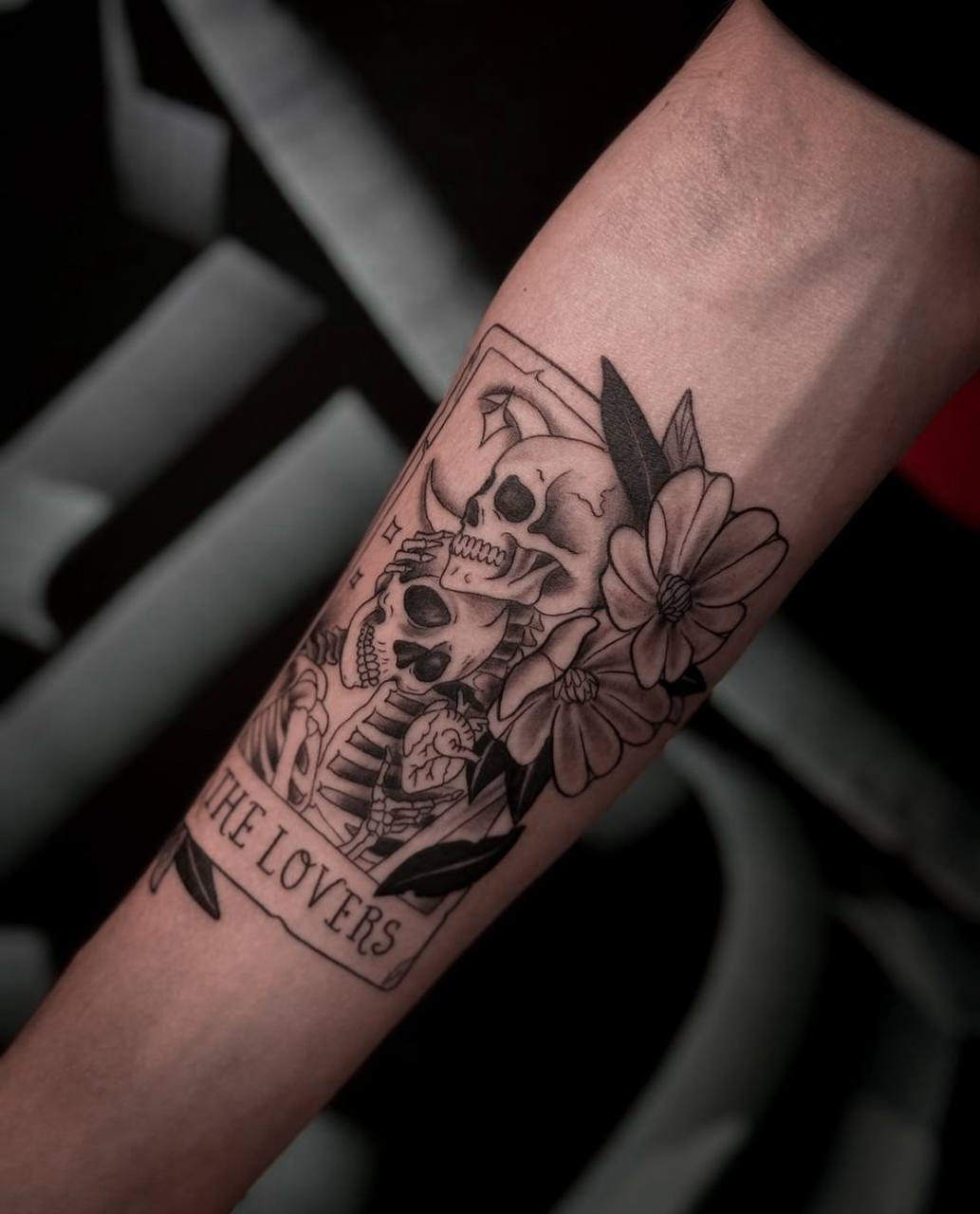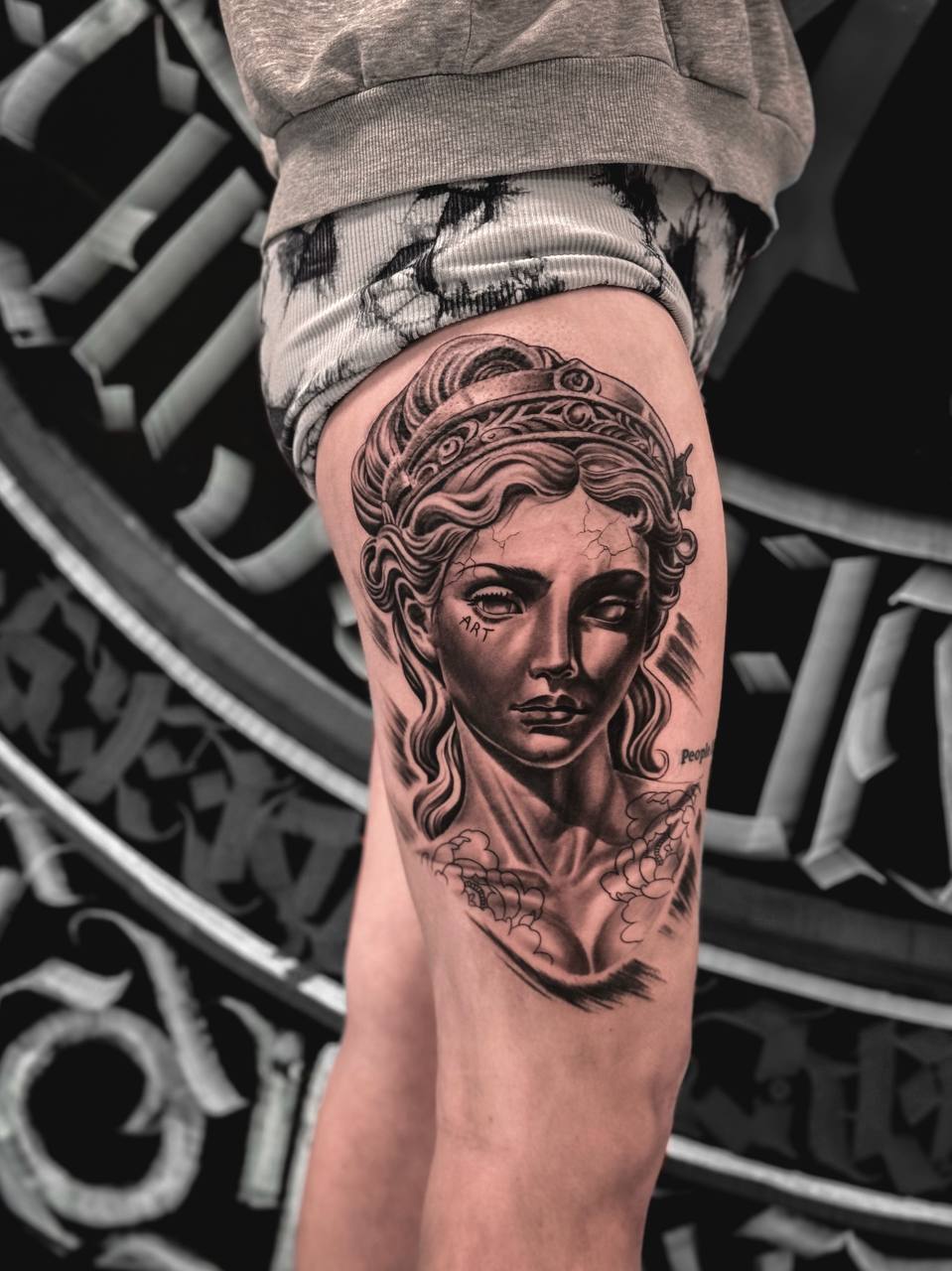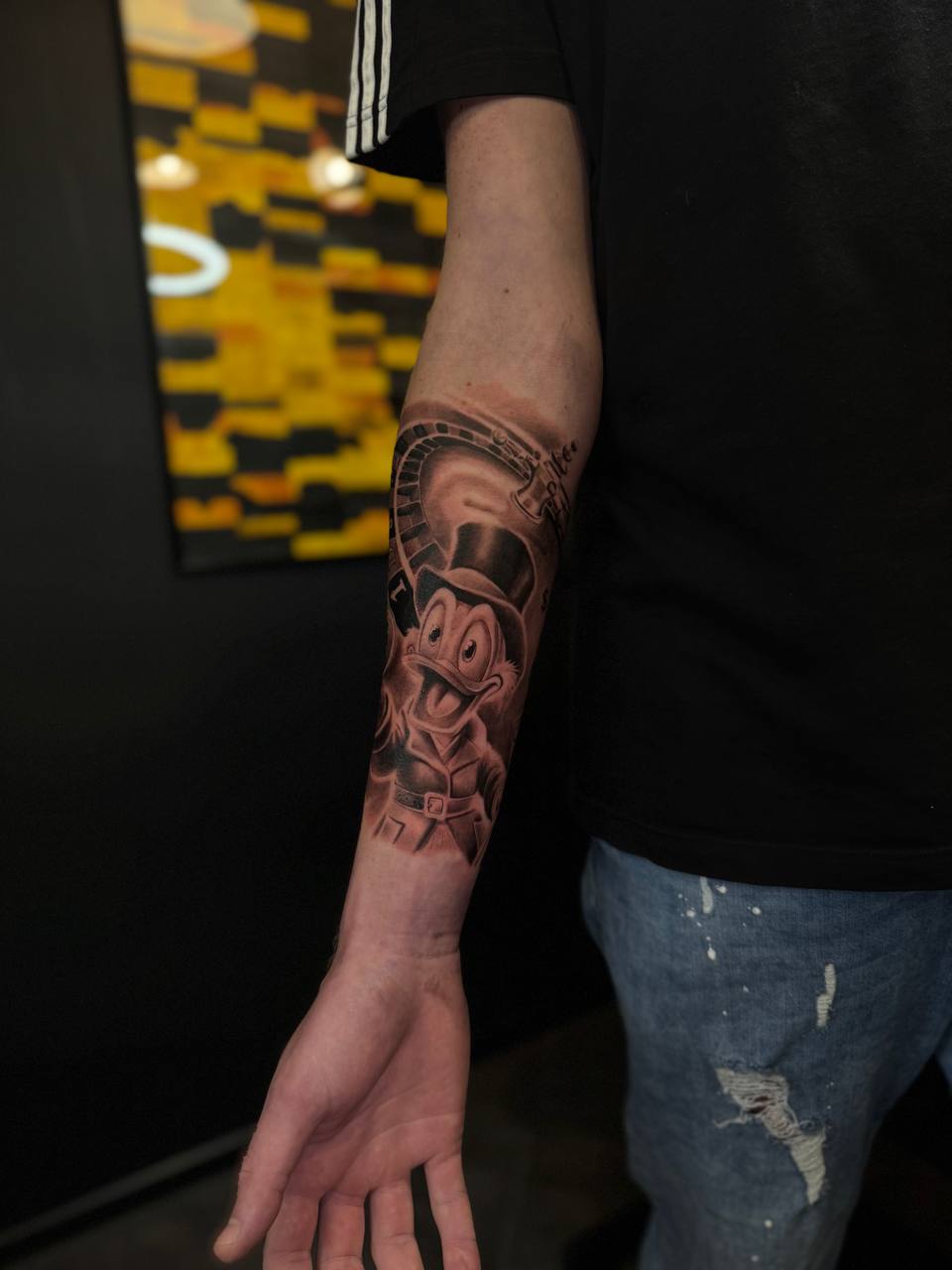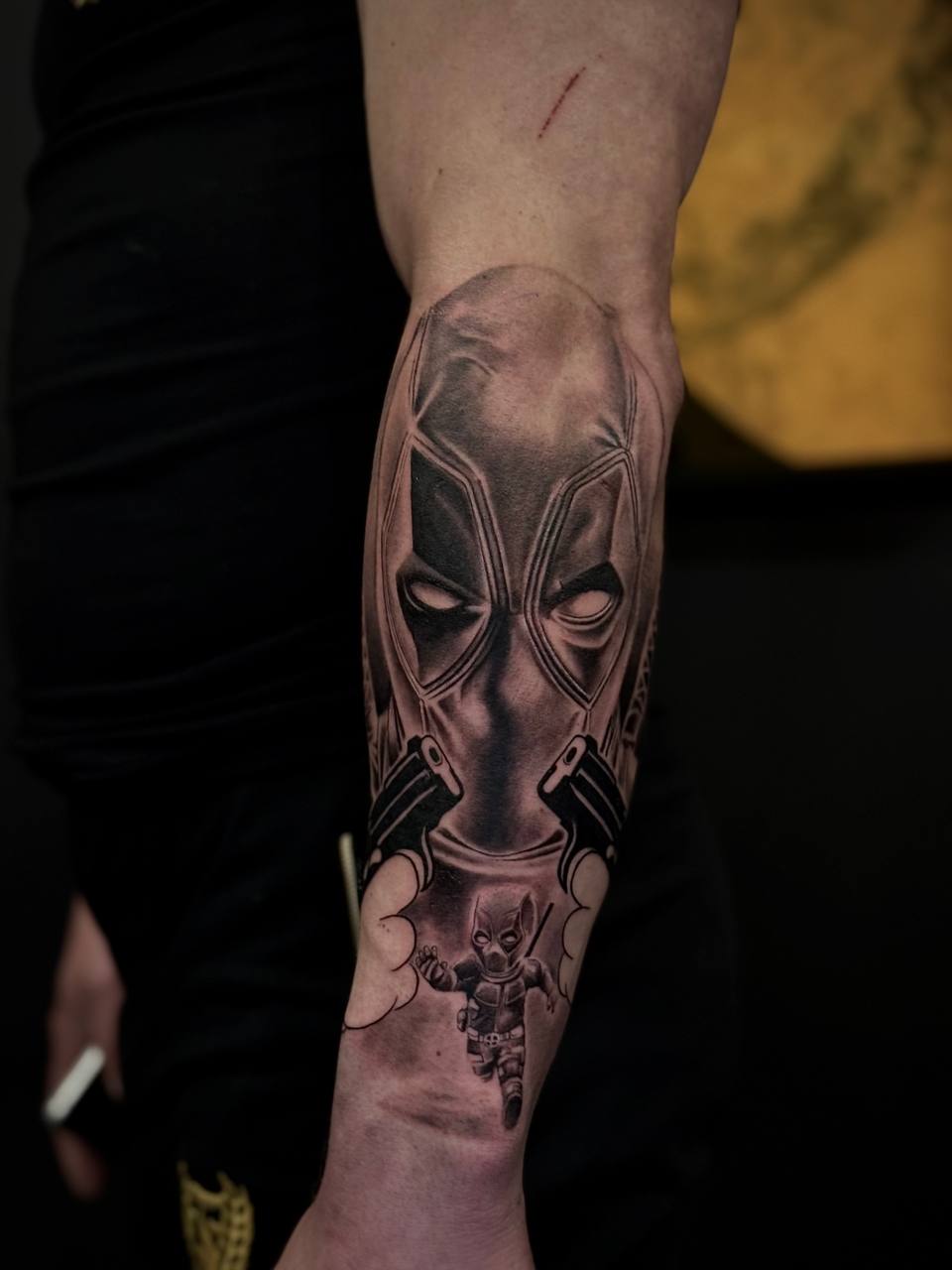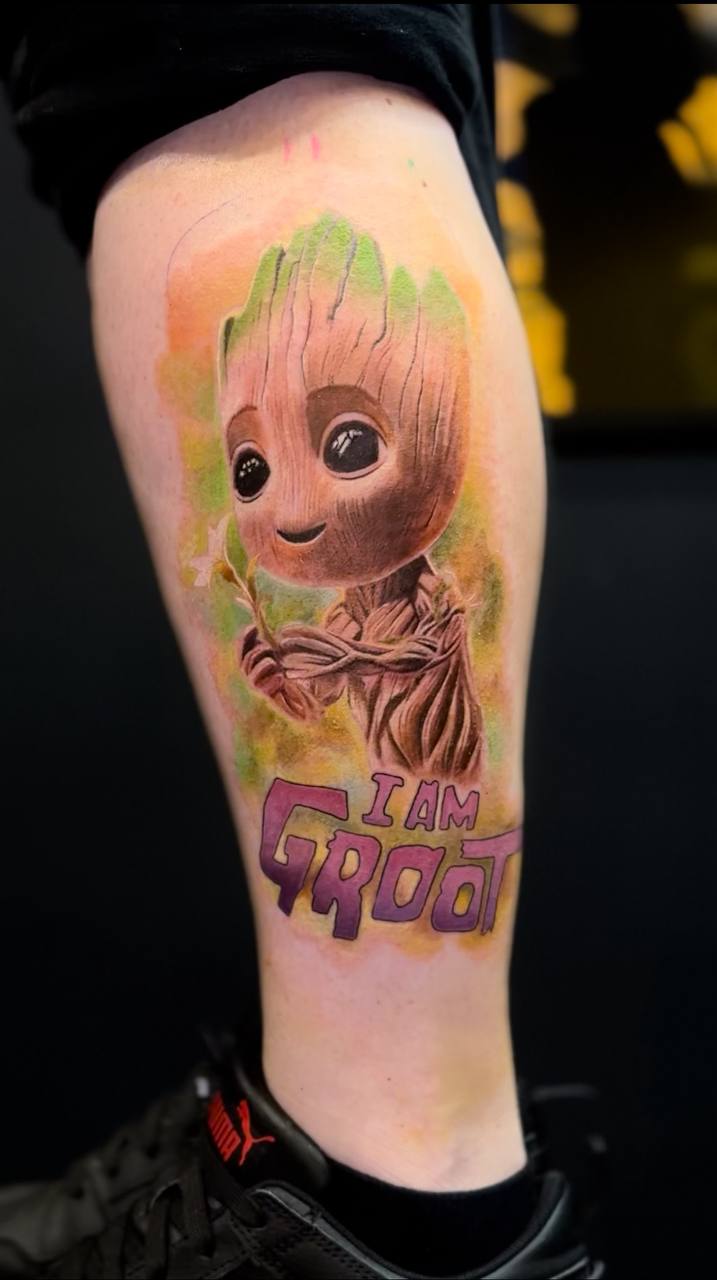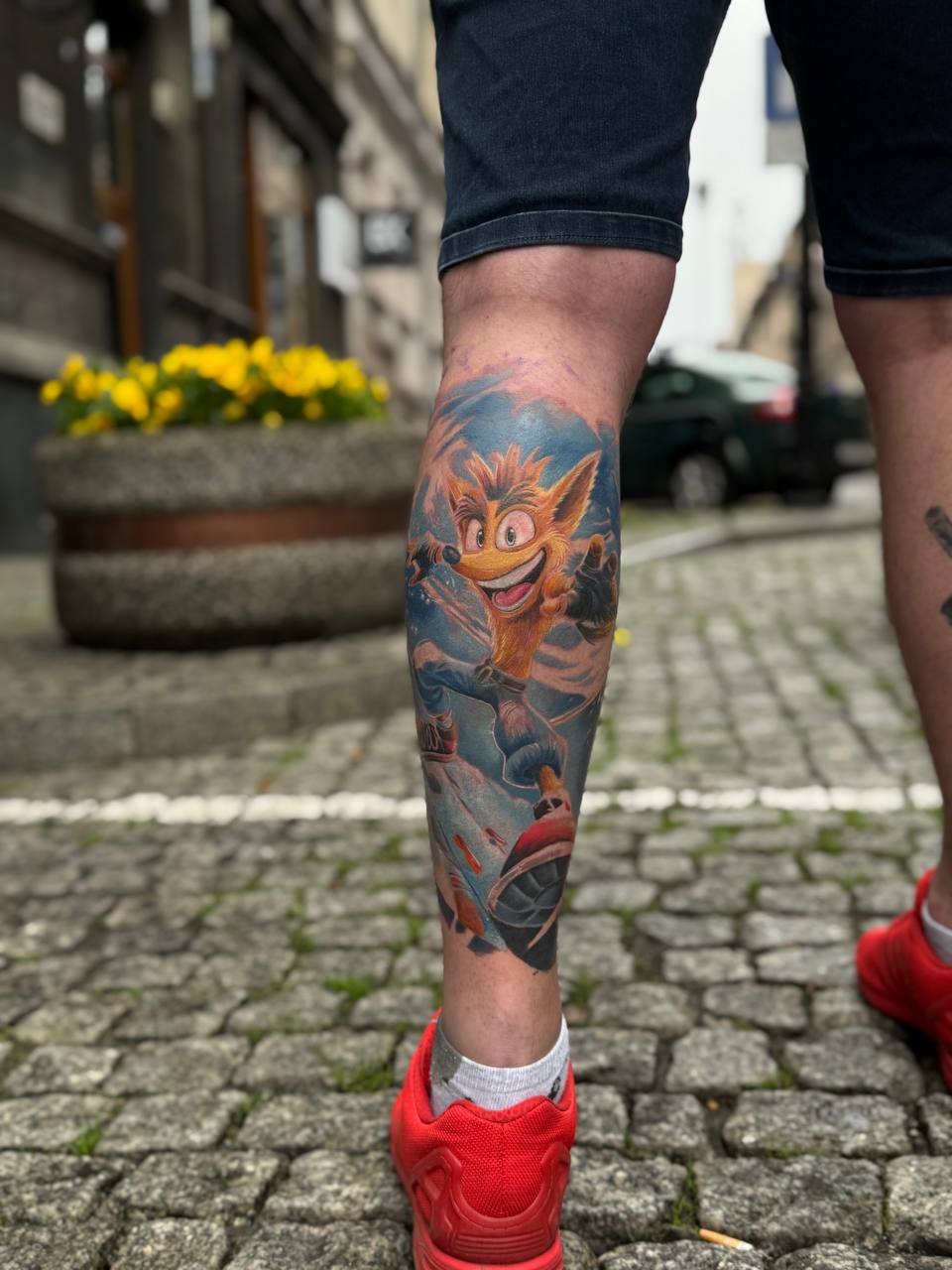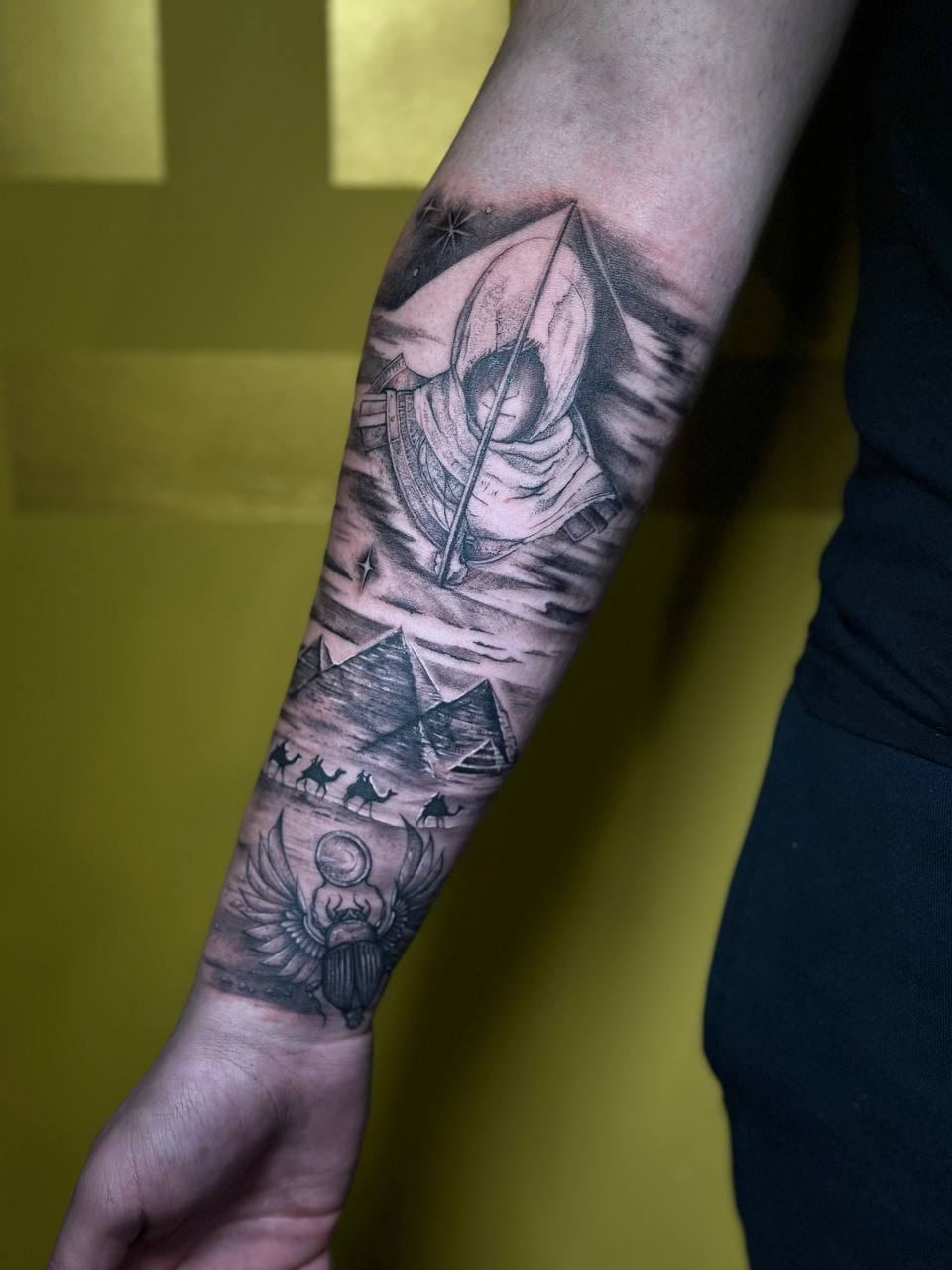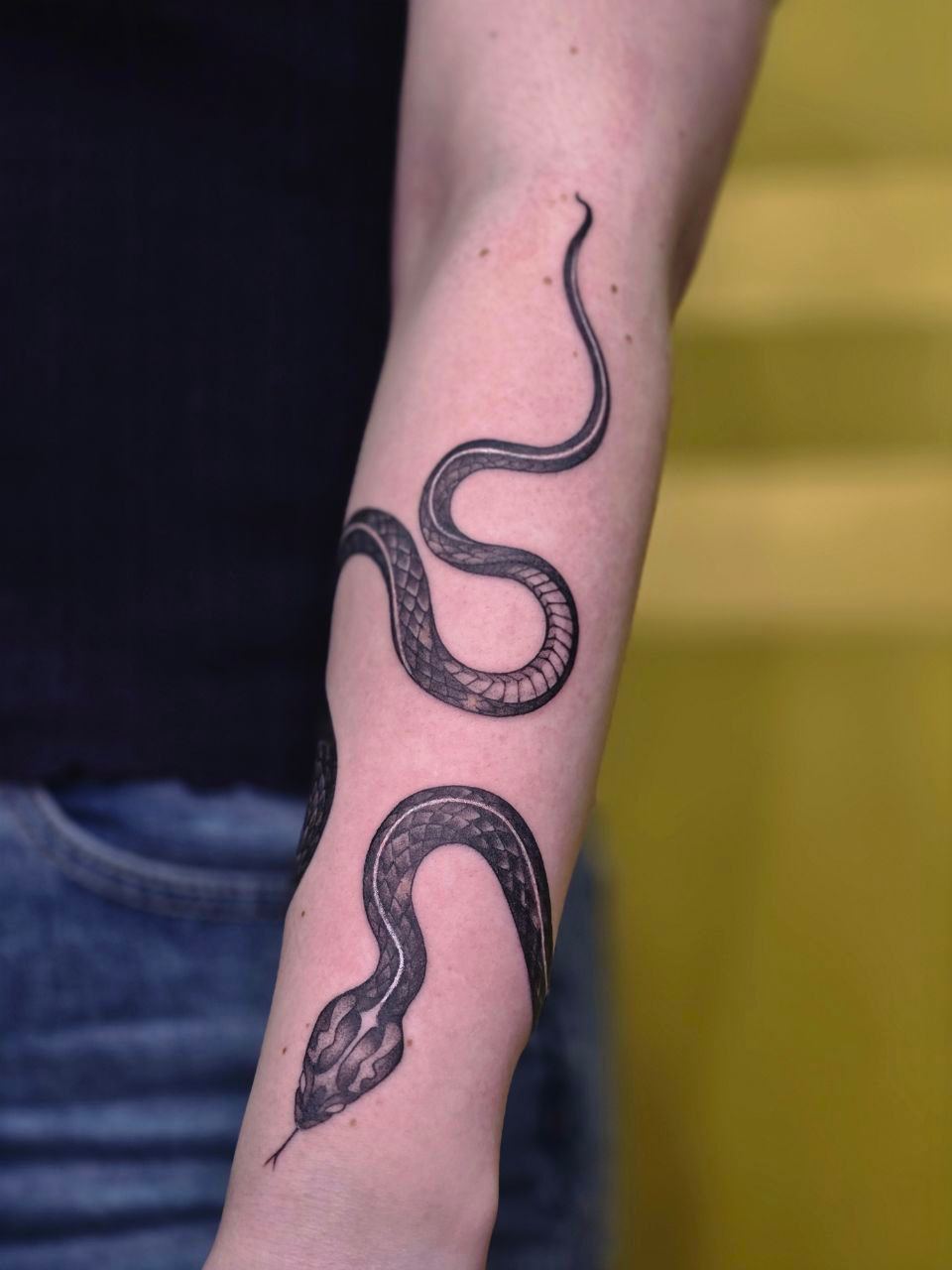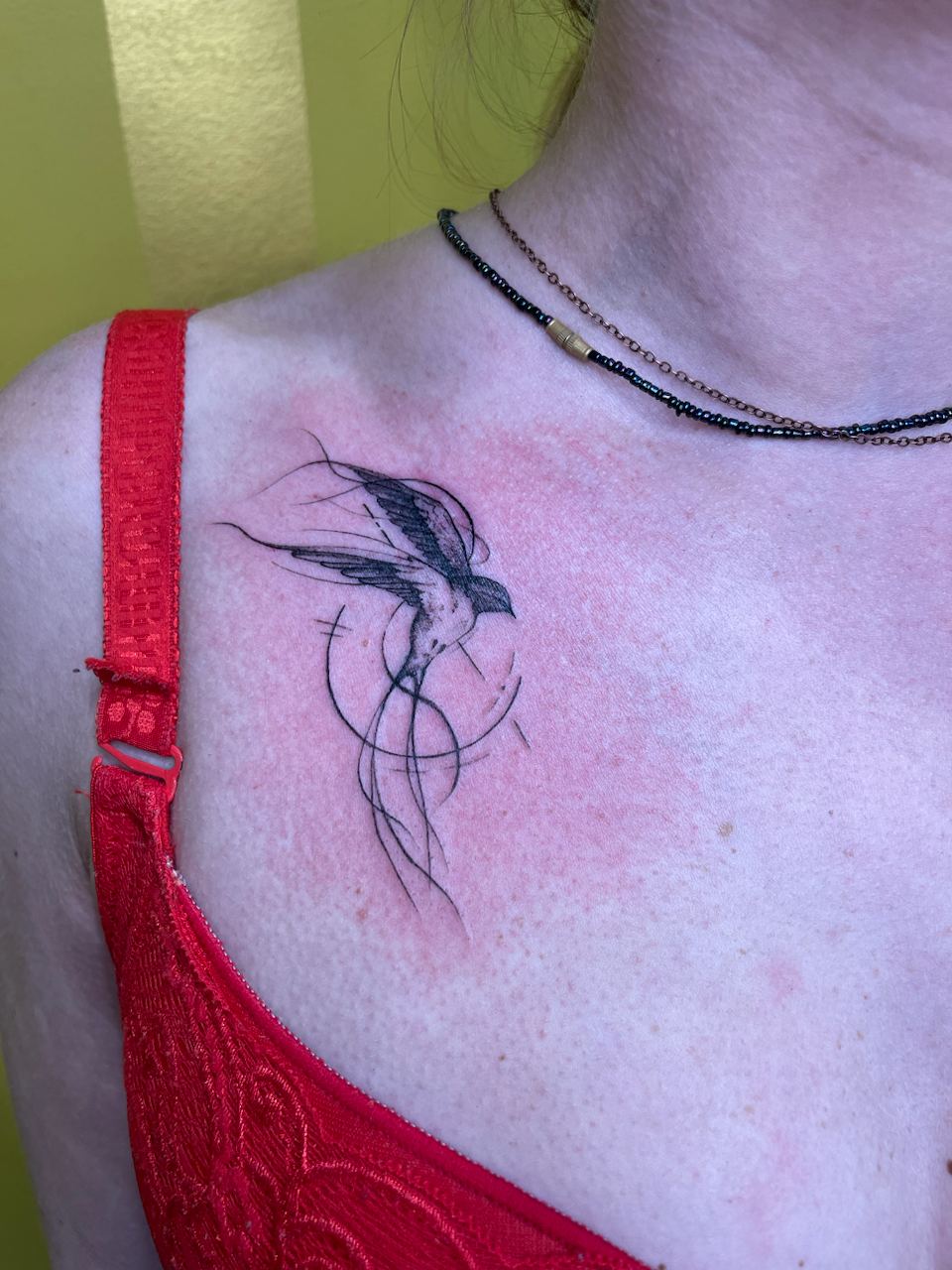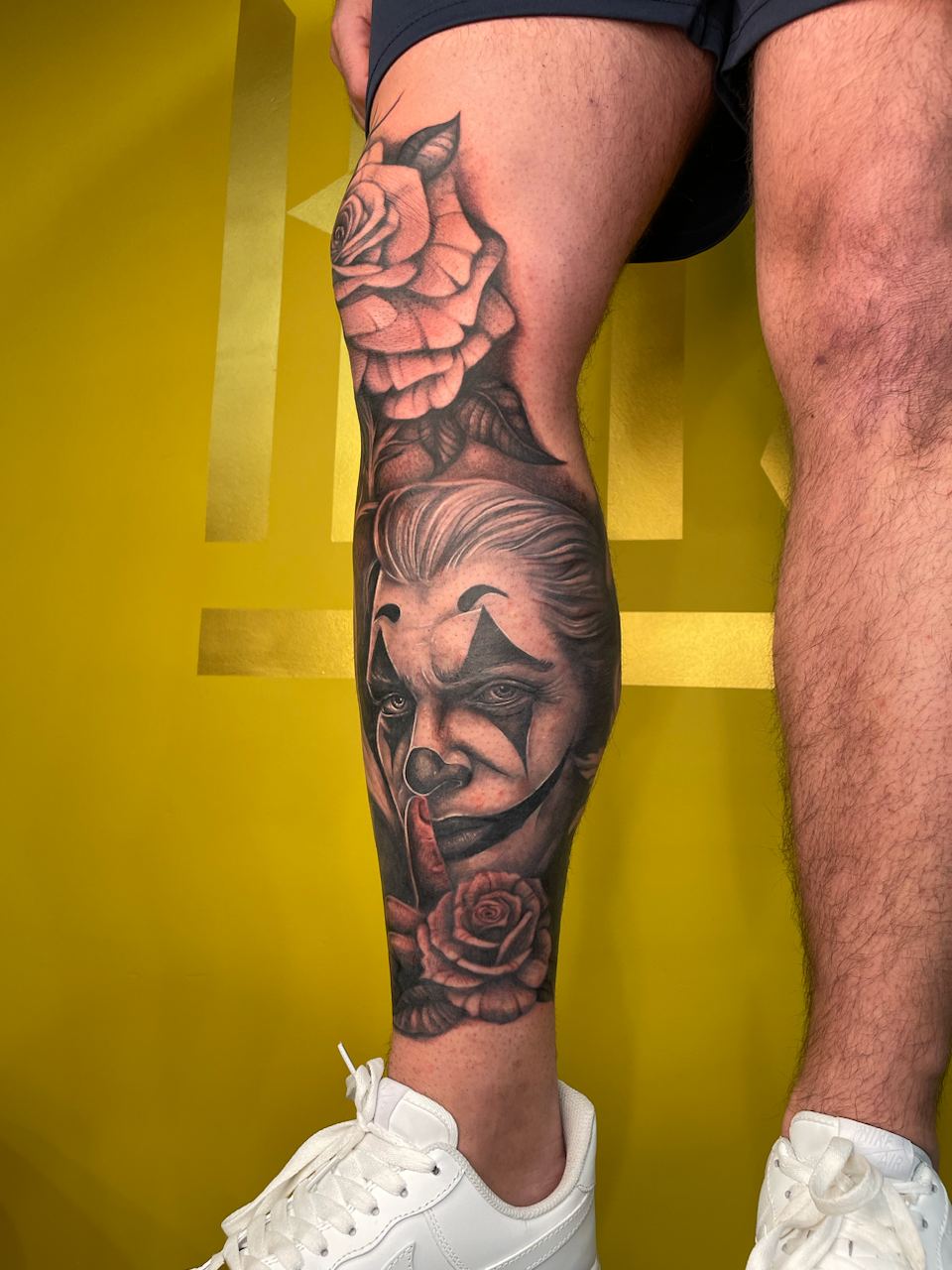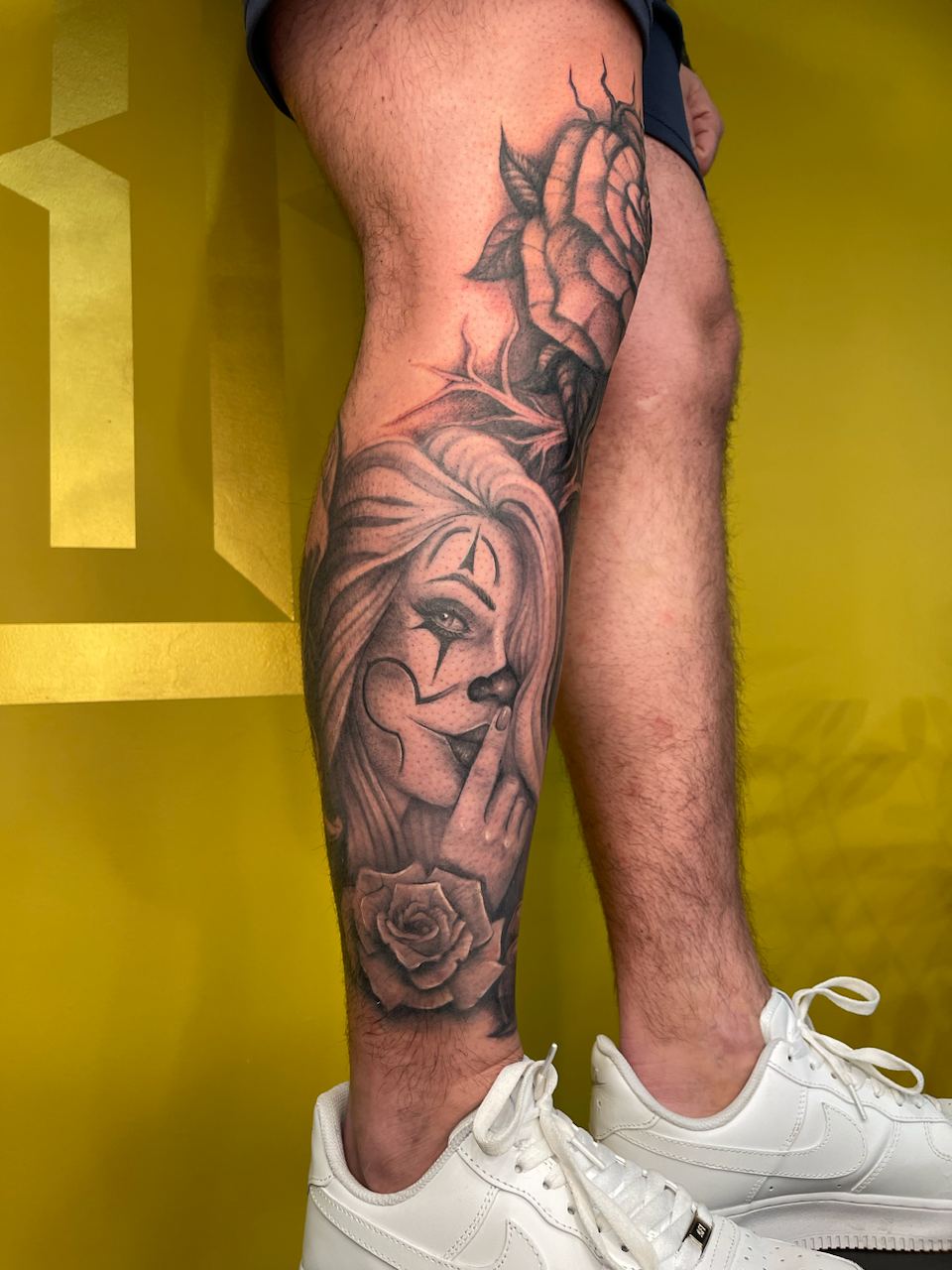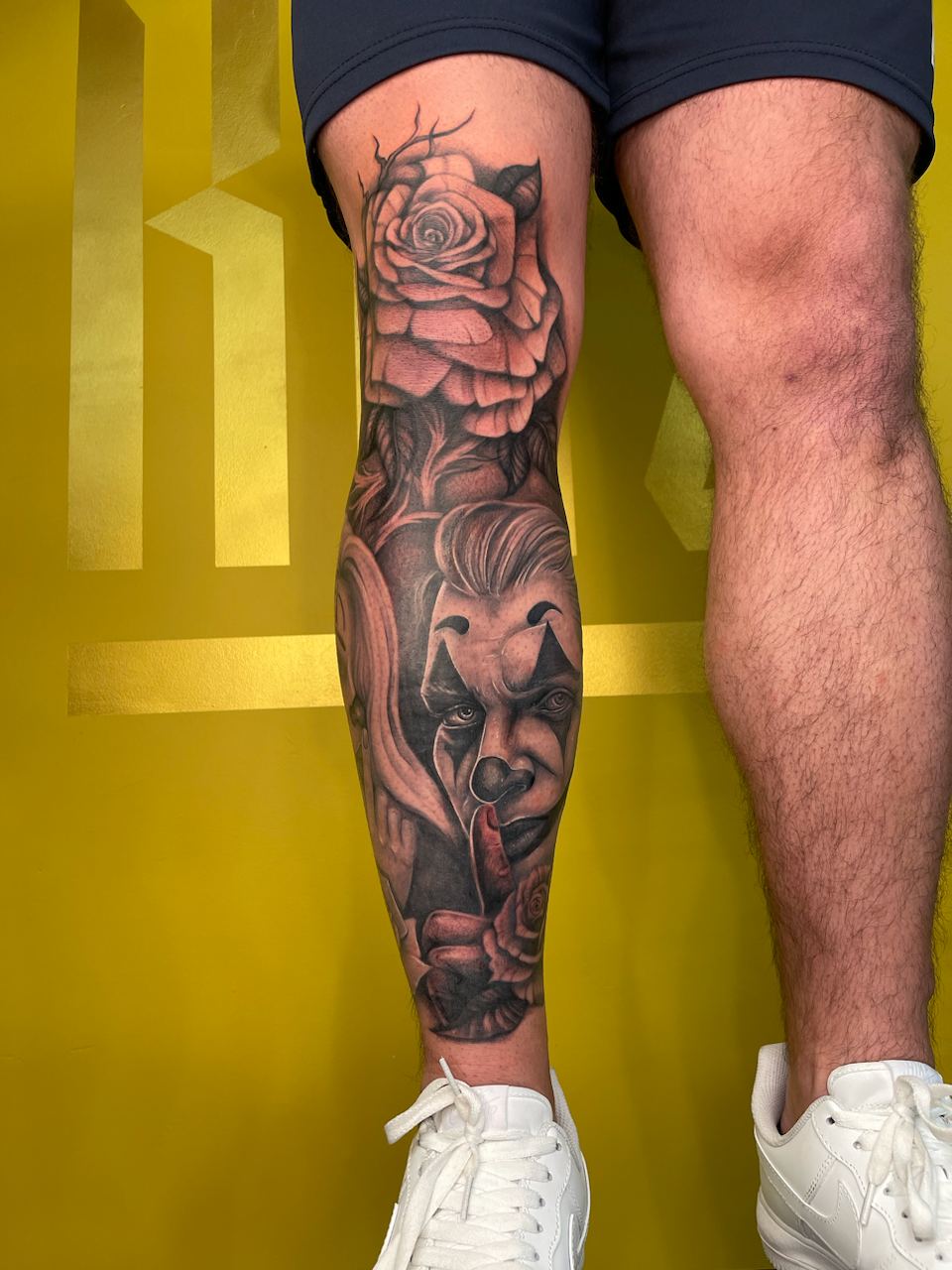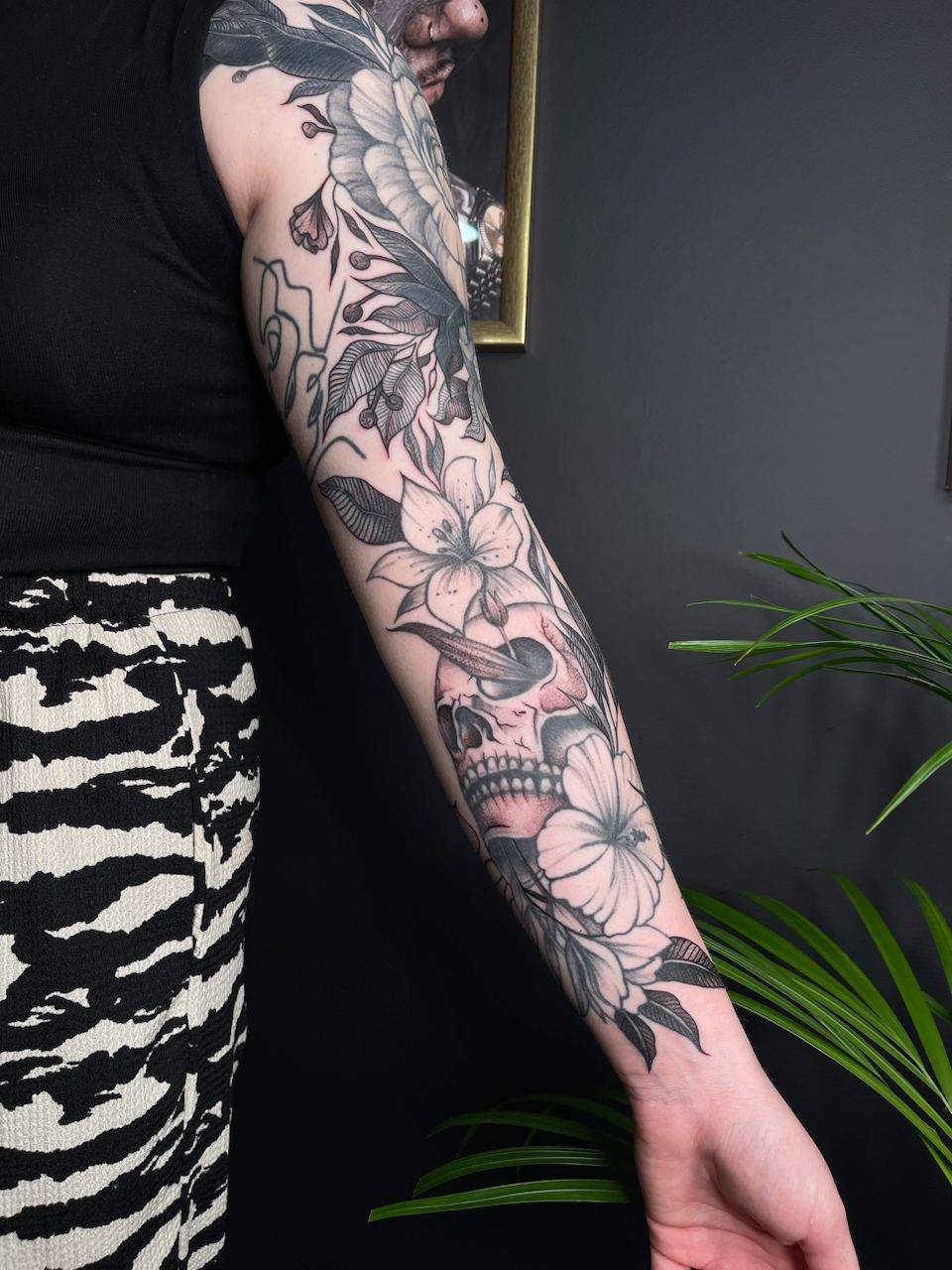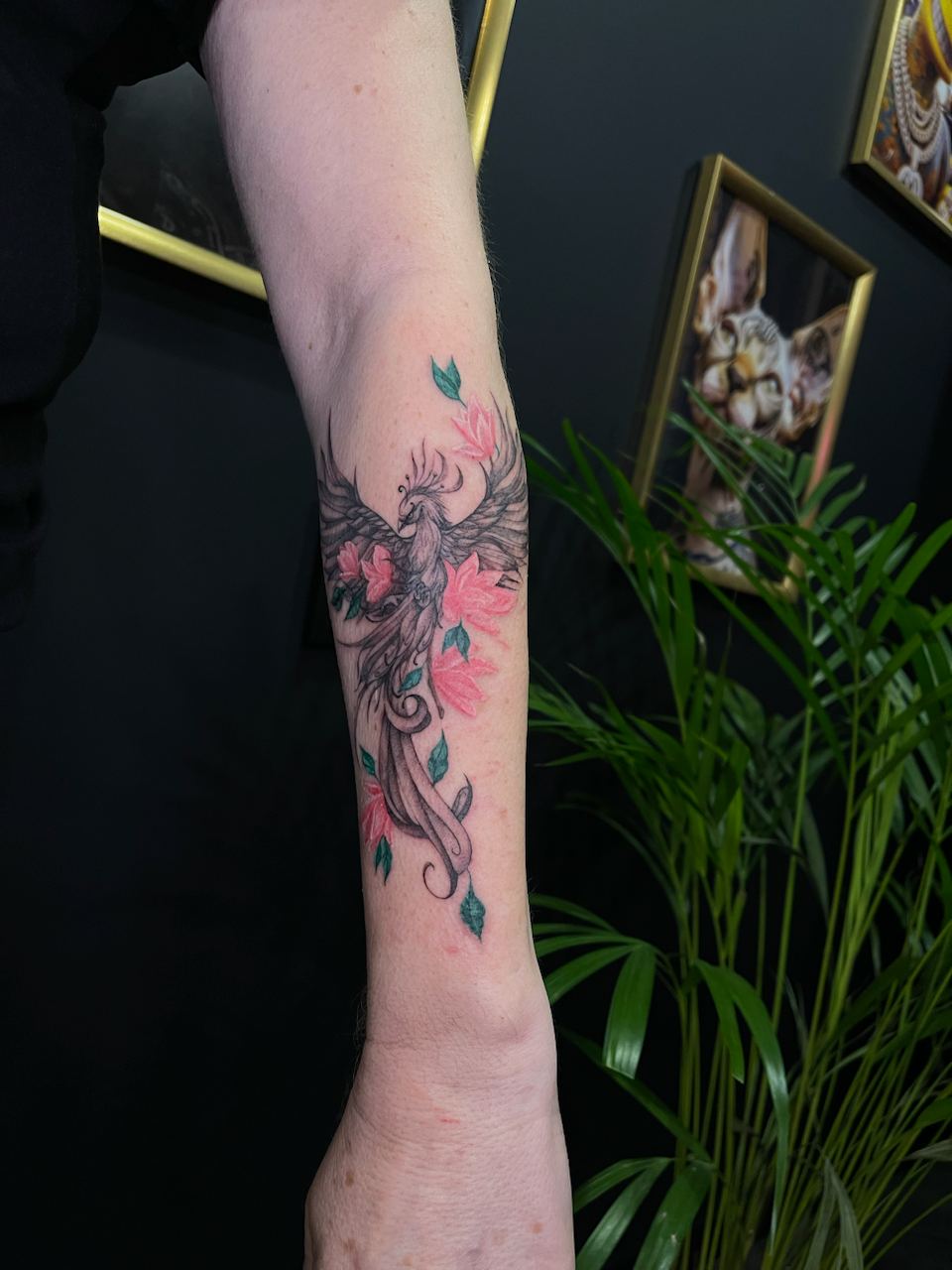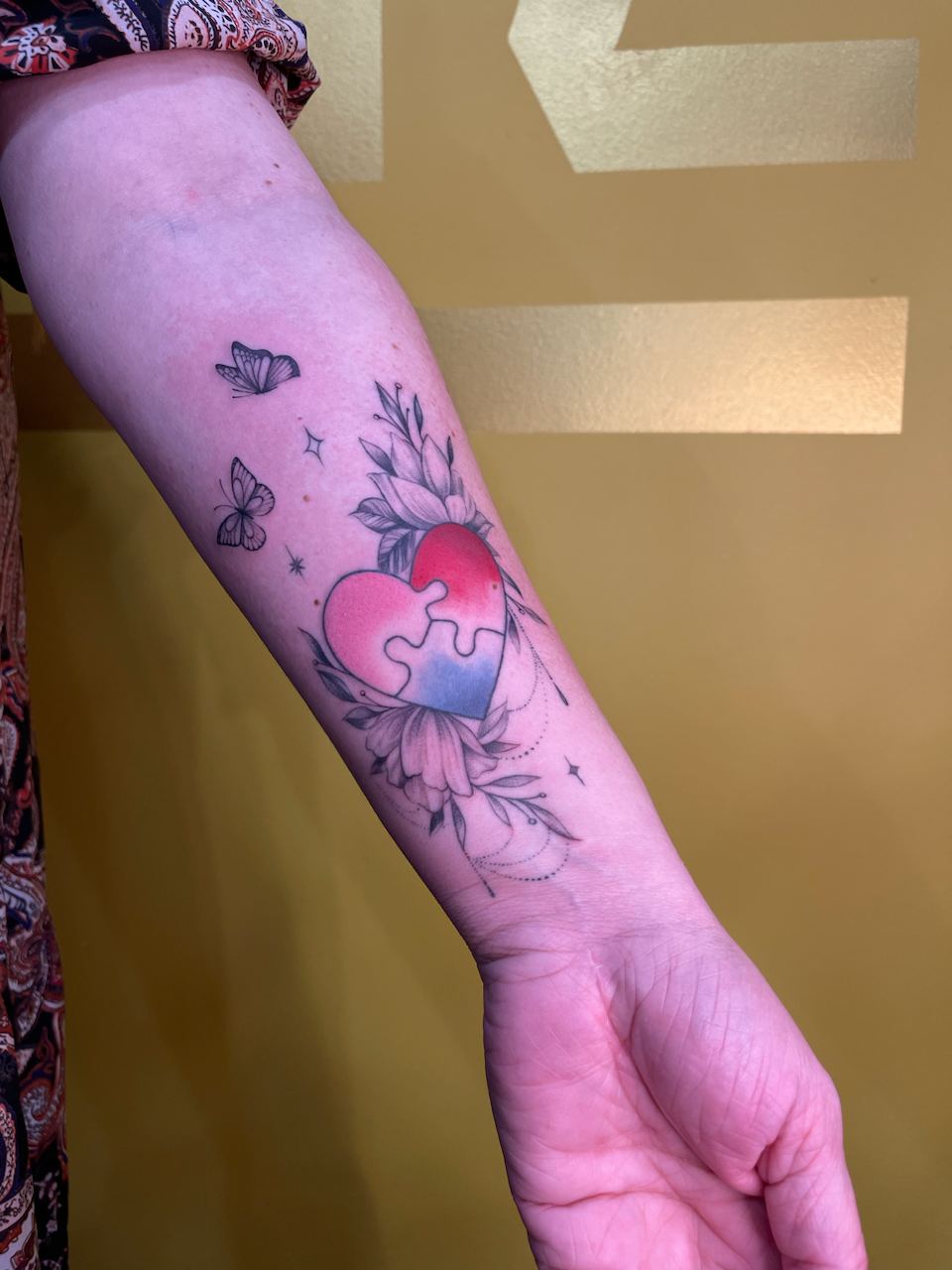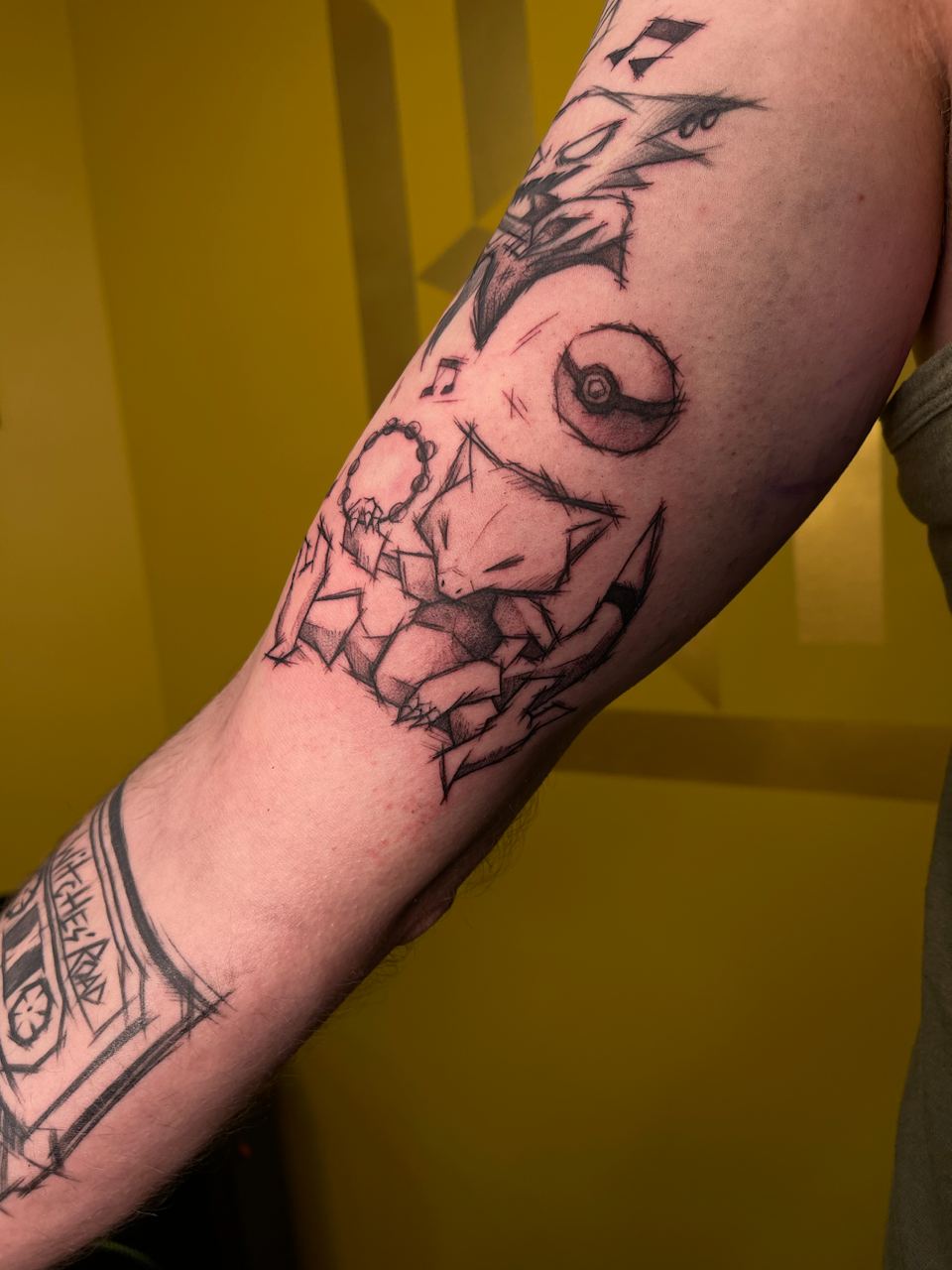
You have an idea for a tattoo, thirty reference images saved on Pinterest and… absolutely no idea what to say to your tattoo artist during the consultation? That’s completely normal. A tattoo consultation is not a test of tattoo terminology, and you certainly don’t need to arrive with a finished design planned down to the last millimetre.
The whole point is actually the opposite: you explain what you want to achieve, show what you like, say what you definitely don’t want, and let the tattoo artist turn those ideas into a design that works on the body and can actually be tattooed well.
A good tattoo consultation can save you a lot of stress. Instead of discovering on the day of your appointment that the design needs to be twice as large, that your reference doesn’t work on the chosen body part or that your budget doesn’t match the amount of work involved, you can sort most of these things out beforehand.
Tattoo consultation – what is it actually for?
First and foremost, it gives you and your tattoo artist a chance to make sure you are imagining the same project.
You might say: “I want a delicate wolf on my forearm.” Your tattoo artist immediately hears several questions: what does “delicate” mean? Fine line? Realistic? Graphic? Just the head or the whole animal? Inner or outer forearm? Ten centimetres or twenty-five?
Without a consultation, it is surprisingly easy to use the same words while imagining completely different things.
If you are looking for a tattoo studio in Katowice, think of the consultation as the first stage of your tattoo project rather than a formality before booking.
Do you need to have a finished idea?
No. You can come in with a very specific vision, but you can just as easily say: “I want something connected to travelling, probably in black, on my calf, but I definitely don’t want a compass or an aeroplane.”
That is already plenty to start a conversation.
Your tattoo artist does not need you to bring a finished sketch. They need enough information to understand the direction you want to take.
The best thing you can prepare: one sentence about your idea
Before your consultation, try to answer one simple question: what do you want the tattoo to be?
It doesn’t need to sound artistic or impressive. A simple sentence is enough:
“I want a large botanical piece from my shoulder to my elbow, in black and grey, and more graphic than realistic.”
Or:
“I want a small symbol connected to my family, but no dates, lettering or literal portraits.”
One clear sentence like this immediately gives the conversation some direction.
References – how many images should you bring?
You don’t need a fifty-slide presentation. A handful of carefully chosen references is usually much more useful than a folder containing two hundred random tattoos.
Five to ten images can be a good starting point, especially if each one shows something specific: the line style, level of detail, shading, composition or overall mood you like.
The most important thing is being able to explain what exactly you like about each image.
“I like this tattoo” is not enough
Imagine showing your artist a photo of a large flower tattoo. You love the soft shading. Your artist may assume you love the rose itself. Unless you explain what caught your eye, the reference can actually create more confusion than clarity.
So instead of simply showing the image, add a sentence:
“I like the thin lines here.”
“I like how much black they’ve used in the background.”
“I like the way the design follows the shape of the arm.”
“I don’t want the same flower — I just like the style.”
Show your artist what you don’t want, too
This is one of the most underrated ways to communicate your ideas.
If you have references that are close to what you want but contain something you dislike, show them and explain why.
“I like the composition, but I don’t want that much black.”
“I like realism, but this looks too photographic for me.”
“I want botanical elements, but without extremely thin decorative lines.”
For a tattoo artist, knowing what you dislike can be just as useful as knowing what you love.
Can you bring a photo of another artist’s tattoo?
Yes — as inspiration, not as a design to copy exactly.
A better approach is to show what you like about the tattoo and then create an original design that suits your anatomy and your chosen artist’s style.
Copying another artist’s original work 1:1 is not a good direction. Apart from the issue of authorship, it often simply doesn’t make sense: a tattoo designed specifically for someone else’s arm may look completely different on yours.
Pinterest and Instagram are useful — but they can also be misleading
Social media is brilliant for collecting ideas, but it mostly shows you the visual result. You often have no idea whether you’re looking at a fresh tattoo, a healed tattoo or a photo with heavily edited contrast.
So don’t treat every image as proof that exactly the same result can be achieved on any skin, at any size and on any part of the body.
Size – “roughly this big” is useful information
You don’t need to measure your skin with callipers. But it helps to know whether you’re thinking about five centimetres, palm-sized or half an arm.
Size affects the amount of detail, how readable the tattoo will be, how long the session may take and how much the project will cost.
If you want a highly detailed portrait that is only five centimetres tall, your tattoo artist may explain that there simply isn’t enough room for all that detail.
Why might your tattoo artist suggest making the design bigger?
Usually, it isn’t because they “want to charge for more hours”.
Some designs simply need space. Very fine lines, tiny gaps and small areas of untouched skin can visually close up over time. If everything is packed too tightly together, the tattoo may become less readable as it ages.
A slightly larger design gives the individual elements room to breathe.
Placement – don’t choose it based on a photo alone
The same design can look fantastic on a calf and completely wrong on the ribs. The human body is not a flat sheet of paper.
Muscles, bones, curves and movement all affect composition. It’s a good idea to tell your artist which placements you are considering while remaining open to small adjustments in position.
If you don’t know where to put the tattoo, say so
You don’t need to decide before the consultation.
You can simply say: “I want this design, but I’m choosing between my upper arm and my calf.” Your tattoo artist can then explain where the proportions may work better, how the size might change and how the tattoo will look from different angles.
Take a photo of the area if your consultation is online
If you’re talking to your tattoo artist through messages or an online form, a good photo of the placement can be extremely helpful.
Take the photo in a natural position and from far enough away to show the whole area. Don’t send only a close-up of two centimetres of skin.
If you already have tattoos nearby, include them in the photo. The new design should work with what is already there.
Show existing tattoos before the design is planned
If your new tattoo needs to connect with an existing one, partially cover it or sit very close to it, your artist needs to know before starting the design.
With a cover-up, the colour, saturation, size and placement of the old pigment all matter.
Sometimes an existing tattoo can be covered straight away. In other cases, laser tattoo lightening may make sense first, so the new design doesn’t have to become unnecessarily dark or heavy.
Scars, moles and skin changes – don’t leave them out
If there is a scar, a large mole, an active skin issue or an area that regularly becomes irritated where you want the tattoo, mention it before your appointment.
Your tattoo artist needs to see the condition of the skin and decide whether the design can be safely planned around that area or whether you should seek medical advice first.
Tattoo styles – you don’t need to know all the names
Fine line, blackwork, dotwork, realism, neotraditional, ignorant, ornamental… if you know these terms, great. If you don’t, that’s absolutely fine.
It is much easier to show three photos and say “I want something in this direction” than to force yourself to use a style name you’re not sure about.
Black and grey or colour?
It helps to have a preference, but you don’t always need to decide immediately.
If the project is still at an early stage, your tattoo artist may be able to explain how the composition would change between a black & grey version and a colour version.
For cover-ups, the colour options may also depend on the pigment already underneath.
Budget – is it okay to ask about price?
Of course. A tattoo is a professional service, and it makes sense to know what kind of cost to expect.
It is usually more helpful, however, to discuss your budget in relation to the project. Instead of saying, “I have 500 PLN — what can you do?”, try: “This is the project I have in mind, but I’d like to stay around this budget. Could we adjust the size or scope?”
Your artist can then explain what is realistic without compromising the quality of the design.
Why can’t you always get an exact price?
For a small, simple tattoo, giving a specific price is often straightforward. With a larger project, the final cost may depend on the number of hours, the amount of shading and how the skin responds during the session.
If the tattoo will require several sessions, ask about the approximate overall cost or the price per session.
Ask how many sessions you might need
A large tattoo cannot always be completed in one day. A full sleeve, large cover-up, realistic back piece or detailed thigh tattoo may require several appointments.
Knowing this in advance makes it much easier to plan both your time and your budget.
Can you get an entire sleeve tattooed in one day?
Technically, a lot can be done during one long session, but that doesn’t mean it is always the best approach.
Large projects are often divided into stages: outlines, individual sections, shading and colour. This can make it easier to control both the composition and the healing process.
Timing – tell your artist about important plans
If you’re flying to the beach a week after your tattoo appointment, have a sports competition coming up, a wedding, swimming plans or a multi-day hiking trip, mention it before booking your session.
A fresh tattoo needs time to heal, and some activities can be difficult to manage during that period.
Sometimes moving the appointment by two weeks makes far more sense than spending your entire holiday worrying about freshly tattooed skin.
What questions should you ask your tattoo artist?
You don’t need to arrive with a formal checklist, but a few questions can be genuinely useful:
– Is this size large enough for this level of detail?
– Is this placement suitable for the design?
– Will the tattoo need one session or several?
– What is the approximate price?
– How should I prepare my skin before the appointment?
– What does the aftercare involve?
– When can I return to training, swimming or sun exposure?
– Is there anything about this design that you would change?
Ask what your tattoo artist would change about your idea
This is one of the best questions you can ask during a consultation.
If you chose the artist because you genuinely like their portfolio, it makes sense to give them some creative room.
Moving a motif by a few centimetres, rotating it slightly or simplifying one element may be enough to make the entire design work much better with your body.
Don’t be afraid to say “no”
A consultation works both ways. Your tattoo artist can suggest changes, but it is still your tattoo.
If there is something you don’t like, say so before the session. Changing the composition while it is still a design is much easier than changing it once it is on your skin.
“I trust you” – when does that help and when does it make things harder?
If you know the artist’s portfolio and genuinely like their style, giving them creative freedom can lead to a great design.
But even then, it helps to set a few boundaries.
“I trust you with the design, but I want to keep this one motif, I don’t want colour, and I don’t want the tattoo to go above my elbow.”
That still gives the artist plenty of freedom while protecting the things that matter most to you.
Will you see the design before the session?
That depends on the individual artist’s process and the type of tattoo. Some artists show designs in advance, while others prepare the final version closer to the appointment or make the final adjustments on the day.
Ask about this during your consultation so you know what to expect.
Why is the design sometimes adjusted directly on the body?
Because a screen doesn’t show anatomy. Once the stencil is placed on the body, you can see whether the design follows movement properly, whether an important detail falls into a crease and whether the main element is visible from the right angle.
With larger tattoos, small adjustments after trying the stencil on the body are completely normal.
The stencil is not final
If you look in the mirror after the stencil has been applied and feel that it is too high, too low or too small — say something.
A stencil can be removed and applied again. A tattoo can’t.
This is exactly the time to make changes.
What should you tell your artist about your skin?
If you have a history of severe allergic reactions, problems with healing, take medication, have a chronic health condition or have reacted badly to tattoos in the past, tell the studio before the session.
Your tattoo artist can then advise whether you may need additional medical guidance or whether the appointment should be postponed.
Do you need an allergy test for tattoo pigment?
Routine patch testing cannot predict every possible reaction to tattoo pigments. If you have a specific history of allergies or have previously reacted to tattoo ink, discuss it individually with your tattoo artist and a healthcare professional rather than assuming that a simple test can provide a 100% guarantee.
How should you prepare your skin before a tattoo?
The best preparation is usually quite simple: normal skincare, no fresh sunburn, no wounds and no significant irritation.
There is no need to use a strong exfoliating treatment or acids the day before your appointment in an attempt to make the skin “perfectly smooth”.
Should you shave the area yourself?
Usually, there is no need. The studio can prepare the area immediately before the session.
If you’re unsure, ask. That is better than aggressively shaving the skin the day before and arriving with irritation.
Sleep, food and alcohol
Try to arrive well rested and after eating a normal meal. A long tattoo session can be physically demanding, and spending several hours in the chair on an empty stomach usually doesn’t make the experience any easier.
It is best to avoid alcohol before your tattoo appointment. Apart from affecting how you feel, it can also affect bleeding and make the session more difficult.
What should you bring to a long tattoo session?
Comfortable clothing, water, something to eat, headphones and a charger — simple things can make a big difference.
Your clothing should also provide easy access to the area being tattooed. If you’re getting your thigh tattooed, very tight jeans probably aren’t the best choice.
How do you choose the right tattoo artist for your idea?
Don’t choose based only on follower count. Look at the portfolio first.
If you want a realistic portrait, choose someone who regularly works in realism. If you want a delicate ornamental piece, check whether that type of work actually appears in their portfolio.
A great tattoo artist can be excellent in their own style and still not be the right person for a completely different aesthetic.
Look at healed tattoos
Fresh tattoos almost always look more intense: they are darker, more contrasted and the surrounding skin may be red.
If a studio also shows healed work, it gives you a better idea of how the lines, shading and colours look over time.
Does a consultation mean you have to book?
It shouldn’t feel like an obligation. If, after talking, you feel that you and the tattoo artist are not on the same page, don’t book the project simply because you feel awkward saying no.
A tattoo is going to stay with you for a long time. You should feel comfortable with and trust the person creating it.
What if the tattoo artist refuses your idea?
That doesn’t necessarily mean your idea is “bad”. The artist may not work in that particular style. The design may be too small for the amount of detail you want. The placement or condition of the skin may also make the tattoo unsuitable or unsafe to perform as planned.
A professional refusal can sometimes be a much better sign than someone agreeing to absolutely everything.
Can you change your idea after the consultation?
Yes, but tell your tattoo artist as early as possible.
Changing one flower to another is very different from changing “a small wrist tattoo” into “a realistic full sleeve”. A major change may require a new quote, a different appointment length or even a different artist.
The most common mistake: too many conflicting references
Ten fine-line tattoos, five old-school pieces, three realistic designs and one geometric tattoo — all labelled “I like this”.
If your references are very different, try to work out what they actually have in common. Maybe what you really like in all of them is the amount of negative space or a strong black outline.
The second mistake: focusing on details instead of the whole design
Sometimes a client has a list of seventeen things that absolutely must appear in the tattoo: a clock, mountains, a wolf, a rose, dates, a compass, eyes, a forest, lettering and another three symbols.
The problem is that a tattoo needs hierarchy. If everything is supposed to be the main element, nothing will be.
Your artist may suggest removing some motifs to make the final design clearer and stronger.
The third mistake: choosing placement only because “it hurts less”
Pain matters, but it shouldn’t be the only consideration. If a design is perfect for the upper arm, moving it somewhere random simply because you are worried about discomfort may weaken the composition.
It is better to discuss pain levels and session length with your tattoo artist than to plan your entire body around an online pain chart.
The fourth mistake: forgetting to mention your holiday
A fresh tattoo followed by a holiday with swimming pools, the sea and full sun one week later is not a great combination.
If you already know your travel dates, mention them during the consultation. The tattoo appointment can then be scheduled so it doesn’t interfere with healing.
The fifth mistake: pretending the budget doesn’t exist
Everyone has a budget. It is better to be open about it than to discover halfway through planning that the project is beyond what you can comfortably spend.
Sometimes a larger design can be divided into sessions, the scope can be simplified or a smaller motif can be planned without compromising quality.
Tattoo consultation in Katowice – what should you actually prepare?
If you want to come prepared, you really only need a few things:
– a short description of your idea,
– a few references with an explanation of what you like about them,
– your preferred placement and approximate size,
– a photo of the area if the consultation is online,
– information about existing tattoos, scars or skin changes in the area,
– an approximate budget if you have a limit,
– any deadline or date by which you would like the tattoo completed,
– a list of your most important questions.
That’s it. You don’t need to arrive with a finished work of art.
The most important thing: prepare a direction, not a finished instruction manual
A good tattoo consultation is a collaboration. You know the story and meaning behind your idea. Your tattoo artist understands composition, technique, how pigment behaves and how a design works with anatomy.
The best tattoo usually comes from somewhere between your original vision and the artist’s experience.
If you would like to discuss your idea, you can explore tattoos at KRZ Studio in Katowice and see the styles the artists work in. You can also contact KRZ Studio, send your references and arrange a consultation before booking your tattoo appointment.
Frequently Asked Questions
Do I need to have a finished tattoo design before the consultation?
No. An idea, a few references and some information about the placement and approximate size are enough. Your tattoo artist can create the design based on what you discuss together.
How many reference images should I send my tattoo artist?
A few carefully chosen images are usually enough. The most important thing is to explain exactly what you like about each reference.
Can my tattoo artist change my idea?
They may suggest changes to the size, composition, placement or level of detail if those changes could improve the readability and longevity of the tattoo. Any final decisions should be discussed with you before the tattoo is done.
Can I ask about the price before the session?
Yes. For simple tattoos, it is often possible to give a specific price. For larger projects, the artist may provide an estimated range, a price per session or an approximate number of appointments.
What if I don’t know where I want the tattoo?
That is a perfect topic for the consultation. Your tattoo artist can compare several placements and explain where the design is likely to work best with your anatomy.