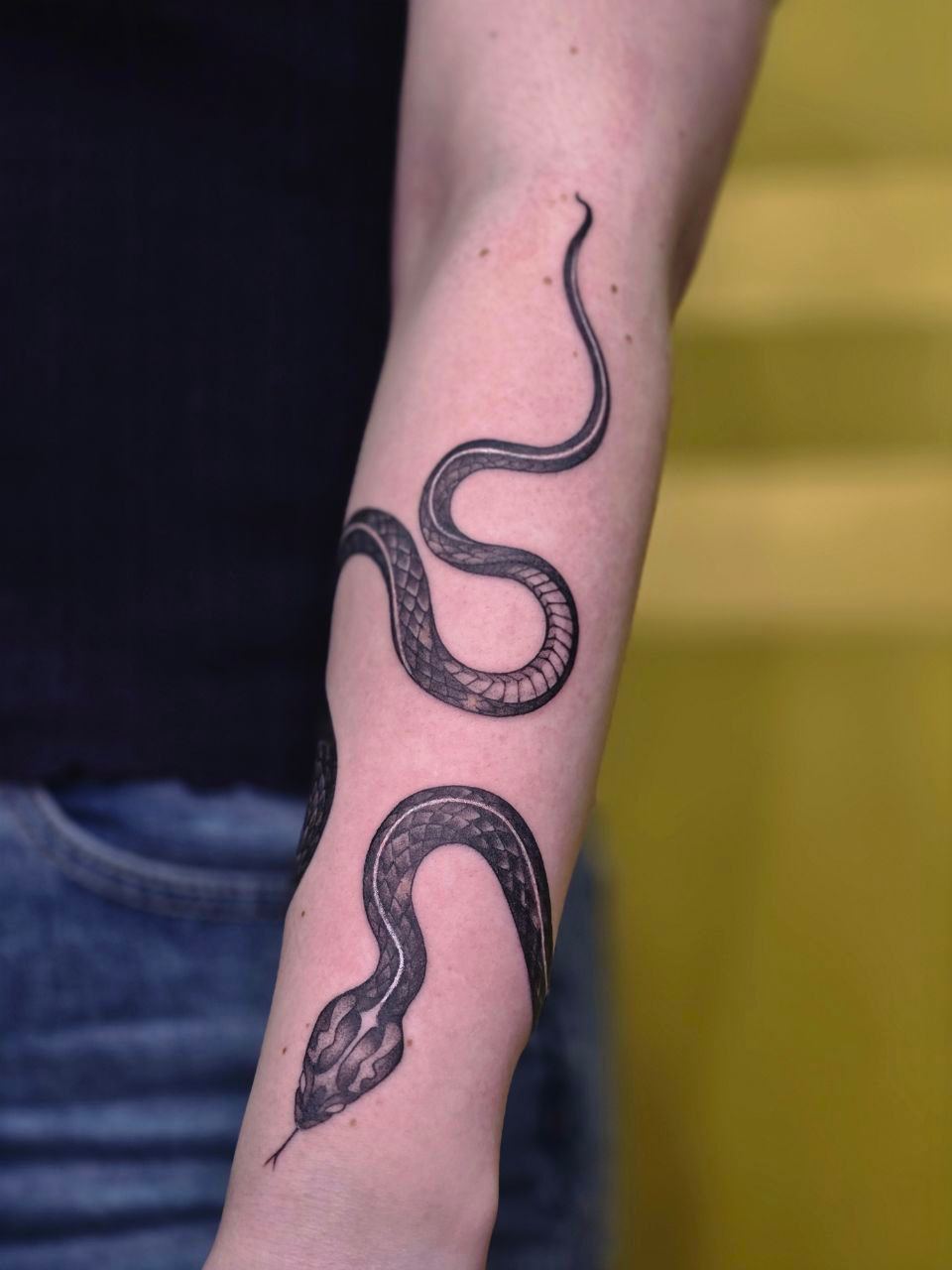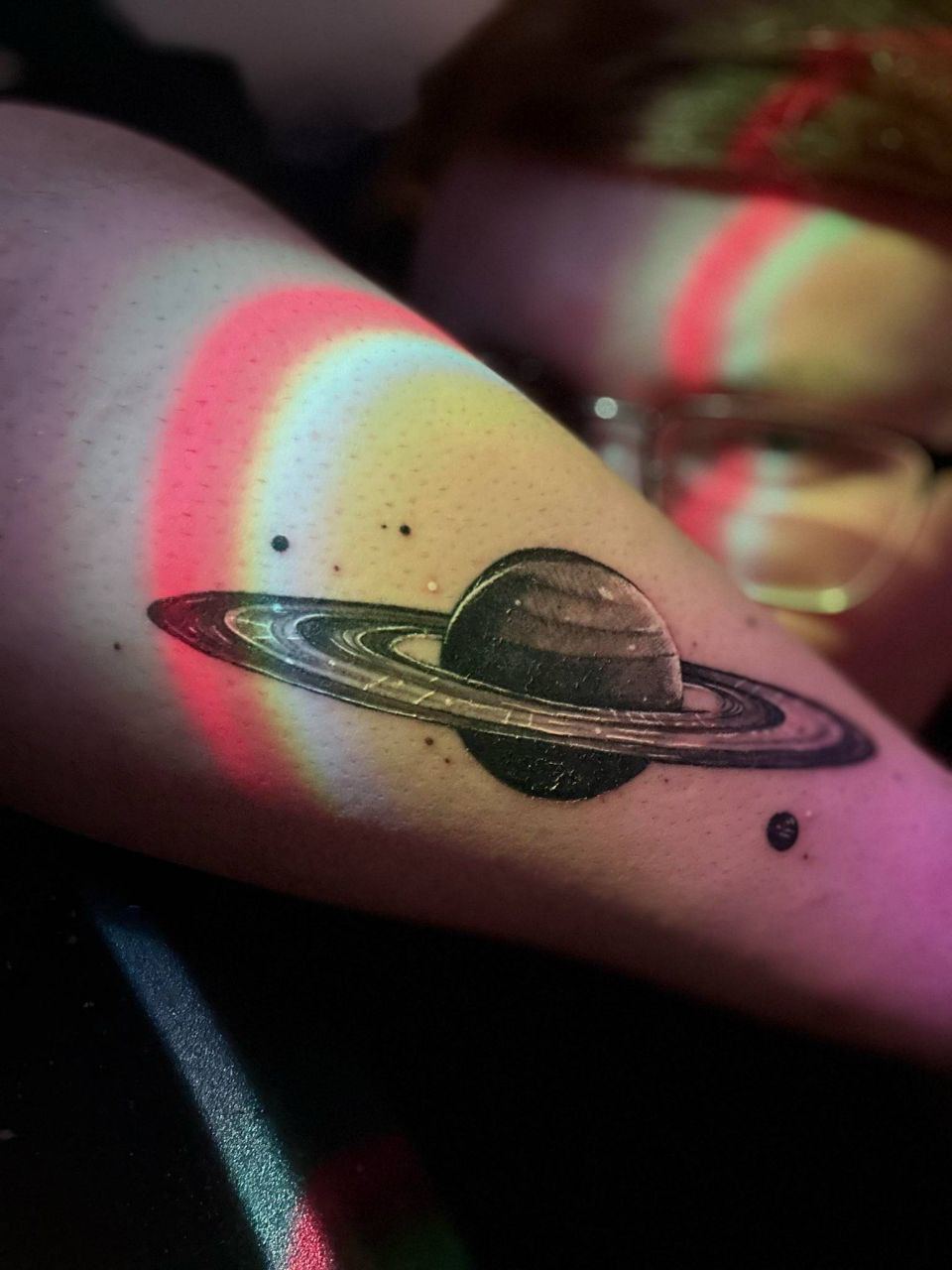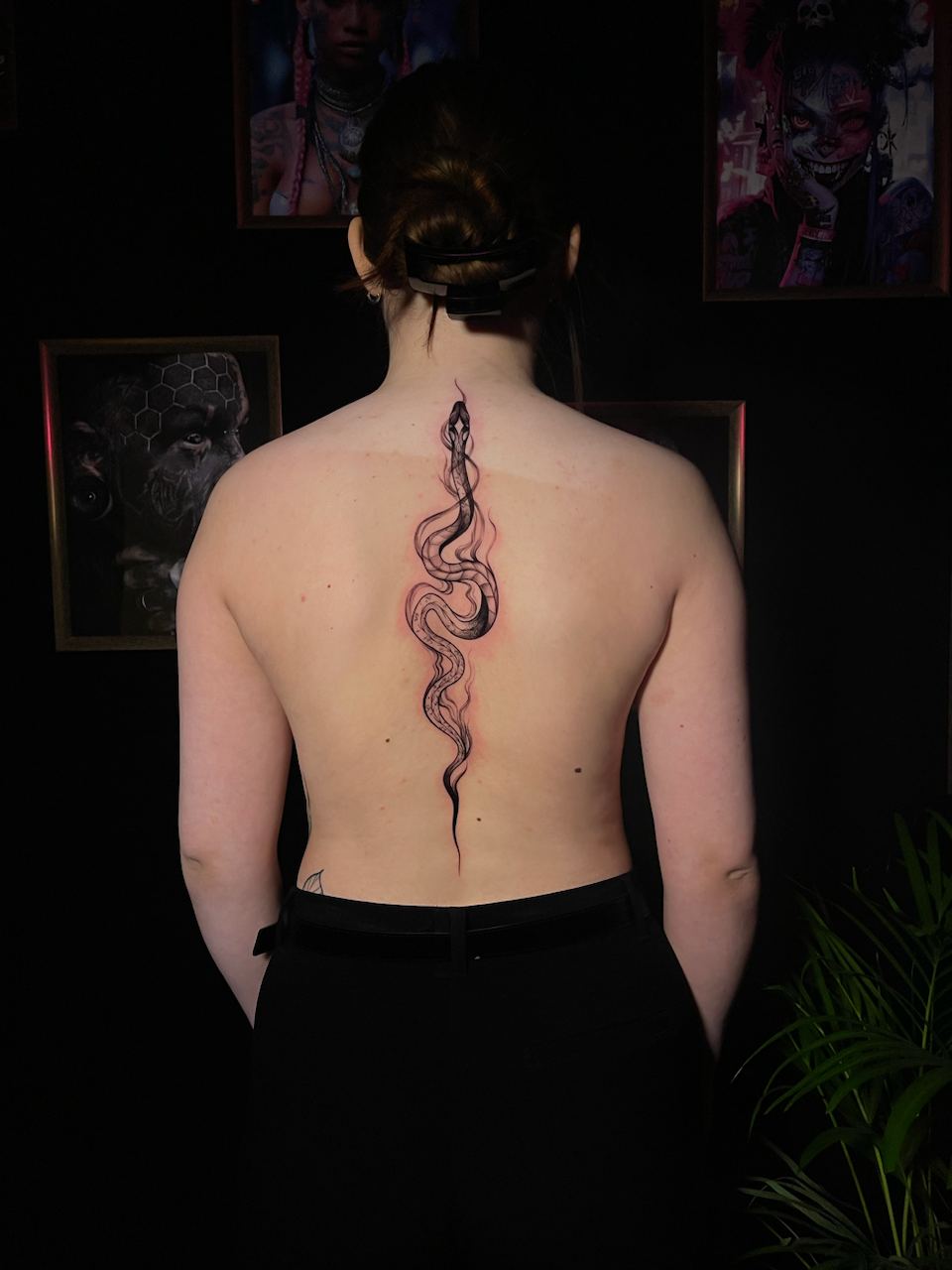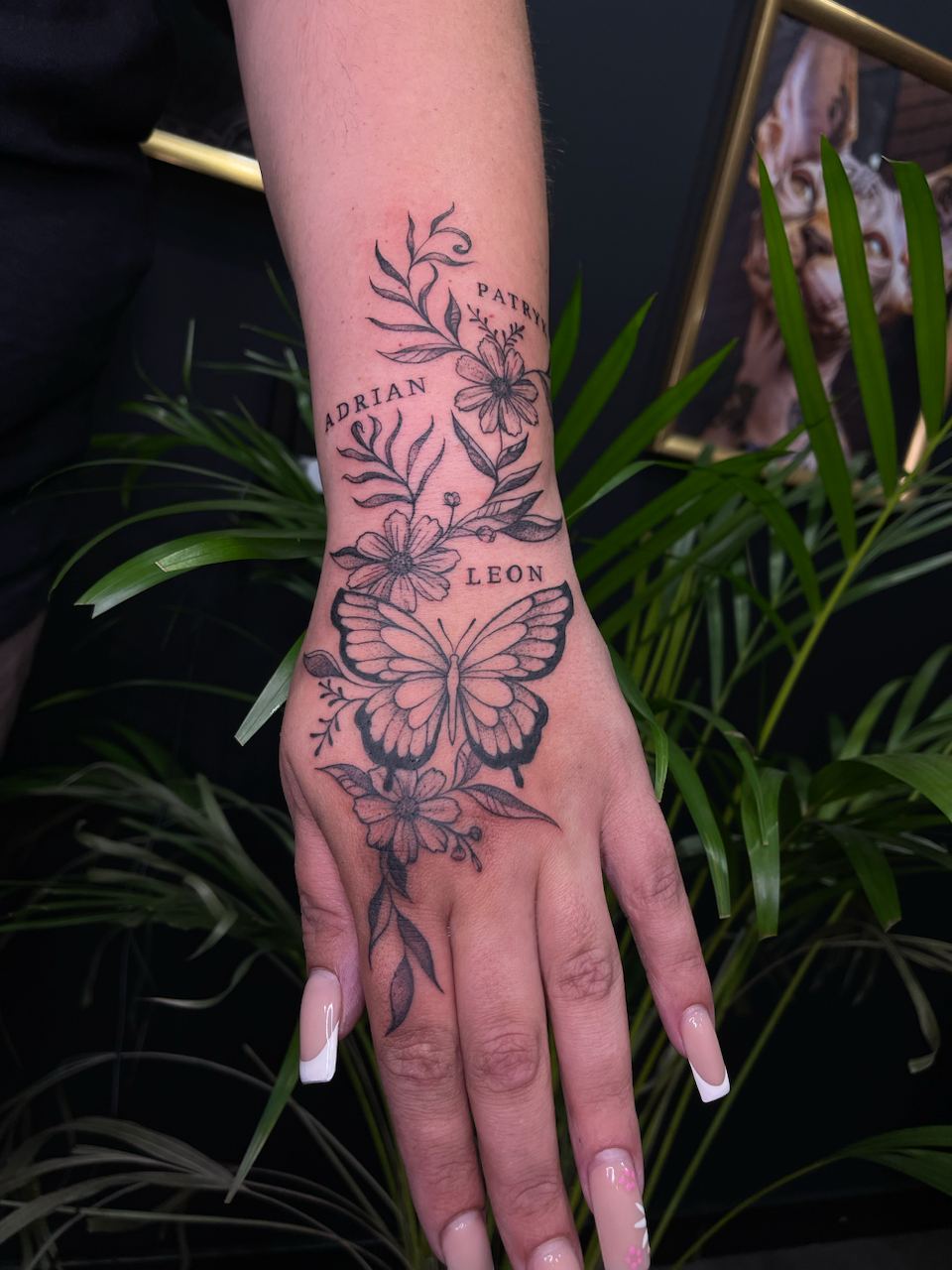
Your first encounter with tattoo equipment can feel a little overwhelming. Pen machines, rotary machines, different stroke lengths, dozens of cartridge markings, RL, RS, magnum, curved magnum, plus power supplies, pigments, ink caps, grips, barrier film, practice skin… If you are just starting out, it is easy to think: do I really need to understand all of this before I can even pull my first simple line?
Relax. At the beginning, the goal is not to memorise the entire catalogue of a tattoo supply store. A good tattoo course in Katowice should first teach you what each tool is for, how it differs from others and how to choose equipment consciously for a specific task. In tattooing, the person with the most expensive machine does not automatically win. The person who understands what they are doing and why does.
What Equipment Do You Learn to Use on a Tattoo Course?
Most courses begin with the absolute basics: the tattoo machine, cartridges or needles, power supply, pigments, disposable materials and workstation organisation. Only later do you move on to the differences between specific configurations, techniques and ways of moving your hand.
This matters because equipment alone does not create a good tattoo. You can buy a machine that costs several thousand zlotys and still produce uneven lines. You can also work with a simpler device and achieve very good results if you understand hand control, working depth, skin tension and tool selection.
Tattoo Machine – The First Thing Everyone Wants to Buy
Most beginners start looking at tattoo machines before they have even taken a course. And very quickly they fall down the rabbit hole: which brand is best, what stroke should you choose, pen or traditional rotary, wired or wireless?
The problem is that without experience it is difficult to know what you actually need. That is why it makes more sense to work with equipment during the course first, experience different settings and only then buy your own setup.
Rotary Machine and Pen – What Do These Terms Actually Mean?
Modern rotary tattoo machines use a motor to move the needle. A very popular design is the pen-style machine, which resembles a thick marker. Many beginners find it comfortable because it sits well in the hand and works with cartridges.
However, not every pen machine behaves the same way. They differ in weight, balance, motor power, the way they deliver energy, needle protrusion adjustment and stroke length.
What About Coil Machines?
Coil machines are still part of tattoo history and practice, although beginners increasingly start with modern rotary machines. A coil machine can feel very different in use and requires a different approach to setup.
On a course, it is worth at least understanding how a coil construction differs from a rotary one, even if you later spend several years working exclusively with a pen machine.
Stroke – A Word You Start Hearing Everywhere Very Quickly
Stroke, meaning stroke length, affects how the machine behaves. In very simple terms, a shorter stroke may provide a softer feel, while a longer stroke can produce a harder hit. But there is no single stroke that is “best for everything”.
Fine lines are worked differently from bold outlines, and soft shading is different again from colour packing. During a course, the most important thing is understanding the difference in feel and in how the skin responds, rather than simply memorising a number in millimetres.
Do You Need Several Machines?
Usually not at the beginning. It makes much more sense to learn one versatile machine well than to buy three and never truly master any of them.
Over time, once you develop your own way of working, you may decide that you prefer one machine for lining, another for shading and another for larger areas. But that comes later.
Wired or Wireless Tattoo Machine?
Wireless pen machines are convenient because they reduce the number of cables around the workstation. A traditional wired power setup, on the other hand, provides a very stable working environment and does not require you to keep an eye on battery levels.
For a beginner, learning how to protect equipment hygienically, organise cables properly and control the device during work is more important than choosing between the two systems.
Power Supply and Voltage – Why Is There No Magic Number?
Online, you will find plenty of advice such as “run lines at X volts and shading at Y”. The problem is that different machines behave differently. The motor, stroke, cartridge, hand technique and hand speed all matter.
That is why it is better to learn how to observe the machine and the skin than to memorise one value. A setting that works for one tattoo artist may not work exactly the same way for another.
Cartridges – Why Have They Become So Popular?
A cartridge is a module containing a specific needle configuration. You insert it directly into a compatible grip or pen-style machine. For many artists, it is a very convenient solution because you can quickly change configurations during a single session.
In professional work, cartridges intended for skin contact are sterile and single-use. After use, they do not go back into a drawer “for the next piece of practice skin”. They should be disposed of in an appropriate sharps container.
Needle vs Cartridge – What Is the Difference?
People often say “tattoo needle”, but in practice a single configuration often contains several or even a dozen thin needles soldered or arranged in a specific pattern.
In a traditional system, needles may be mounted on a longer bar and used with a suitable tube and grip. In a cartridge system, the entire module is enclosed in a replaceable housing.
For a beginner, the most important thing is learning how to read the markings and understand what is actually inside the tip.
RL – Round Liner
Round Liner is one of the first configurations you will encounter. The needles are grouped tightly in a circular shape, making them suitable for creating lines.
On packaging you may see markings such as 3RL, 5RL, 7RL or 9RL. The number indicates the number of needles in the grouping, but that number does not tell you everything. The diameter of each needle and the taper also matter.
Does 3RL Always Make a Thinner Line Than 5RL?
It usually forms a smaller grouping, but the final result depends on many factors: needle diameter, cartridge construction, hand movement, hand speed, machine settings and the skin itself.
That is why learning configurations is not about memorising a chart that says “this equals this type of line”. You need to see them in practice.
RS – Round Shader
Round Shader also has a circular arrangement, but the needles are spaced more loosely than in a liner. This configuration can be used for small areas of shading, softer fills or certain illustrative effects.
At the beginning, it is useful to compare RL and RS side by side on practice skin. The difference then stops being something you only know from the label.
Magnum – When Larger Areas Come Into Play
Magnum configurations have needles arranged in rows. They are widely used for shading, blending and filling larger areas with colour.
They include classic magnums as well as curved magnums, also known as soft edge or round magnums. The curved edge can allow for a softer entry into the skin and smoother transitions.
M1, M2, CM – Do You Need to Know Every Abbreviation Straight Away?
No. At first, it is enough to understand the basic logic: liner for lines, shader for certain types of shading, and magnum for larger areas and transitions. The details can come later.
The worst thing you can do is buy one box of everything “just in case” before you even know what you will actually use.
Needle Diameter – Why Does It Matter?
Two configurations both labelled 5RL may behave differently if they are made from needles of different diameters. Thinner and thicker needles feel different during work and transfer pigment differently.
On a course, it is worth learning how to read the full manufacturer marking rather than looking only at the “RL” ending.
Taper – Another Parameter That Stops Being a Mystery
Taper describes the shape of the needle tip and the length of its narrowing. In practice, it affects the way the needle deposits pigment and behaves in the skin.
There is no need to turn it into quantum physics on the first day. What matters is understanding that two needles with a similar diameter and pin count can work differently.
Cartridge Membrane – What Is It For?
Many modern cartridges contain a membrane that helps limit backflow of fluids towards the machine. It is an important design element, but it does not remove the need to protect the machine properly and follow hygiene procedures.
During a course, you should learn to treat the machine and everything around it as potentially exposed to contamination during work.
Pigments – You Do Not Choose Them Just Because the Bottle Colour Looks Nice
At first, pigment may seem like the simplest part of the setup. It is black, red, blue – what could be complicated about that?
In practice, pigments differ in composition, consistency, coverage, mixing properties and the way they behave in the skin. There are also legal requirements to consider.
In the European Union, substances used in tattoo inks and permanent makeup pigments are subject to REACH restrictions. Since January 2022, restrictions have applied to thousands of hazardous substances, and products intended for tattooing must be properly labelled and include required information about their composition.
What Does REACH Mean for a Beginner Tattoo Artist?
First of all: do not buy random pigments from an unknown source simply because they are cheap or have excellent reviews on social media.
During a course, it is worth learning how to check labels, the manufacturer, the intended use, batch number, expiry date and compliance with EU market requirements. Pigment is a material that goes into the skin – this is not the place to save money “just because you are starting out”.
Black Pigment – Why Do Beginners Work With It So Often?
Black is the foundation of a huge number of styles: from simple linework and blackwork to diluted greys and shading.
During a course, you may learn the difference between black pigments used for lining, more universal blacks and preparing greywash tones. The most important thing, however, is learning how to control saturation rather than searching for “the blackest black in the world”.
Greywash – Why Does Not Every Shade of Grey Come Straight From a Bottle?
A lot of shading is done with diluted black. You can use ready-made greywash sets or properly prepared mixtures intended for tattoo work.
At the beginning, it is useful to see several saturation levels on practice skin because the difference can look subtle in an ink cap but completely different on the surface.
Coloured Pigments – What Do You Need to Understand?
Colour does not behave like paint on a sheet of paper. The final result also depends on skin tone, saturation, working depth and what pigment is next to or underneath it.
During a course, it is worth learning the basics of colour mixing, contrast and building a palette. You do not need fifty colours right away. Often, learning how to work consciously with a smaller set is much more valuable.
Ink Caps – A Small Detail With a Big Impact
During tattooing, pigment is poured into disposable ink caps. You do not place a used needle directly into the ink bottle.
The workstation should be arranged so the caps are stable, easy to reach and positioned outside the area where your hand could accidentally knock them over.
Practice Skin – Where Does Learning Really Begin?
For a beginner, it is one of the most important “tools”, even though technically it is not a device. On good-quality practice skin, you can train lines, curves, circles, tonal transitions, fills and movement consistency without working on a real person.
It does not behave exactly like human skin and will never replace it completely. But it helps you build basic hand control.
Why Is It Worth Practising Boring Lines?
Because tattooing is largely about consistency. If you can make one good line by accident, that is not yet a skill. If you can make fifty similar lines, you are beginning to gain control.
Practice skin exercises may not look particularly spectacular on Instagram, but they are what build the foundation.
Stencil and Thermal Printer
Another part of the workstation is preparing the design. Many studios use thermal printers to transfer the design onto transfer paper and then use an appropriate stencil solution to transfer it onto the skin.
During a course, it is worth learning how to prepare a stencil so that the lines are clear, do not smear during work and do not make it harder to assess what has already been tattooed.
Does a Tattoo Artist Need to Know How to Draw by Hand?
Digital equipment does not replace an understanding of form. A tablet can make designing much easier, but you still need to understand proportions, composition, light, line and how the design will behave on the body.
If drawing makes you nervous, it is also worth reading the article about how to prepare for a tattoo course and what is realistically expected from beginners.
Graphics Tablet – Is It Essential?
No, but it has become a very popular tool. It allows you to quickly change scale, adjust composition and prepare different versions of a design.
The most important thing is that the tablet helps you design rather than replacing your thinking. A finished design still needs to be adapted to the client’s anatomy.
Gloves and Barrier Materials
Hygiene is not an optional addition to a tattoo course. It is one of the foundations of the profession.
When preparing the workstation, you learn about disposable gloves, covers for the machine, grip, cables and other elements you may touch during the procedure. You also learn how to separate the clean zone from the potentially contaminated zone.
Why Can You Not “Just Quickly” Touch Your Phone?
Because if you are working in gloves and touch your phone, a door handle, a lamp or an unprotected bottle, you transfer contamination between surfaces.
This should become a habit during the course: if you move outside the prepared area, you change your gloves and return to work according to the correct procedure.
Sharps Container
Used cartridges and other sharp items do not go into a regular waste bin. They require an appropriate puncture-resistant sharps container.
It is one of those things that does not look particularly exciting on social media, but in a real studio it is more important than a designer armrest.
Disinfection Products and Workstation Preparation
During a course, you learn the difference between cleaning, surface disinfection and disposable materials. Not every product is suitable for every purpose.
It is important to use products according to their intended purpose and the manufacturer’s instructions, including the required contact time.
Bed, Chair, Armrest and Lighting
Good ergonomics can save your back. Tattoo artists spend many hours in one position, so an adjustable workstation, stable armrest and good lighting are not luxuries.
Beginners often focus only on the machine and then find that after two hours of practice their neck, wrist and back hurt. Positioning the client and your own body is part of the technique.
Lamp – Why Is Normal Room Lighting Not Always Enough?
You need even lighting that does not create strong shadows exactly where you are working. A well-positioned lamp helps you assess lines, saturation and the condition of the skin surface.
During a course, it is worth learning how to reposition the light source whenever you change your working position.
Green Soap and Skin-Cleansing Products
During tattooing, the skin needs to be cleaned regularly to remove excess pigment and fluids. The industry uses appropriate products designed for this purpose, commonly referred to as green soap.
A beginner should first learn how to work gently and avoid “scrubbing” the skin simply because they want to see the line more quickly.
The Machine Is Not Everything – The Whole Workflow Matters
Professional work begins before you even switch on the machine. The design, stencil, workstation setup, material preparation, pigment organisation and surface protection should all be ready in advance.
A good workflow means that during the tattoo you are not running around the studio looking for another ink cap, cable or paper towel.
What Do You Usually Get During a Course, and What Do You Need to Buy Yourself?
That depends on the organiser. Some courses provide all equipment for practice, others include a starter kit, and some require students to bring certain materials themselves.
Before signing up, it is worth asking exactly what is included in the price: the machine, cartridges, practice skin, pigments, disposable materials, design work and possibly a starter kit.
Is It Worth Buying a Starter Kit Before the Course?
Usually, it is better to wait. Very cheap kits from random marketplaces can be tempting because they include a lot of items, but the quality of the machine, cartridges and pigments may be difficult to assess.
After a few days of practice, you will have a much better idea of what kind of machine you need and which cartridge configurations you actually use.
What Should Be Included in Your First Sensible Setup?
At the beginning, you generally need one good, predictable machine, a compatible power system, several basic cartridge configurations, pigments legally placed on the market, barrier materials, gloves, ink caps, appropriate working products and good-quality practice skin.
You do not need twenty types of magnum and thirty colours just to make your shelf look professional.
Which Configurations Should You Learn First?
It is a good idea to start with several liner sizes, one or two configurations for small areas of shading and a few magnums. That allows you to practise the basic differences without unnecessary chaos.
Later, you will see for yourself whether you are more drawn to fine line, bold traditional outlines, realism, blackwork or colour work.
Equipment and Tattoo Style
This relationship is very important. Someone specialising in microrealism may have very different equipment preferences from a tattoo artist working in bold traditional or large-scale blackwork.
That is why “the best tattoo machine” does not exist independently of style, hand technique and working method.
Fine Line – Is Buying a Small Needle Enough?
No. A fine configuration does not automatically create beautiful fine-line work. You need a steady hand, the right speed, pressure control and a very good understanding of the skin.
Small configurations are less forgiving of mistakes, so beginners should practise them consciously rather than treating them as “easier because they are thin”.
Blackwork – Is It Just About Black Pigment?
No. Large black areas require even saturation and control over a larger surface. Suitable magnums, ergonomics and consistent movement all matter.
Simply buying a large cartridge will not solve the problem of uneven filling.
Realism – Why Can Equipment Not Replace Observation?
Realism often involves different configurations and soft transitions, but the most important skill remains the ability to see tonal values, contrast and image structure.
The machine does not know where the shadow should be. That is still the tattoo artist’s decision.
How Does a Course Help You Avoid Unnecessary Purchases?
This is one of the less obvious advantages. After a course, it is usually much easier to distinguish equipment you actually need from gadgets that simply look great in advertising.
Instead of buying everything, you start asking: does this solve my problem? Does it suit my style? Is it compatible with my machine? Will I realistically use it?
Is Professional Equipment Expensive?
Starting professionally in tattooing requires a budget, but you do not need to buy everything in one day. It is better to build your setup gradually.
Start with solid basics. Then add more configurations, colours and accessories as your style develops.
The Biggest Beginner Mistake: Copying a Favourite Artist’s Setup
Just because a well-known tattoo artist works with a particular machine and specific needles does not mean the exact same setup will feel right for you.
They have thousands of hours of experience behind them. You are still building your own muscle memory. Equipment should support your learning, not become an attempt to dress up like someone from Instagram.
Second Mistake: Changing Equipment Every Week
If every practice session uses a different machine, a different needle and different settings, it becomes difficult to understand what actually improved or worsened the result.
At the beginning, consistency is your friend. Work with a similar setup and change one parameter at a time.
Third Mistake: Focusing on Equipment Instead of Your Hand
Buying things gives you a quick feeling of progress. A new machine arrives by courier and suddenly you feel more professional.
Unfortunately, your hand does not develop from packages. It develops through hours of focused practice, analysing mistakes and repeating the fundamentals.
How Should You Prepare for the Equipment Part of a Tattoo Course?
You do not need to know the names of every cartridge. It is enough to come with questions. If you already own a machine, you can ask whether it is worth bringing it along and discussing it with the instructor.
It is also useful to think in advance about which tattoo style interests you most. That makes it easier to understand which configurations may be especially important for you.
Tattoo Course in Katowice – What Should You Learn About Equipment?
After a good course, you do not need to know every machine model on the market. You should, however, understand the main types of devices, needle and cartridge configurations, the principles of pigment selection, workstation organisation and safe working practices.
You should also know how to continue developing independently: how to test equipment, compare settings and draw conclusions from your practice.
If you want to learn about tattoo equipment in practice, you can check the tattoo course at KRZ Studio in Katowice. And if you have questions about the programme, equipment or preparing for the training, contact KRZ Studio.
Frequently Asked Questions
Do You Need Your Own Tattoo Machine for a Tattoo Course?
That depends on the organiser. Many courses provide equipment for practice, so before buying your own machine it is worth checking the programme and what equipment is included.
What Tattoo Machine Should You Buy as a Beginner?
Ideally, choose one you have had the opportunity to test and that suits your hand and the style of work you plan to pursue. Price or brand alone does not guarantee that a machine will be right for you.
What Do RL, RS and Magnum Mean?
RL stands for Round Liner, used mainly for lines, RS means Round Shader, and Magnum refers to needle configurations arranged in rows, commonly used for shading and filling larger areas.
Are Tattoo Cartridges Single-Use?
Cartridges intended for use on skin are sterile and single-use. After use, they should be placed in an appropriate sharps container.
Can Every Tattoo Pigment Be Used in Poland?
No. REACH restrictions apply in the EU to substances used in tattoo inks and permanent makeup. It is worth using products intended for tattooing that are properly labelled and sourced from a reliable supplier.