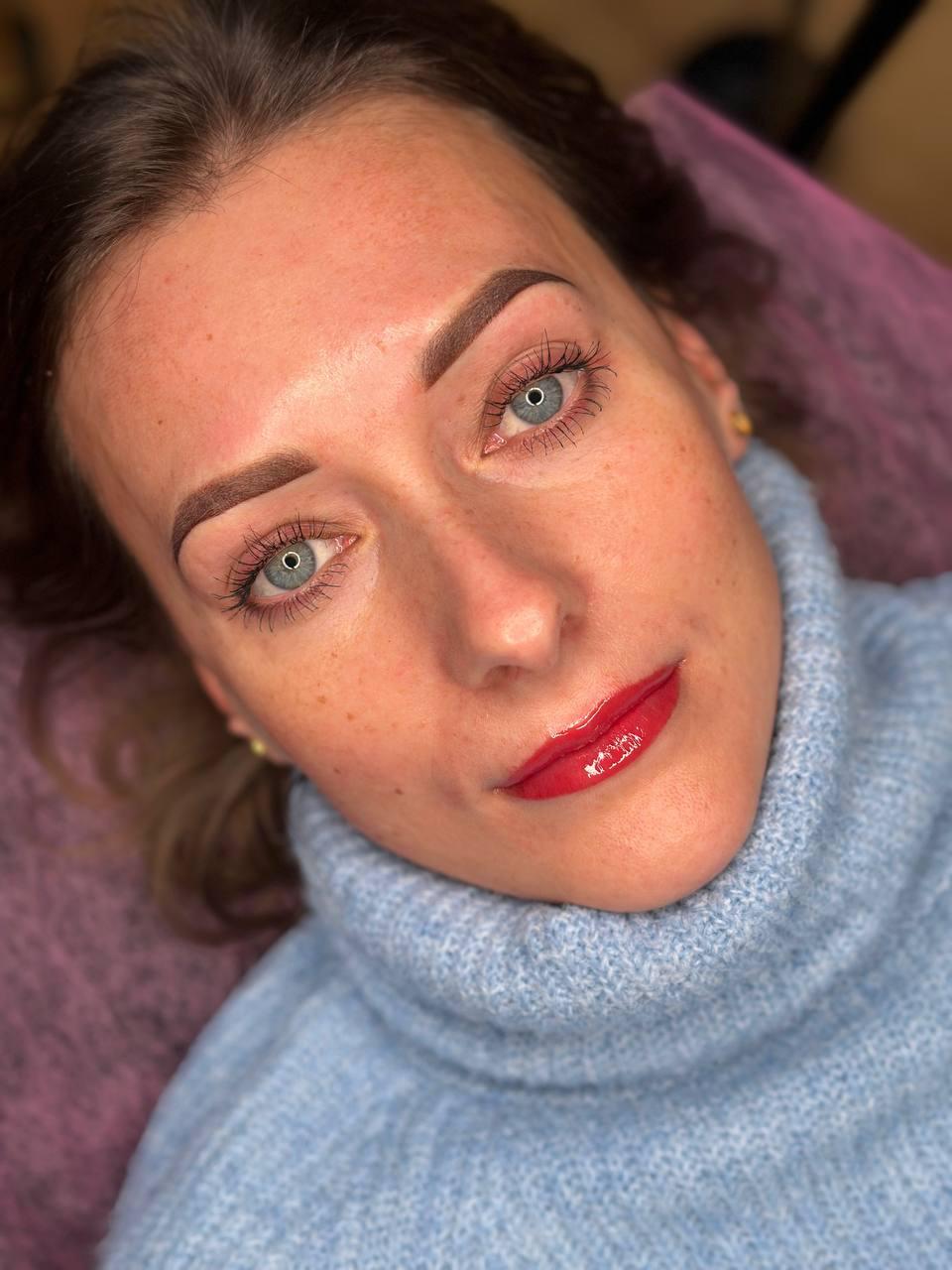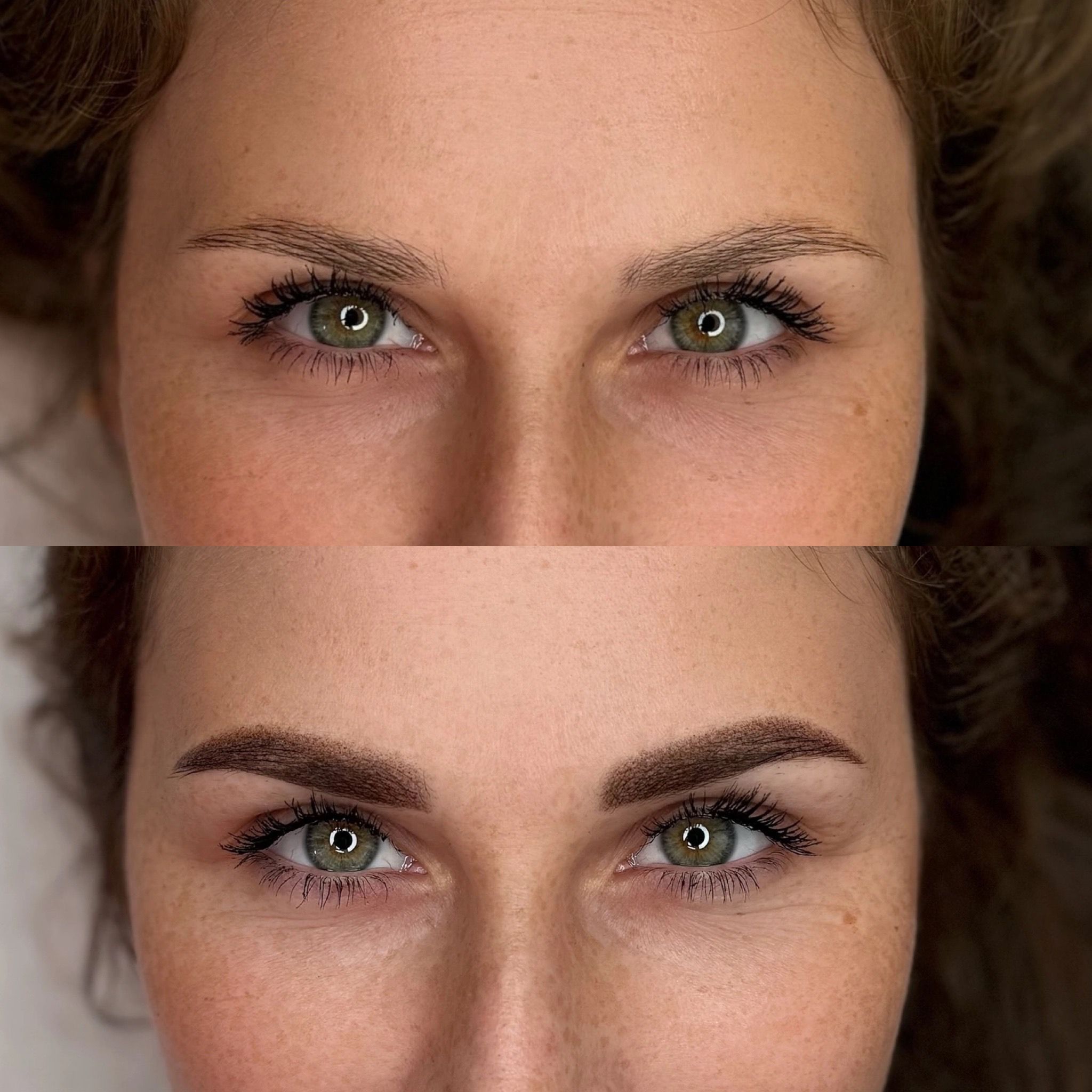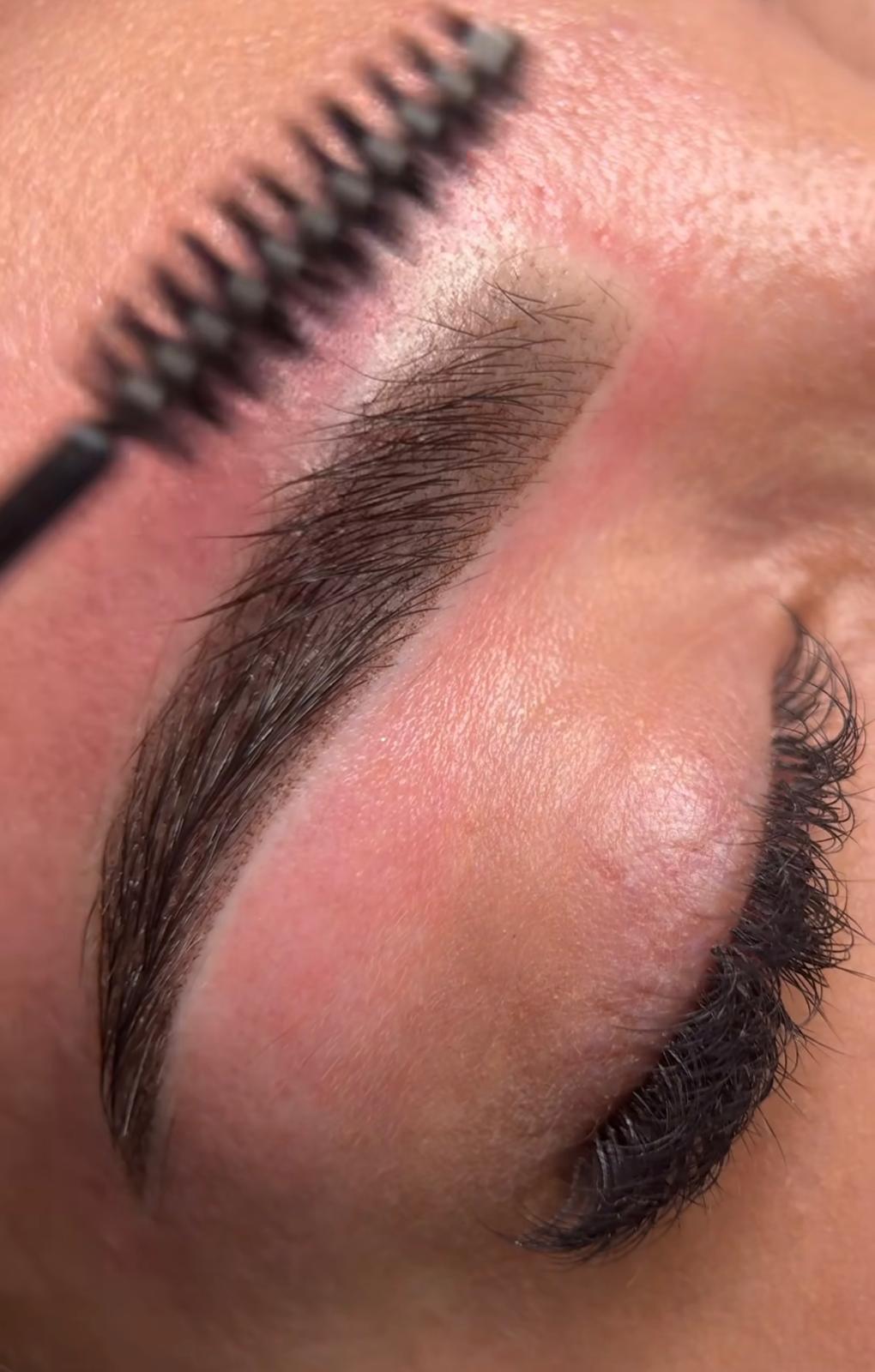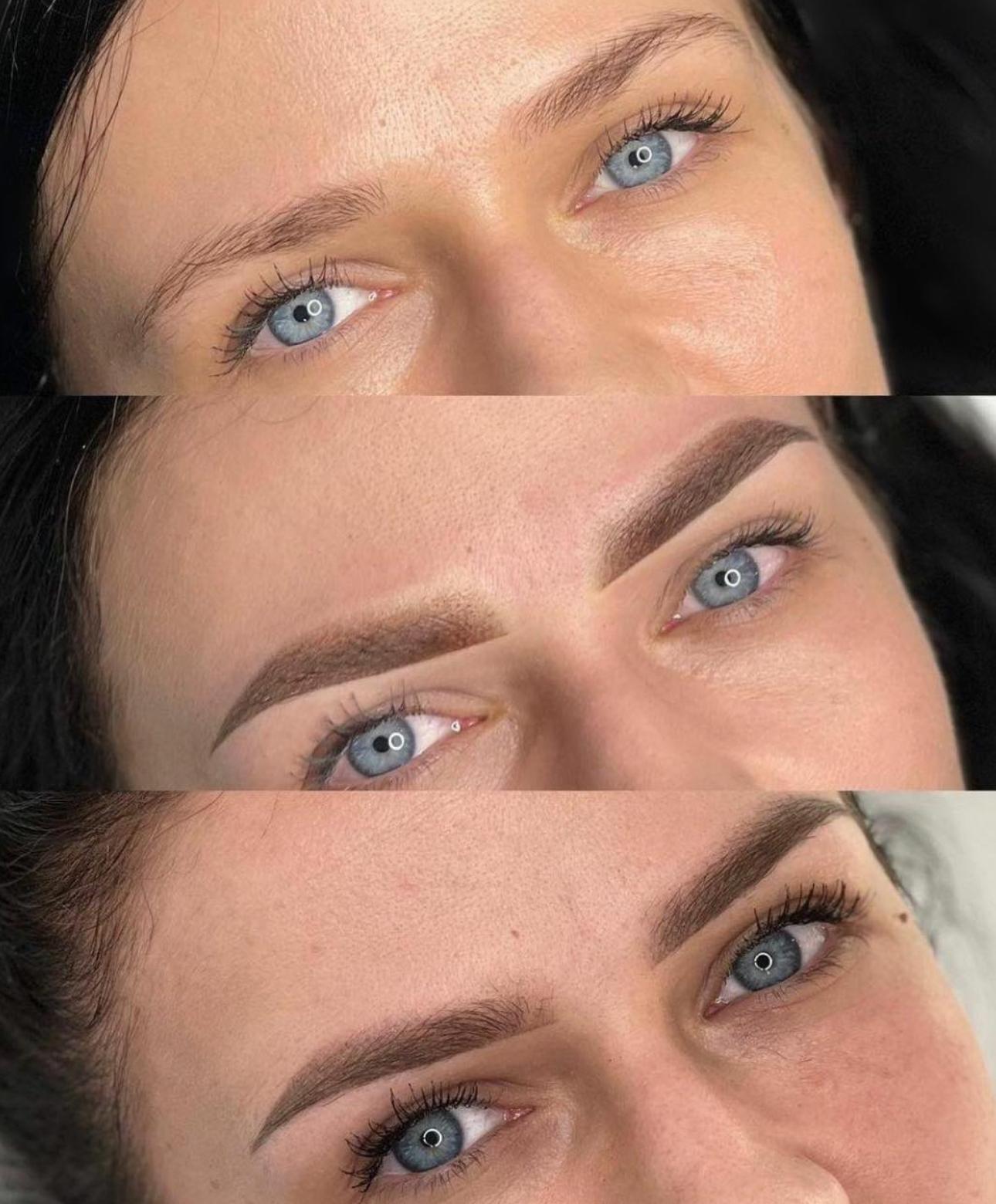
You look in the mirror and, instead of a cool, natural brown, notice a warm ginger, red, or even orange shade in your eyebrows. Don’t worry – this is not an unusual situation. Red and orange brows after permanent makeup are more common than many people realise, particularly several years after the original procedure or during laser removal of old pigment.
The most important thing is not to try fixing the problem blindly. Sometimes a carefully planned colour correction is enough. In other cases, gradually lightening the old pigment with a laser will be the better option. Everything depends on what is actually present in the skin and why the colour has changed to red or orange.
Why do eyebrows turn red or orange after permanent makeup?
Permanent eyebrow makeup is rarely created with one “pure” colour. Pigments are usually blends of several colourants selected to produce a natural-looking brown. This is where the whole story begins.
Think of brown not as a single colour but as a mixture of dark, red, yellow, and sometimes other tones. Over time, the individual components may fade at different rates. If the darker components disappear more quickly, the warmer base underneath begins to show. The eyebrows may then look ginger, red, or orange.
A similar effect can occur while removing pigment. The laser may break down the darker components of the mixture first, making the warmer tones temporarily more visible. This does not always mean that something has gone wrong. Sometimes it is simply another stage of the process.
Red eyebrows after several years – does this mean the permanent makeup was poorly done?
Not necessarily. The quality of the pigment, working technique, and implantation depth are extremely important, but even well-performed permanent makeup changes over time.
The skin is constantly changing, the pigment gradually breaks down, and its appearance is affected by factors such as sun exposure, skincare, individual metabolism, cosmetic treatments, and the composition of the original pigment blend. Eyebrows that looked cool brown five years ago may therefore look completely different today.
The real problem begins when subtle fading is replaced by an intense, unnatural colour that is difficult to correct with another layer of pigment.
Where does the orange shade come from?
Orange eyebrows often appear when some of the darker components in the original mixture have faded, leaving the red and yellow tones more visible. Together, these colours can create an orange result.
Interestingly, a similar effect can also appear after the first sessions of laser permanent makeup removal. Once the dark brown has been broken down, the pigment may suddenly look warmer than before. A client may say, “I came in to remove brown and left with orange.” That sounds worrying, but it is not always the final result.
Can the laser “bring out” a red colour?
Yes, and this is very important to understand. With cosmetic pigments, the colour visible on the skin’s surface may represent only one part of the complete mixture. When the laser breaks down the darker components, a previously hidden red or orange tone may become more visible.
Literature concerning cosmetic tattoo removal describes a process known as unmasking, meaning the exposure of pigments that were previously hidden. In other words, the red colour does not always “appear” because of the laser. It may have been part of the mixture from the beginning but was previously covered by darker tones.
This is why laser permanent makeup removal in Katowice should be planned in stages, with the response of the specific pigment assessed after each session.
Red eyebrows after laser treatment – is this normal?
When we are talking about pigment colour, a transition from dark brown to red, orange, or yellow can occur. However, it is important not to treat every colour change as the same thing.
A change in pigment colour is different from significant redness of the skin after treatment. Immediately after laser treatment, the skin may remain red, swollen, or more sensitive for a while. This is a tissue response and not necessarily the colour of the pigment.
If the skin is calm after healing but a clear red or orange shade remains in the eyebrows, this is residual pigment that may require another stage of treatment.
Can red and orange pigment be removed with a laser?
In many cases, yes, but selecting the correct wavelength is essential. Dark pigments respond differently from red or orange ones, so the device and settings need to match the colour actually remaining in the skin.
A wavelength of 532 nm is often used for red and some orange pigments. However, this does not mean that every red pigment will disappear after one session. Ink compositions can vary greatly, and some mixtures behave unpredictably.
There is little point in competing with promises such as “one appointment and the problem is gone”. A calm, gradual approach is far more sensible.
What about a yellow colour that appears after red?
This can also happen. After another session, red or orange pigment may become lighter and shift towards yellow. This occurs because the different components of the mixture are removed at different rates.
Yellow can be more challenging because it is light and does not absorb some wavelengths as effectively. This is why permanent makeup removal does not always follow a simple path of brown → lighter brown → no pigment. Sometimes the process looks more like brown → orange → yellow → gradual lightening.
Can red eyebrows simply be covered with new pigment?
It depends on the intensity of the old colour. If the red shade is light and stable, colour correction may sometimes be possible. An experienced permanent makeup artist can choose a pigment that neutralises the overly warm tone.
The problem begins when there is a large amount of old pigment in the skin. Adding more layers to heavily saturated eyebrows can produce a heavy and unpredictable result. After several corrections, the brows may become increasingly dark, while the colour turns into an even more complicated mixture rather than improving.
Before adding more pigment, it is worth asking one question: are we genuinely correcting the colour, or simply trying to hide an excessive amount of old ink?
When is removal better, and when should the colour be corrected?
If the eyebrows are relatively light, you still like their shape, and the main problem is a slightly warm shade, correction may make sense.
However, if the pigment is intense, the red or orange colour dominates, the shape is outdated, or several corrections have already been performed, it is often more sensible to lighten the old brows first.
Removing some of the pigment provides greater freedom when creating new permanent makeup later. Instead of building another layer over the old one, the artist can work on a much cleaner base.
Why should you avoid a quick correction?
Because red pigment can make a simple solution sound tempting: “We’ll add a cool colour and everything will be fine.” Sometimes that does work. However, if a large amount of old pigment is present in the skin, neutralisation may only be temporary.
Over time, the new layer will also begin to fade, and the warm tone may reappear underneath. The result? Instead of one problem, there are several layers of pigment and an even more complicated plan for the future.
A proper consultation before correction is therefore far more important than making a quick decision in the treatment chair.
Does the composition of the old pigment matter?
It matters enormously. Cosmetic pigments may contain different organic colourants, iron oxides, titanium dioxide, and other ingredients. Their behaviour over time or under laser treatment depends on this exact mixture.
The problem is that after several years, the client often cannot remember which product was used, and the salon that performed the procedure may no longer exist. The specialist then assesses the pigment mainly through its colour, treatment history, and the skin’s response.
If you have your treatment record, the pigment name, or photographs of your eyebrows taken shortly after the original procedure, bring them to the consultation.
What is paradoxical pigment darkening?
This is a separate issue and should not be confused with the normal exposure of red or orange pigment. Some cosmetic pigments containing certain iron or titanium compounds may suddenly darken instead of becoming lighter after laser treatment.
The eyebrows may then turn grey, graphite, or almost black. This is a recognised phenomenon that has been documented in cosmetic tattoo removal.
This is why, in difficult or uncertain cases, the specialist may recommend a test on a small area. It allows them to see how the pigment responds before treating the entire eyebrow area.
Does paradoxical darkening mean that the pigment can no longer be removed?
Not necessarily. In some cases, the darker pigment may respond to further treatments. However, the situation requires a cautious plan and should not be treated as a standard removal process.
The most important thing is for the client to understand the risk before treatment so that a possible colour change does not come as a surprise.
How many treatments are needed for red or orange eyebrows?
There is no single honest answer. One person may notice a significant change after several sessions, while another may need a longer process. Everything depends on the amount, composition, and depth of the pigment, previous corrections, and the body’s response.
It is also important to remember that the colour may change between sessions. Assessing the result one day after treatment tells us very little. The skin needs to heal, while the pigment continues responding to the processes triggered by the laser.
Why are breaks between treatments important?
Because a laser does not “vacuum” pigment out of the skin. Its purpose is to break the colourant into smaller particles, after which the body gradually works to remove them.
The skin also needs time to recover. More frequent treatments do not guarantee faster results and may increase the risk of irritation and other unwanted effects.
The plan should therefore be developed in stages by observing what is actually happening to the pigment.
Is a remover better than laser treatment for red eyebrows?
There is no single method that is best for everyone. Removal solutions and lasers work in completely different ways, and the choice depends on the pigment, skin, history of previous procedures, and desired result.
One advantage of a laser is the ability to select a wavelength for the pigment colour. In some cases, other methods may be considered when the ink composition or its response to light raises concerns.
The worst approach is to jump from one method to another without a plan. If laser treatment is followed by a remover, then colour correction, and finally another pigmentation procedure, assessing what is actually present in the skin becomes increasingly difficult.
Can red eyebrows be removed completely?
Significant lightening can often be achieved, but no responsible specialist should promise “100% removal” before seeing the pigment and observing how the skin responds.
Permanent makeup is more complex in this respect than a simple black tattoo. Colour mixtures can change shade after consecutive sessions, so the plan may need to be adjusted along the way.
What should you do if your eyebrows turn red after several years?
First, do not panic or immediately cover them with another strong pigment. Take clear photographs in daylight and book a consultation.
During the appointment, three things should be assessed: how much pigment remains in the skin, whether you still like the existing shape, and what result you ultimately want to achieve.
If you want new, softer eyebrows but the old ones are intensely red and heavily saturated, lightening them will often be a sensible first step.
What if the red colour appeared after the first laser session?
First of all, give the skin time. The final result should not be assessed immediately after the session. Once the area has fully healed, it will be possible to see which shade actually remains and plan the next stage.
If dark brown has changed to orange or red, the laser may have removed some of the darker components and exposed a warm pigment. The next session can then be planned specifically for that colour.
How should you prepare for a consultation?
You do not need to know the chemical composition of your pigment. Simply try to remember a few basic facts: when the permanent makeup was performed, how many touch-ups you had, whether the brows were previously treated for removal, and how their colour changed over time.
If you have before-and-after photographs from previous years, show them to the specialist. Sometimes one old photograph reveals more about the pigment’s history than a lengthy description.
If you would like to discuss removing old PMU, you can contact KRZ Studio in Katowice and send a photograph of your eyebrows before the appointment.
What about new permanent makeup after removal?
A new procedure should only be performed once the skin has recovered properly and the amount of old pigment allows an attractive result to be created.
It is not always necessary to remove everything completely. Sometimes lightening the old colour enough to prevent it from interfering with the new pigmentation is sufficient.
If you are planning new eyebrows after completing the removal process, you can also explore permanent makeup in Katowice. It is best to view the entire process as one journey: old pigment → lightening → skin recovery → new design.
The most common mistakes with red and orange eyebrows
The first mistake is adding more layers of pigment simply to “cancel out” the red colour. If a large amount of old ink remains, the problem may return.
The second mistake is judging the result of laser removal after one day. Both the pigment and skin need time, and the colour may change in stages after treatment.
The third mistake is assuming that every red pigment will behave in the same way. Two shades that look similar may have completely different compositions.
The fourth mistake is choosing a method simply because it worked for someone you know. With permanent makeup, an individual assessment genuinely matters.
Red and orange eyebrows – what should you do step by step?
First, assess the situation without makeup and in natural light. If the colour is subtle and you still like the shape, you can discuss correction. If the pigment is intense, the eyebrows have been corrected several times, or you want to change the shape completely, it is worth considering lightening first.
With laser treatment, you need to be prepared for the colour to change in stages. Brown may become red, red may turn orange, and orange may shift towards a lighter yellow. This does not necessarily mean that the treatment has failed – sometimes you are simply seeing the next layers of the pigment mixture.
The most important thing is for the process to be managed by someone who understands the differences between dark pigment, warm colours, and the risk of paradoxical darkening.
Laser permanent makeup removal Katowice – when should you book a consultation?
If your eyebrows have turned red, ginger, or orange and you are unsure whether to correct or remove them, a consultation can help clarify the situation without guesswork.
At KRZ Studio, the current colour, pigment saturation, and your desired result can be assessed. Sometimes correction will be the best solution. In other cases, laser permanent makeup removal in Katowice followed by preparing the skin for new pigmentation will make more sense.
You do not need to decide on the entire process immediately. Start by answering one question: what is actually left in the skin, and what would you like the final result to look like?
Frequently asked questions
Why did my permanent eyebrow makeup turn red?
This is usually caused by the components of the pigment mixture fading at different rates. Darker tones may fade more quickly, making the red or orange components more visible.
Can orange eyebrows be removed with a laser?
In many cases, yes. However, warm colours require a suitably selected wavelength and may need several stages of treatment.
Why did my eyebrows turn red after laser treatment?
The laser may remove the darker component of the mixture first, revealing a previously hidden red or orange pigment. This is a recognised effect in cosmetic tattoo removal.
Is it better to correct or remove red eyebrows?
It depends on the amount of old pigment, the shape, and the desired result. A subtle shade may sometimes be corrected, but heavily saturated eyebrows or those that have been corrected several times are often better lightened first.
Can pigment become darker after laser treatment?
Yes. Some cosmetic pigments may undergo paradoxical darkening. This is why careful assessment and sometimes a test on a small area are important in uncertain cases.